
Wedging chair legs
making simple difficult

[ soundtrack : Svanrand - Heilung (names of old Valkyries) ]
****
This post is too long for email — open in browser for full length.
****
It’s tough going, these days … they demand most of what I have to give, and my old, ailing Mother needs me more than ever — there’s not much time and energy left for my after-hours chair-copying learning-project or for writing nerdy prose about it to post on Substack. But there is some time, inbetween it all. There are always some lacunae in the whirl of life, and I know no better way of using them than trying to do something deceptively simple as well as I can. It’s a very good way to take your mind off things, trying to solve practical problems.
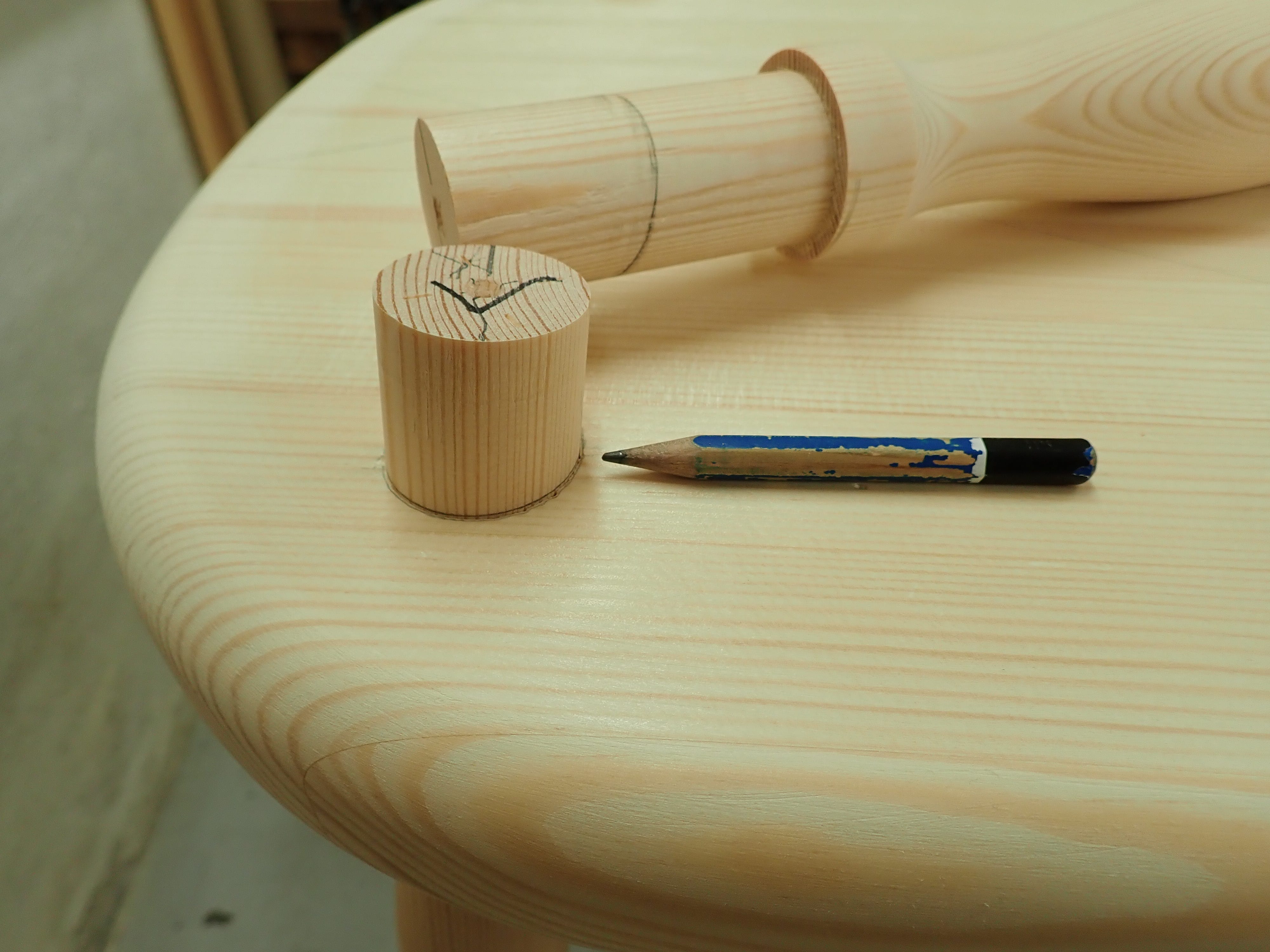
I’ve got all my chair-parts manufactured; all that’s left to do before assembly is some semi-final sanding here and there and preparing the fit between the legs and the seat. I begin by dry-fitting and marking how far they protrude.
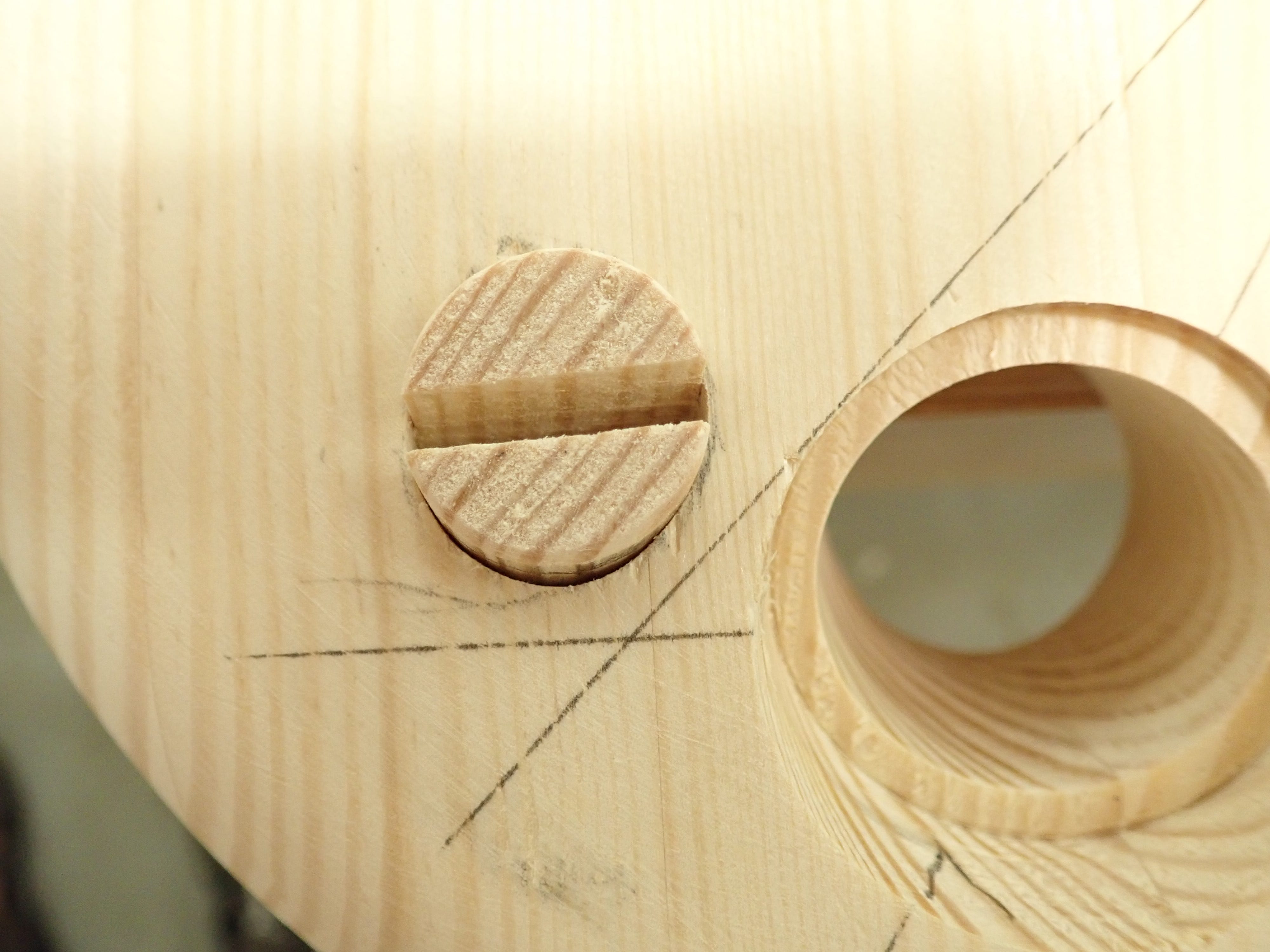
I’ll use wedges to secure the tenons firmly in place, and to improve their mechanical resistance to extraction I make the mortices ever-so-slightly conical by expanding the round hole against the end-grain. I make the mortise slightly oval by sanding - mind your angles! - using a dowel/broomstick clad with stapled-on sandpaper.
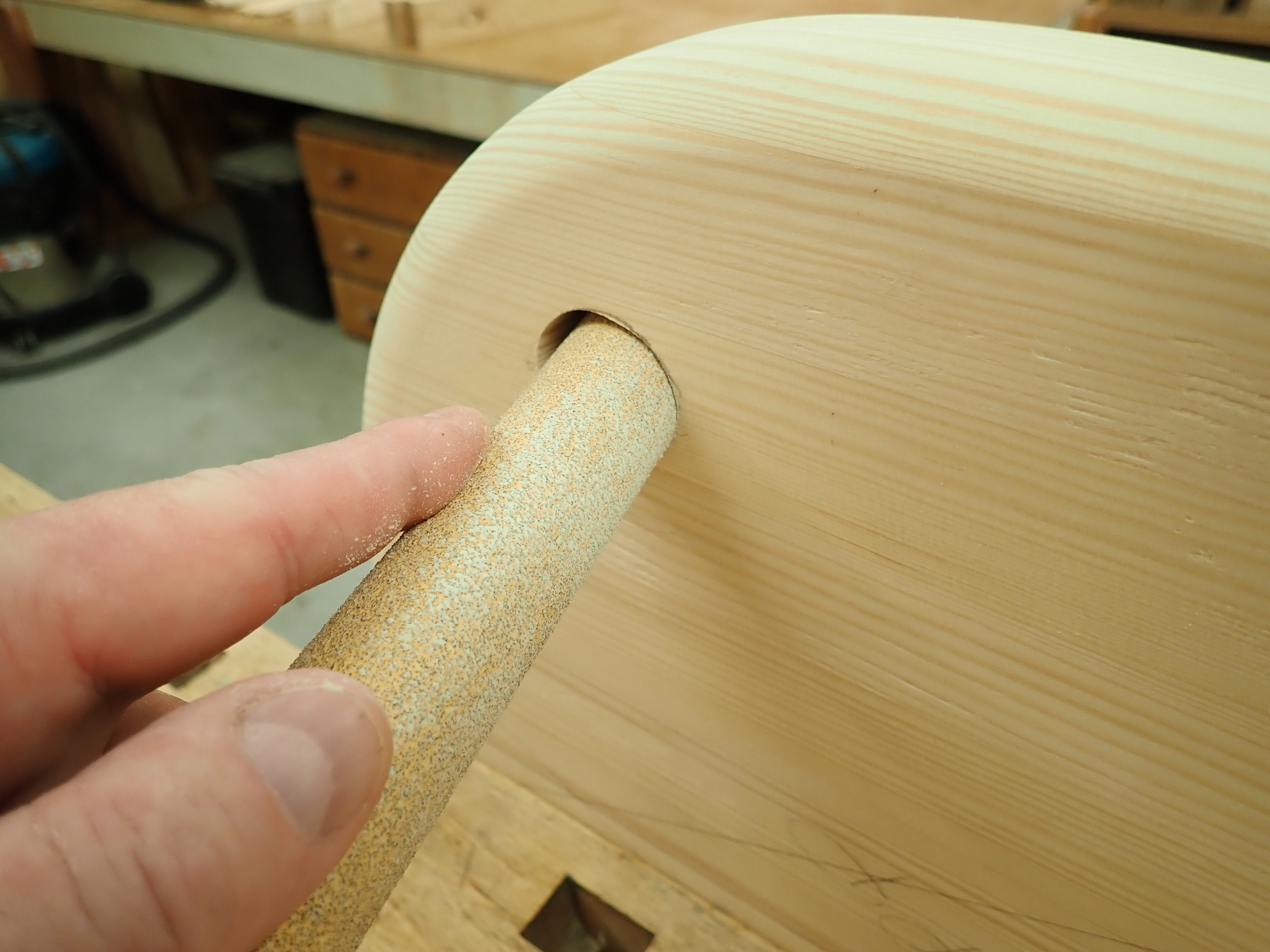
My aim is to enlarge the mortise 0,5 - 1 mm on each endgrain-side (and leave the ‘side-grain’ snug). The mortises’ endgrain is a harder/better surface to ‘wedge against’ and your seat is less prone to splitting if stressed in this direction — attempting to wedge ‘sideways’ - against the side-grain - is asking for trouble.
The point of this exercise is to deform the tenon by hammering in a wedge after it has been seated in the mortise, so that it will act like a (round) dovetail; resisting extraction and being firmly lodged in place.
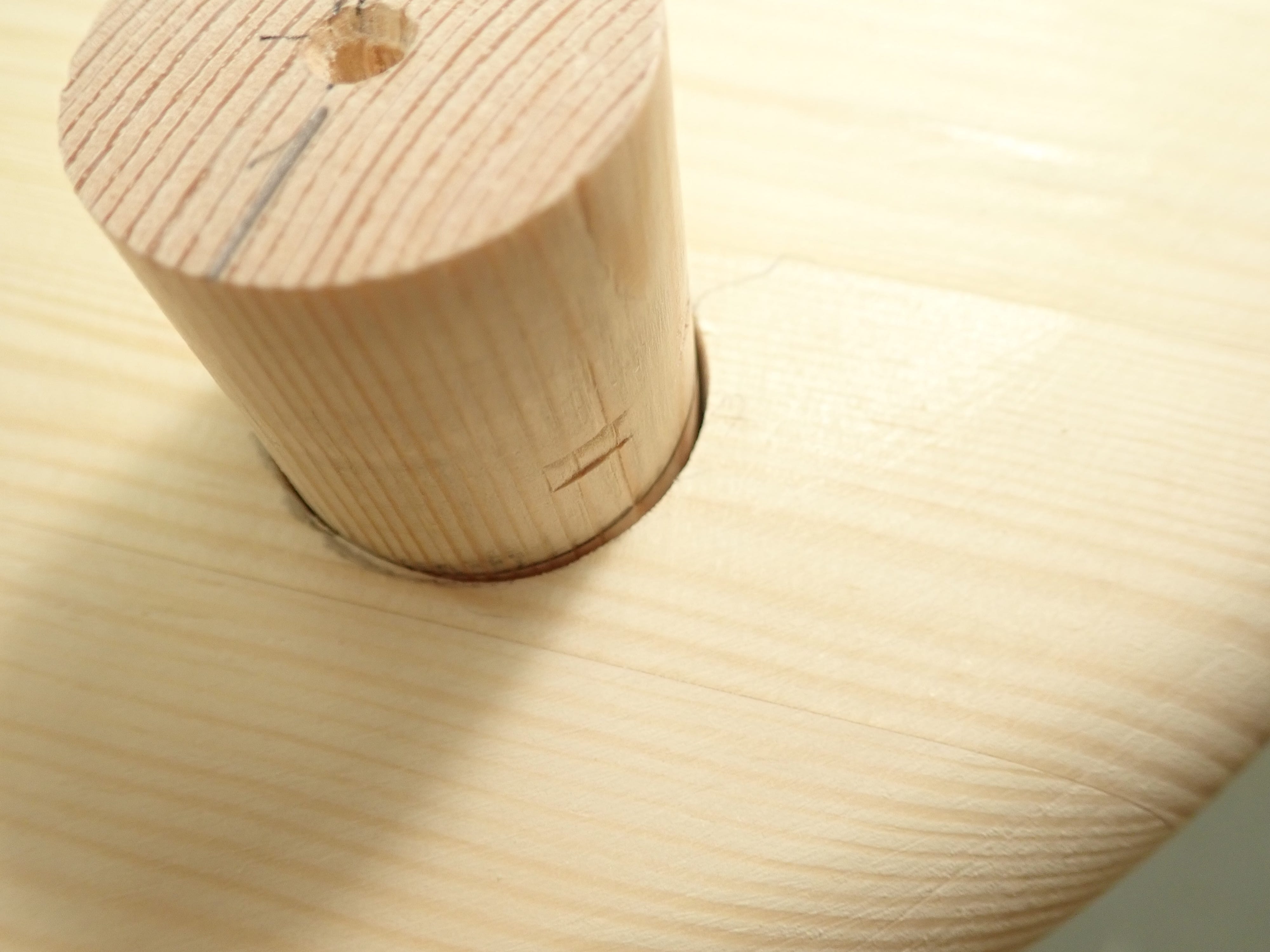
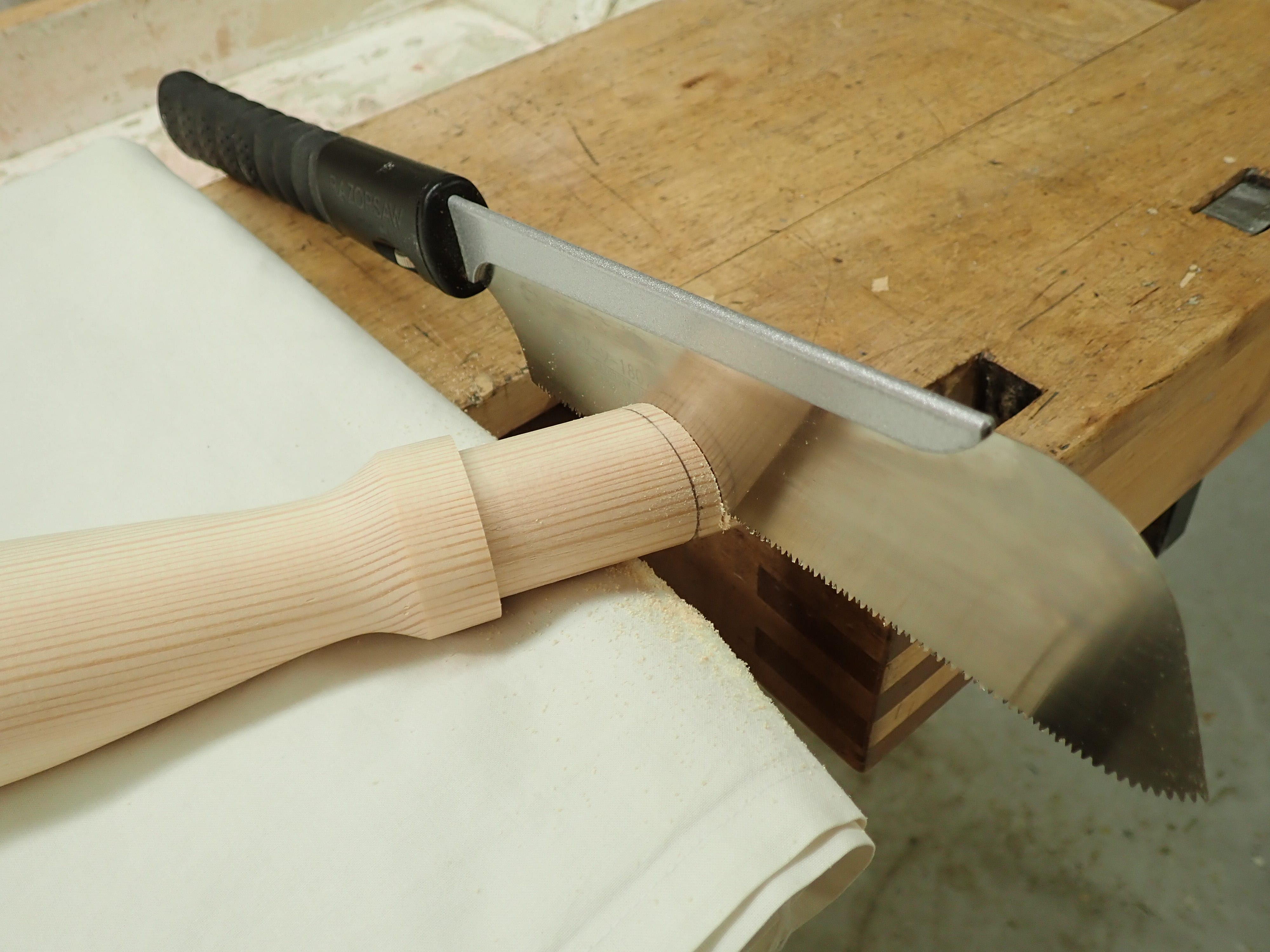
I like to cut off excess length of tenon; makes it easier to cut out for wedges.
Last time I wedged some chair/stool-legs in place, I first made a fancy slot-cutting contraption — I enjoy making ‘clever’ jigs and devices. If they help me make a series of parts repeatably and accurately, I’m all for it! The ability to make any part ‘by hand and eye’ is an essential skill and the basis of any further understanding of wood and craft, but the novelty of being able to do so wore off thirty years ago for my part.
That said, the ‘clever contraption’ linked to above didn’t work all that well, so this time around - only having to make one chair - I did it by hand and eye. It is that skill that will see you through, after all.
A couple of pencil-marks, a good rip-saw and a steady hand …
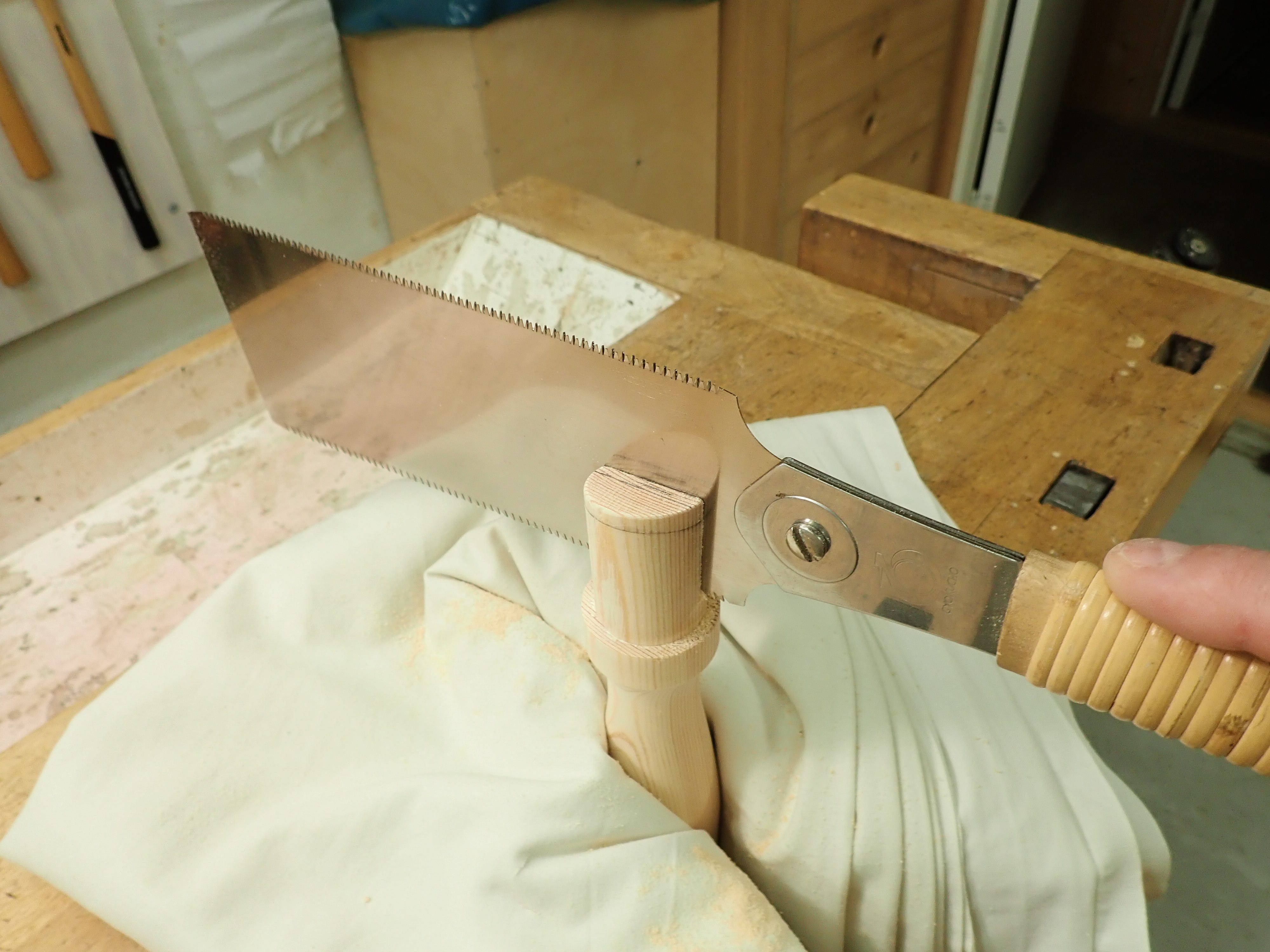
If your cuts don’t meet at the bottom, a jeweler’s saw will free the wedge.
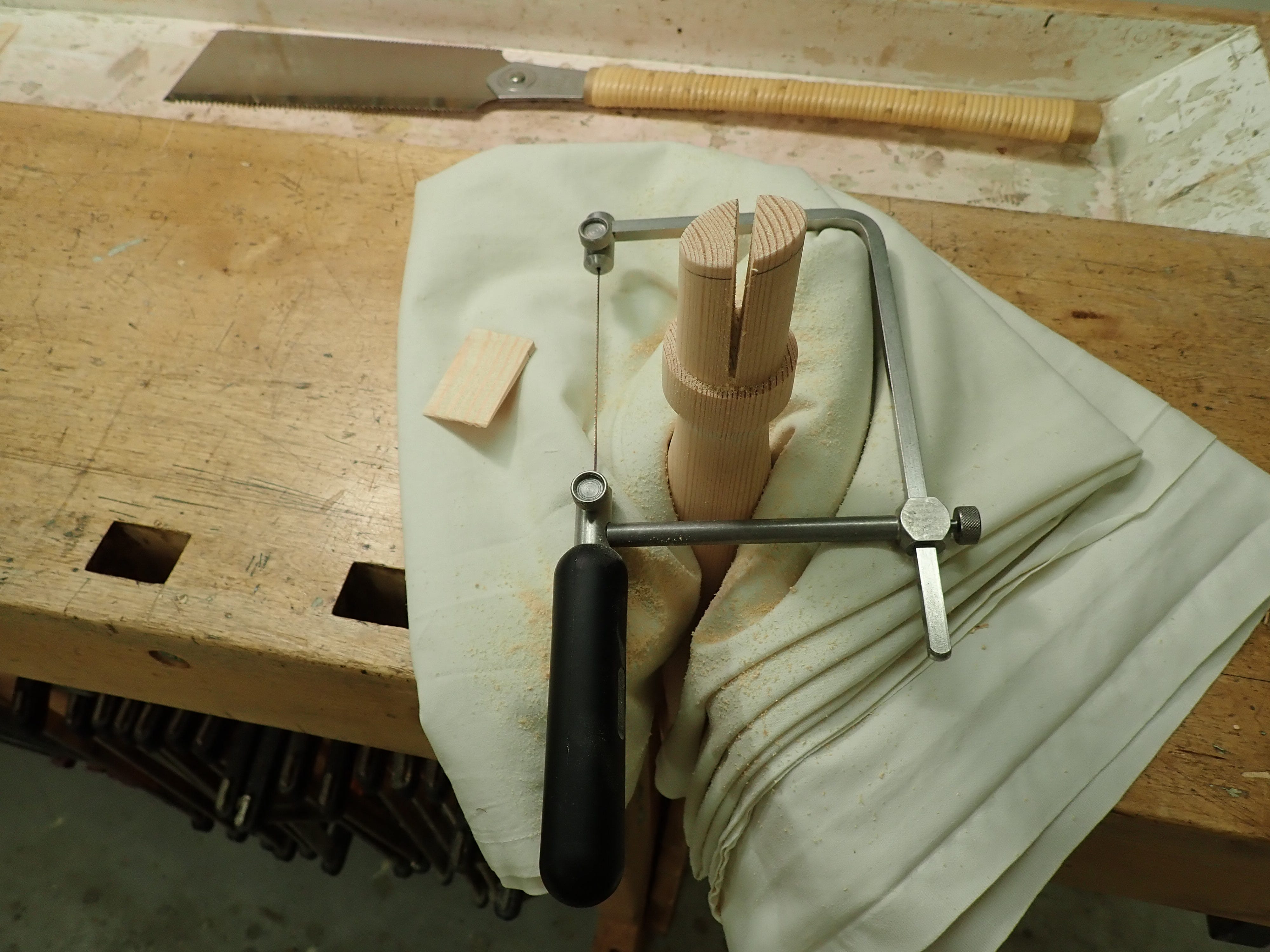
The wedge is oriented perpendicular to the seat’s grain-direction and wedges against the endgrain.
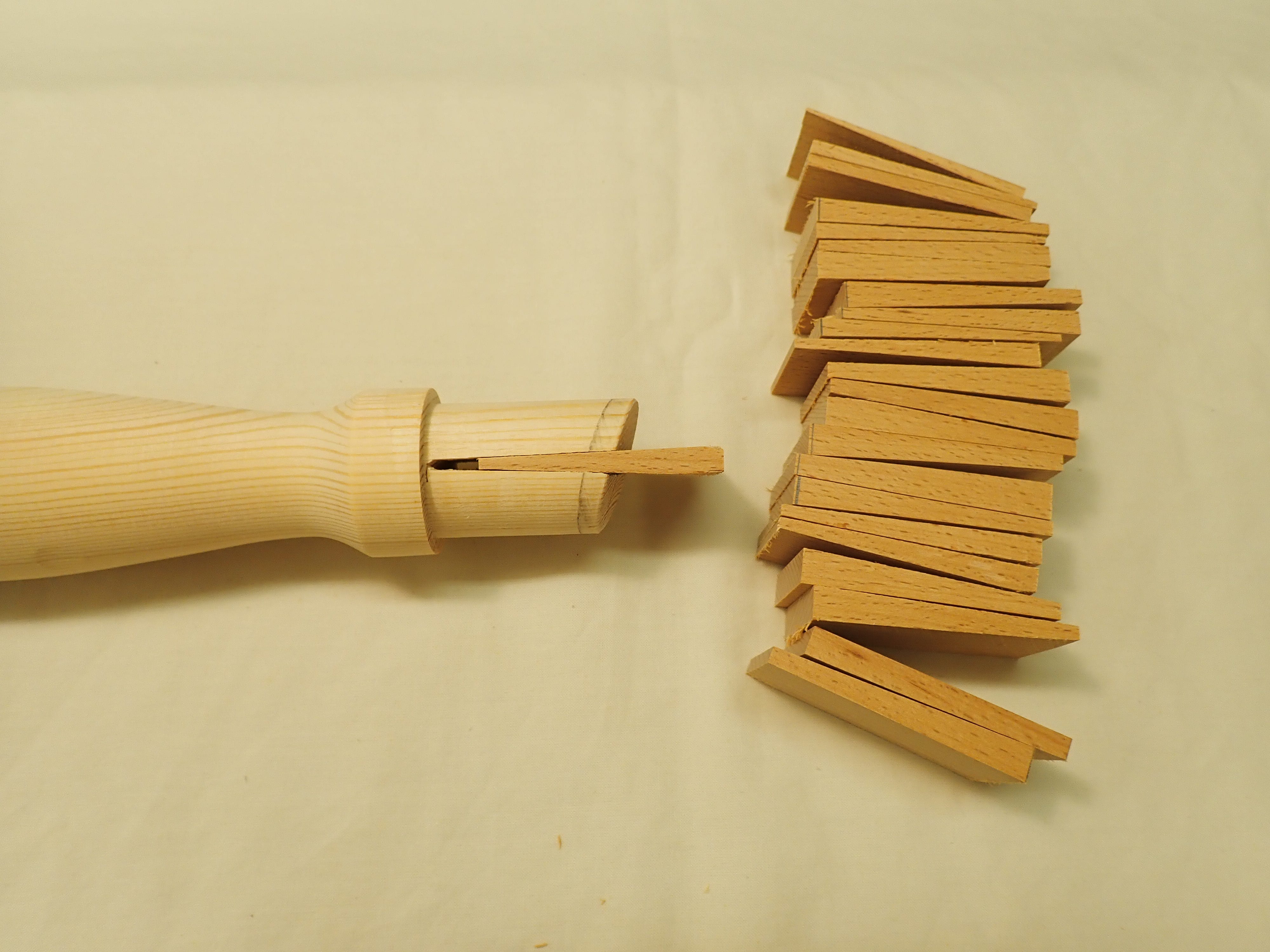
I’ll need some wedges. I made them out of a harder wood than the pine I used for the legs and seat. This makes sense, since the wedges are the forcers — they apply force, the softer pine yields and complies.
I used some scraps of beech that I cut freehand on my table saw.
This is a very useful way of making wedges — I learned to do this from Dangerous Frank back when I was a young, enthusiastic stripling. He hired me for a summer after my first year at furniture-making school. He was an old carpenter (and the younger brother of my furniture-making hero Harold Skjøldt, who had arranged the engagement). There had been a huge fire downtown, in Storgata 37, and our job was to restore the stripped-out brick-and-mortar shell back to a rentable commercial space. We started out jumping from beam to beam, bare brick walls, burned smell still strong … I learned a great deal that summer: About carpentry and construction, about the history of working-man’s culture in Oslo, and about being a working man myself.
Frank: “I would never ask you to do anything that I would not do myself and know to be safe! Here, let me show you how I do this …”
So, I learned how useful a varied selection of wedges could be.
Since I cut the wedge-slots by hand, they will vary slightly by size and slope — as will the wedges I cut by eye. Given a selection, I can choose a good fit.
I want the wedge to pry the tenon apart — but gently, and without splitting the chair-leg, the chair-seat or breaking the tenon-halves — no more force than necessary! Wedges are immensely powerful! They are strong enough to easily deform wood and break things apart. They are deceptively simple ‘enforcers’ — that’s one reason why they are so useful in construction (not to forget their incremental adjustability — two reciprocal wedges tapped against each other; that’s how they used to position windows and doors before nailing them in place through the wedges; everything thus locked in place).
Wedges seem so simple, but merit much more consideration than they are usually afforded. But who am I to piss against the wind in a time where Large Language Models are poised to usurp our collective brains and bring about eternal bliss, untold prosperity, peace on earth and the perfect kill-chain — Hallelujah! We can always hire someone to do the work — good luck! Helplessness was never a winning strategy … like drowning never was preferable to swimming — or sailing.
Back to business: When your parts are matched and fitted, you must mark each one to know which goes where.
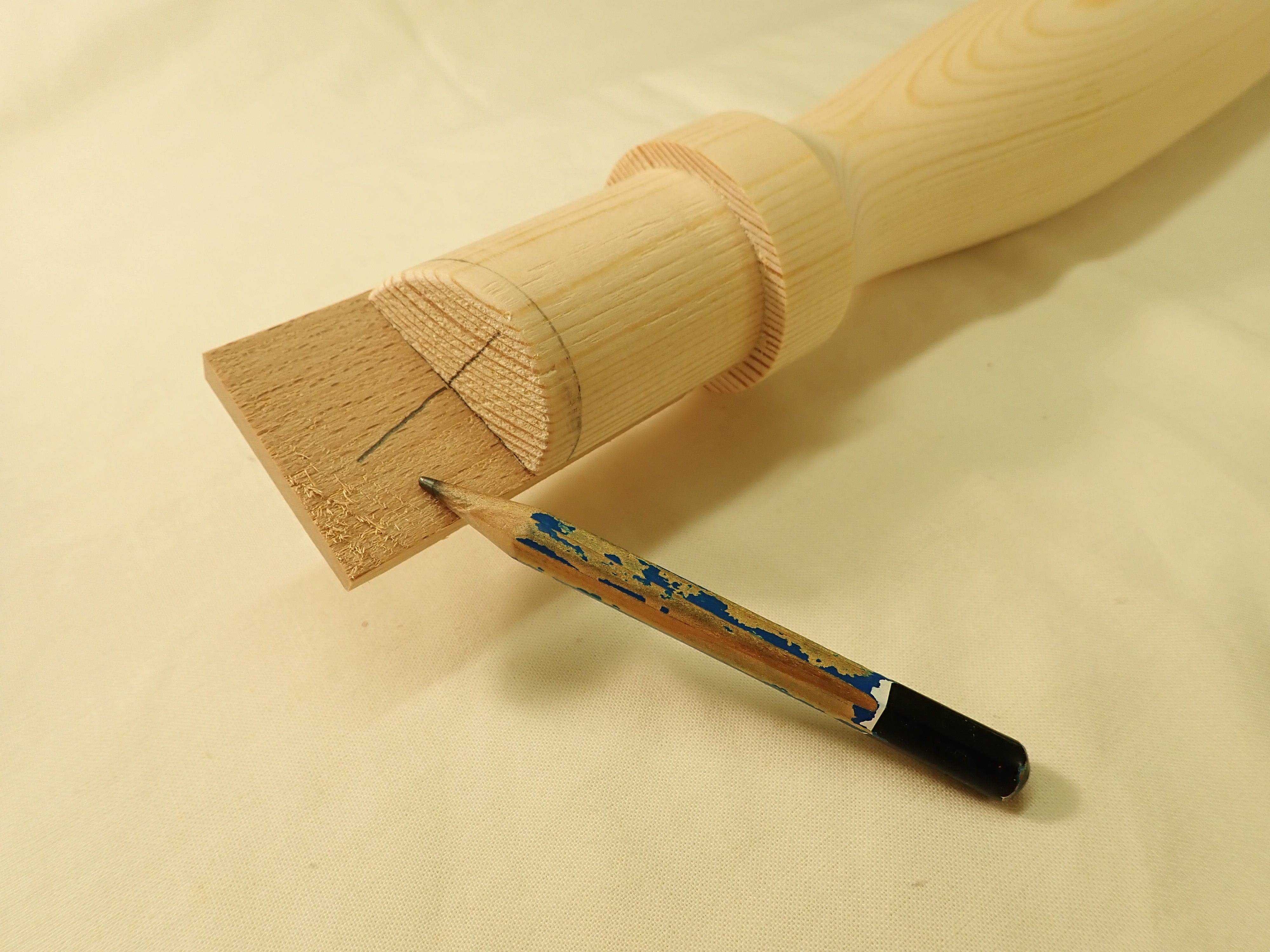
My wedges have the same width as their tenon.
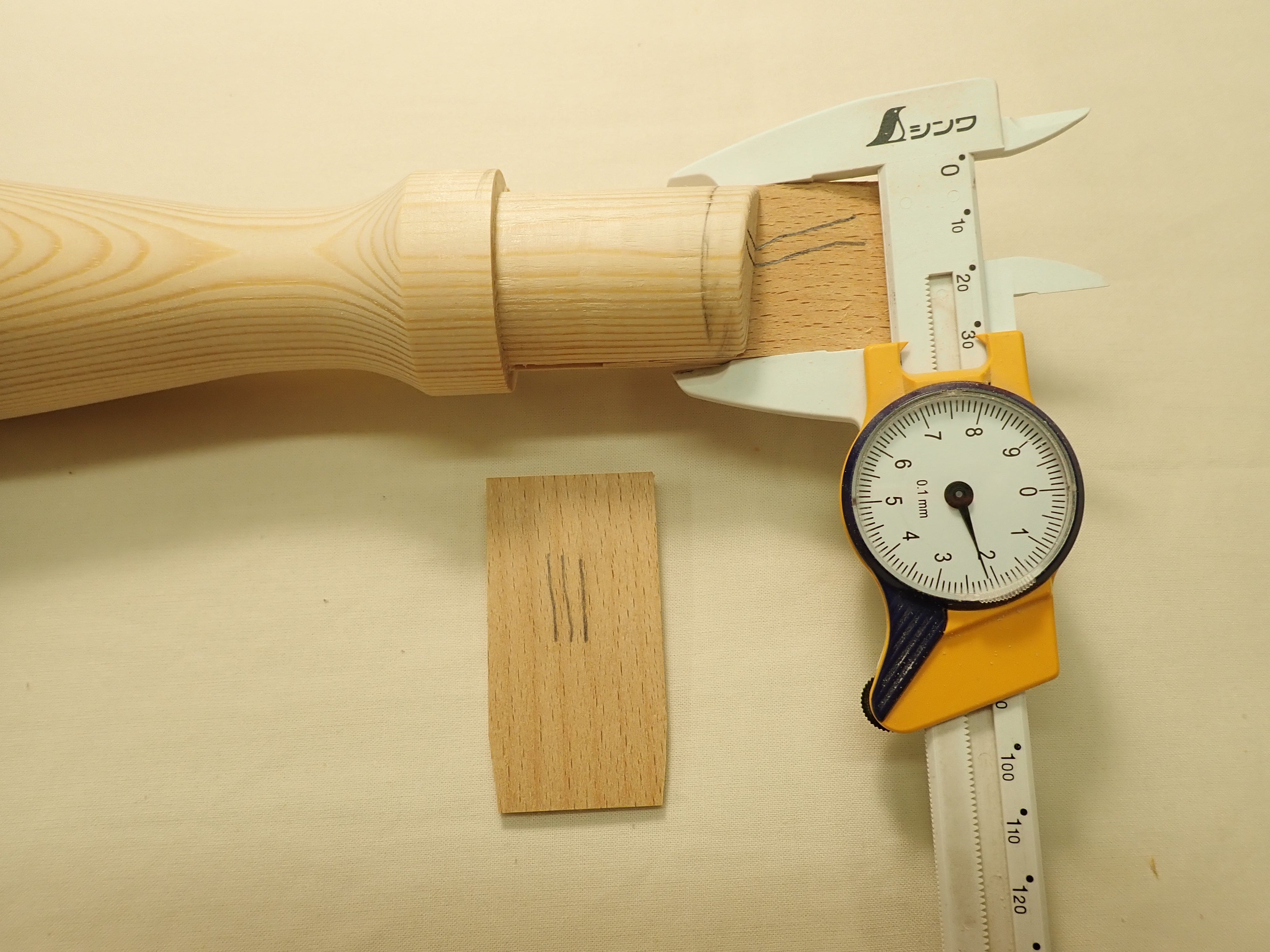
I also taper their width at the slim edge, so as to faciltate their entry and smooth progress down into constriction!
Here’s something for your consideration: Have a look at the wedged tenons below! This is some sort of verbal equation: Before they bottom out, the wedges should impart the sideways forces necessary to force the tenon cheeks tightly against the mortise endgrain walls.
It’s not a conceptually difficult point to grasp, but pulling it off in practice might be not so easy. But isn’t that how we make our living; by mediating the conceivable with the practicable?
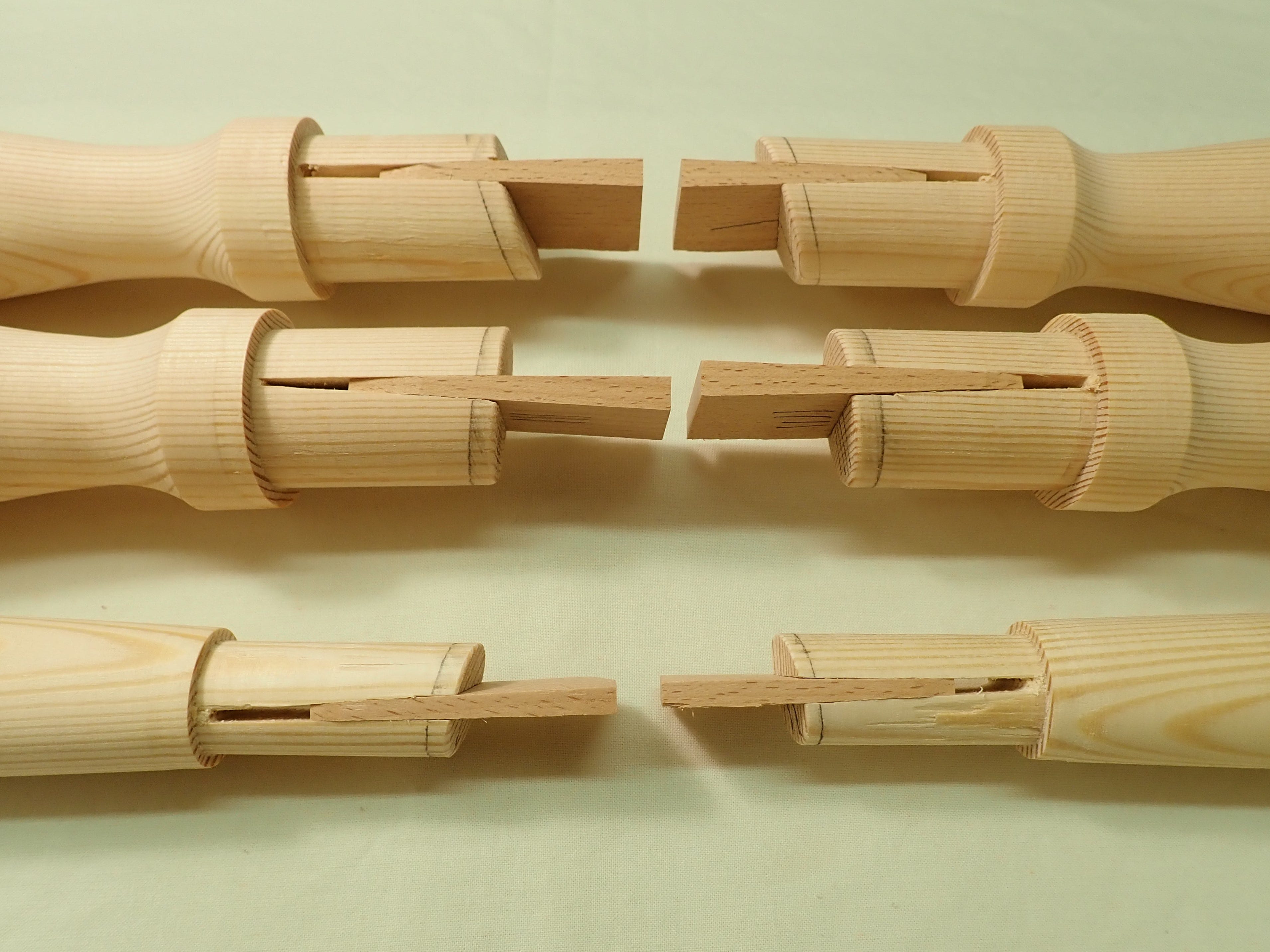
Sometimes, the difficult part is not shaping the wood, but understanding how the wood ought to be shaped.
****
“Sometimes, the difficult part is not shaping the wood, but understanding how the wood ought to be shaped.” What a way with words!
There are two types of chairmakers. The first, John Brown and Chris Schwarz, make chairs by hand and eye, so no two chairs are alike. Others, like Brian Boggs, try to do all the work with clever jigs, making the parts repeatable and neat. And then there's Peter Galbert.
May your mother be healthy and live a long life.