
Red or white oak?
Which Quercus?

[ soundtrack : Road - Nick Drake (Josh Turner Guitar Cover) ]
***
I’m making a pair of doors that are to carry untreated outer paneling. The customer wants it to develop that grayed, weatherworn look so popular in recent years. I ordered a batch of 1” x 5” x 9’ white oak for this purpose. Yesterday I hauled them out of storage and into the bright shop-lights.
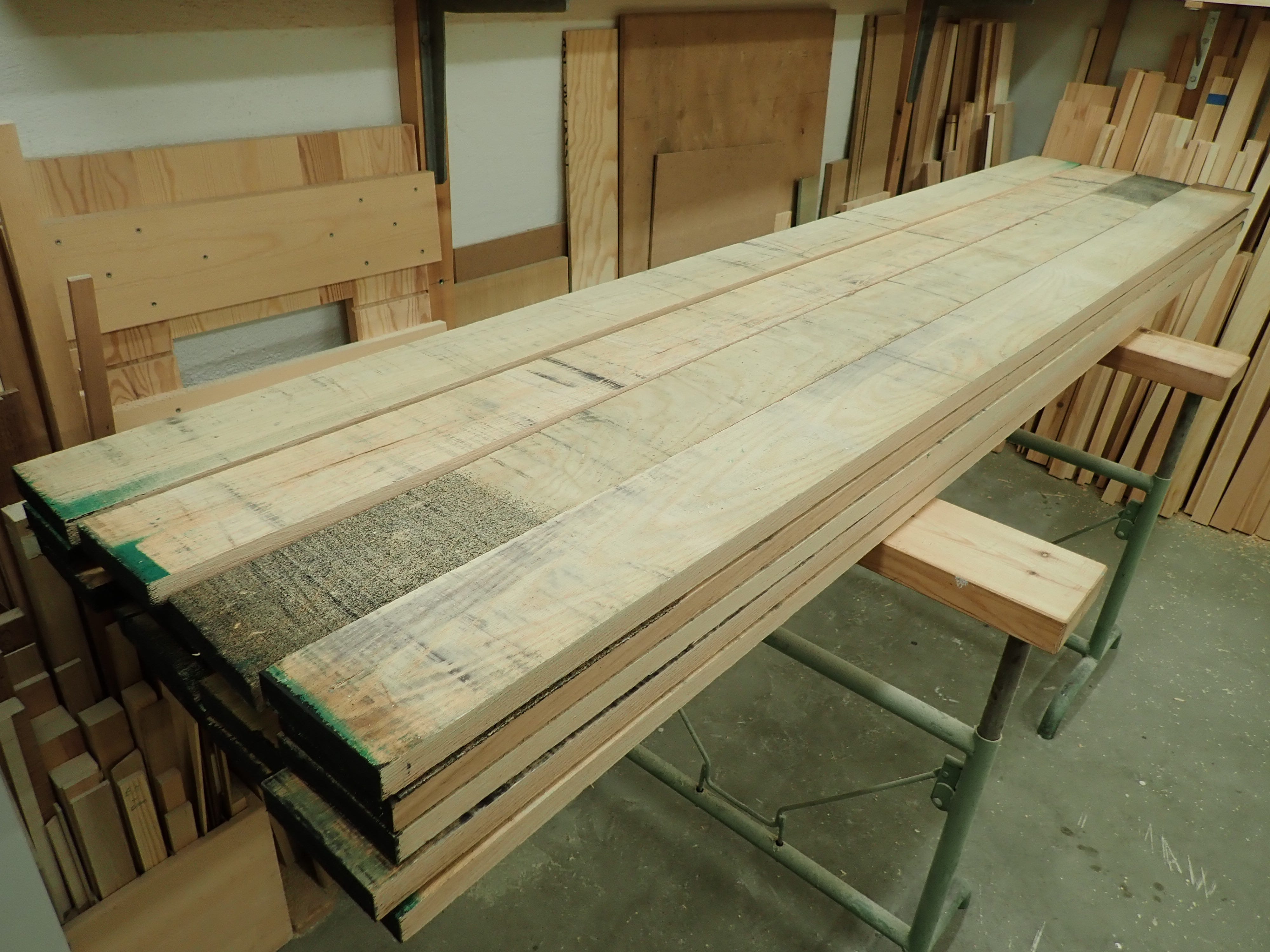
I often use oak — American or European white oak — when I need something hard-wearing and/or rot resistant, so typically thresholds, ‘water-boards’ (drip-noses) on windows or other weather-exposed parts. I’m not particularly fond of oak as such, despite its useful characteristics; I find it coarse and unattractive in colour and texture, and the kiln-dried stuff I get is ornery to work (… I can hear the Australians and New Zealanders mock me all the way from the other side …) I’m a softie, used to the mild Pinus Sylvestris from the Swedish forests, though I have occasionally come across some mellow, straw-coloured oak (Southern Europe?) that is beautifully suited to furniture use.
There was something off about the bunch of boards I had readied for planing. It was too light and reddish in hue. White oak usually has a grayish-brown cast tending towards olive/green (there are considerable variations, as always with wood). These boards were not like that.
I got my FrankenStanley Jack out and planed a couple of patches to get a better look. This was red oak! Quercus rubra if ever I saw one. I took some pictures to send to my lumber-supplier — Oslo Finérfabrikk — because red oak is not rot resistant at all.
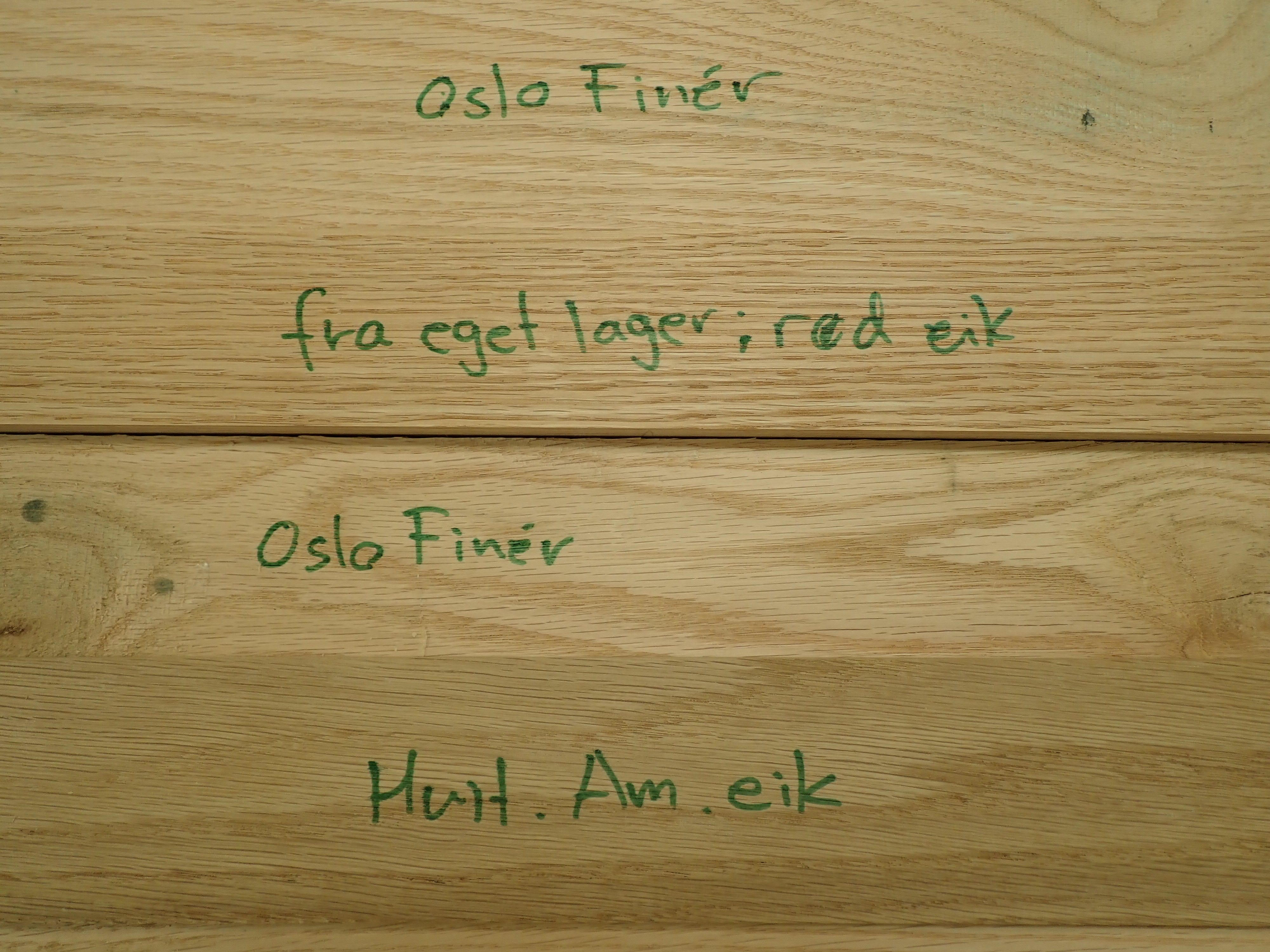
The differences don’t appear clearly in the picture, but my eyes are not easily fooled when looking at wood; it’s what I’ve done the best part of my life. It is difficult to explain exactly how I tell one species of wood from another. There are of course handbooks, charts and tables of descriptions; there are seriously scientific methods of taxonomy. I identify woods the same way I tell people apart; That’s Jack and this is Jill. Can you explain exactly how you recognize your friends? They all have two eyes and one nose, two ears and one mouth … minimal differences, yet unmistakable.
I sent a mail to my lumber-merchant explaining that he had sold me a pig in a poke. The boards were ordered online and delivered to my shop; long gone are the days when you could just turn up at the warehouse and explain your needs to your knowledgeable man on the forklift who knew what goodies were hidden in which stacks. The merchants replied assuring me that according to their paperwork the boards should be white oak. It’s a bit like the Met Office telling you the sun is shining when outside it’s pissing it down.
To quote the excellent Wood Database:
“The pores found in the growth rings on red oak are very open and porous, and should be easily identifiable. White oak, however, has its pores plugged with tyloses, which help make white oak suitable for water-tight vessels, and give it increased resistance to rot and decay. The presence of tyloses is perhaps the best and most reliable way to distinguish the two oaks […]“
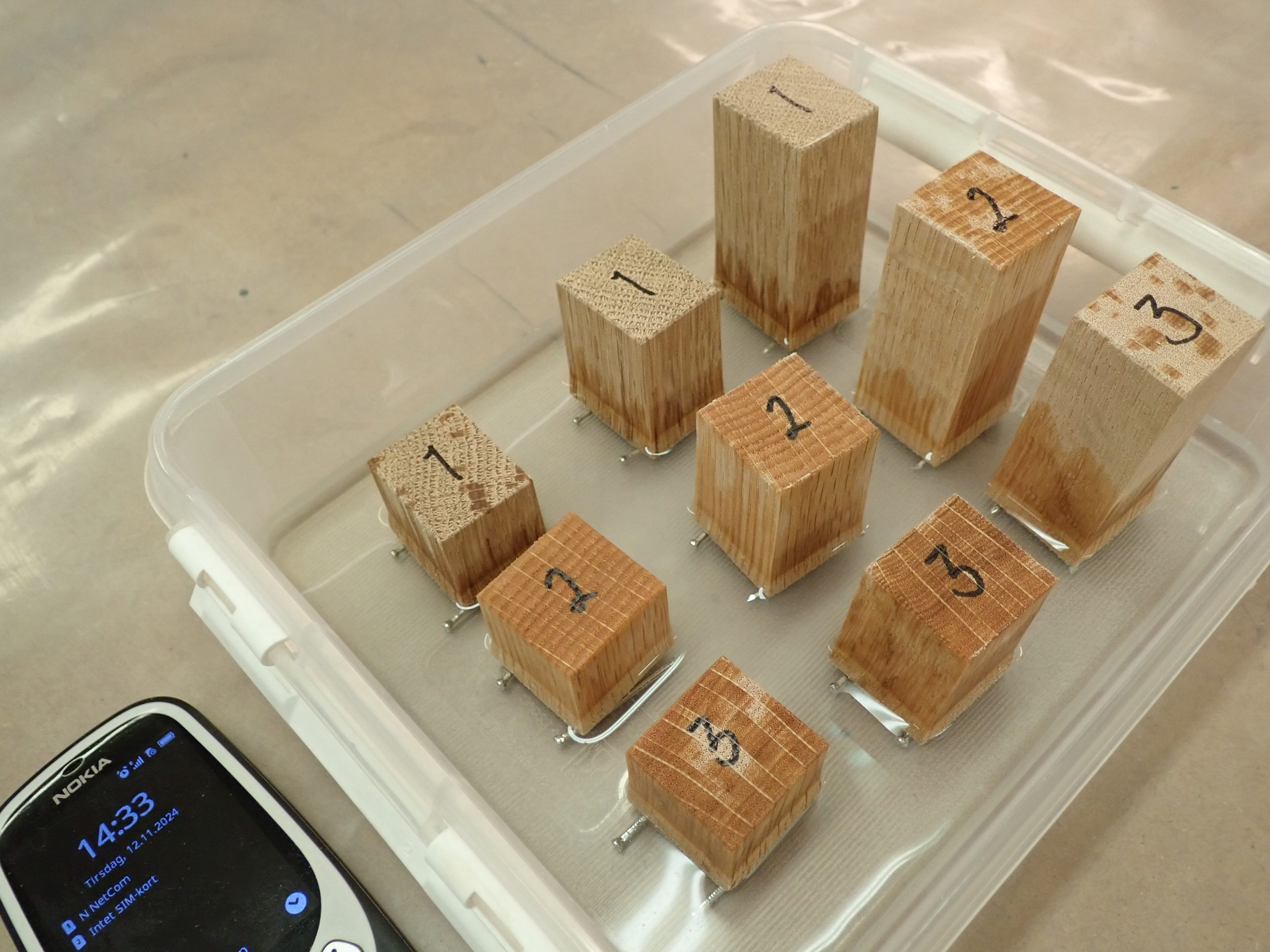
… so I devised a little demonstration. I cut some blocks of oak and set them in a puddle of water (not arctic gin!) to see how readily they would absorb H2O.
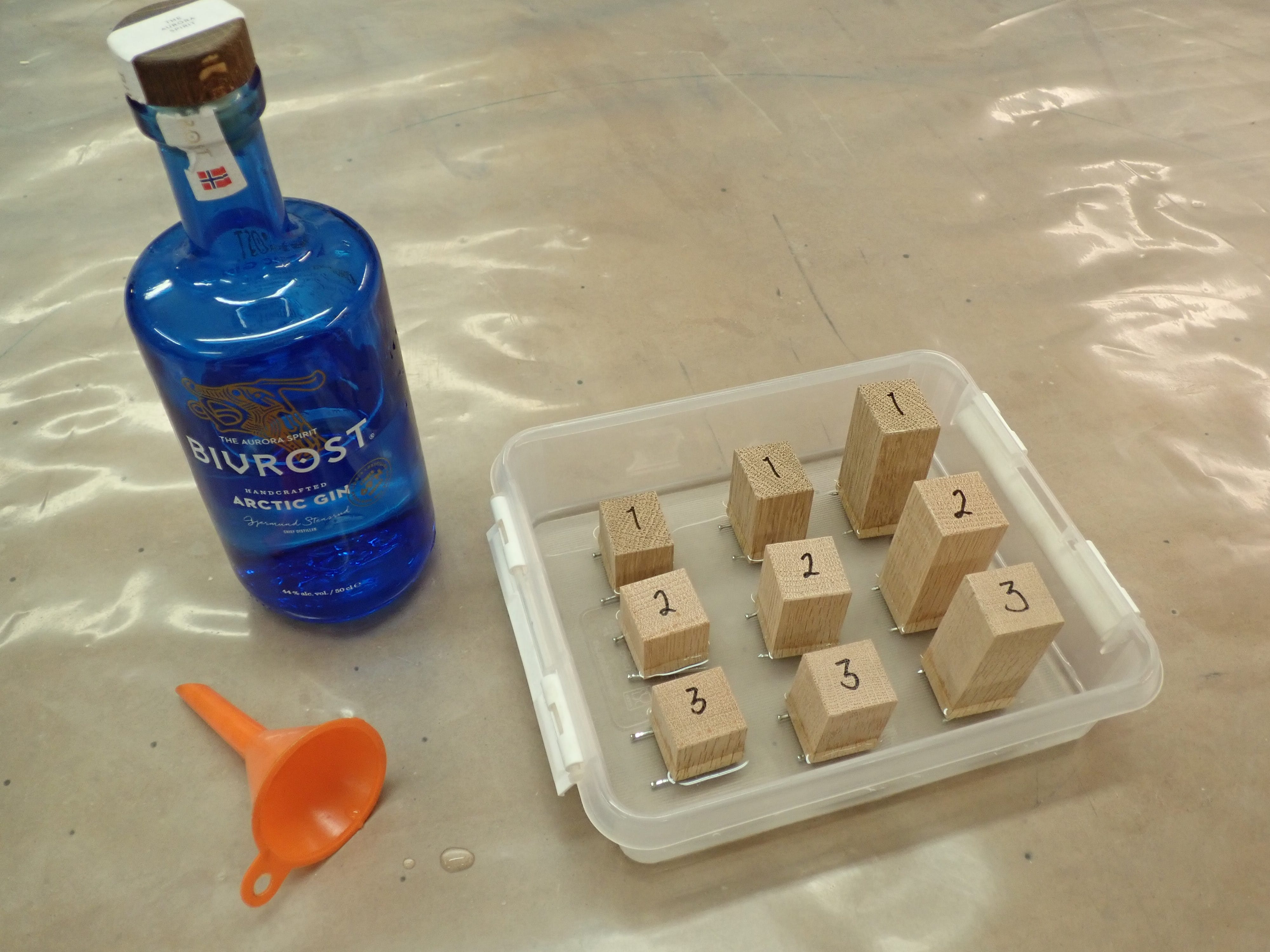
The ones marked ‘1’ are of certified white oak, while ‘2’ & ‘3’ are my suspected red oaks. It only took a couple of minutes for the water to wick its way up through the most compliant block (# 2).

I continued taking photos during the afternoon. I was surprised at how quickly the red oak absorbed water.

That certainly explains why it’s not rot resistant — must be a bastard to get dry!

The pattern should be fairly obvious by now.
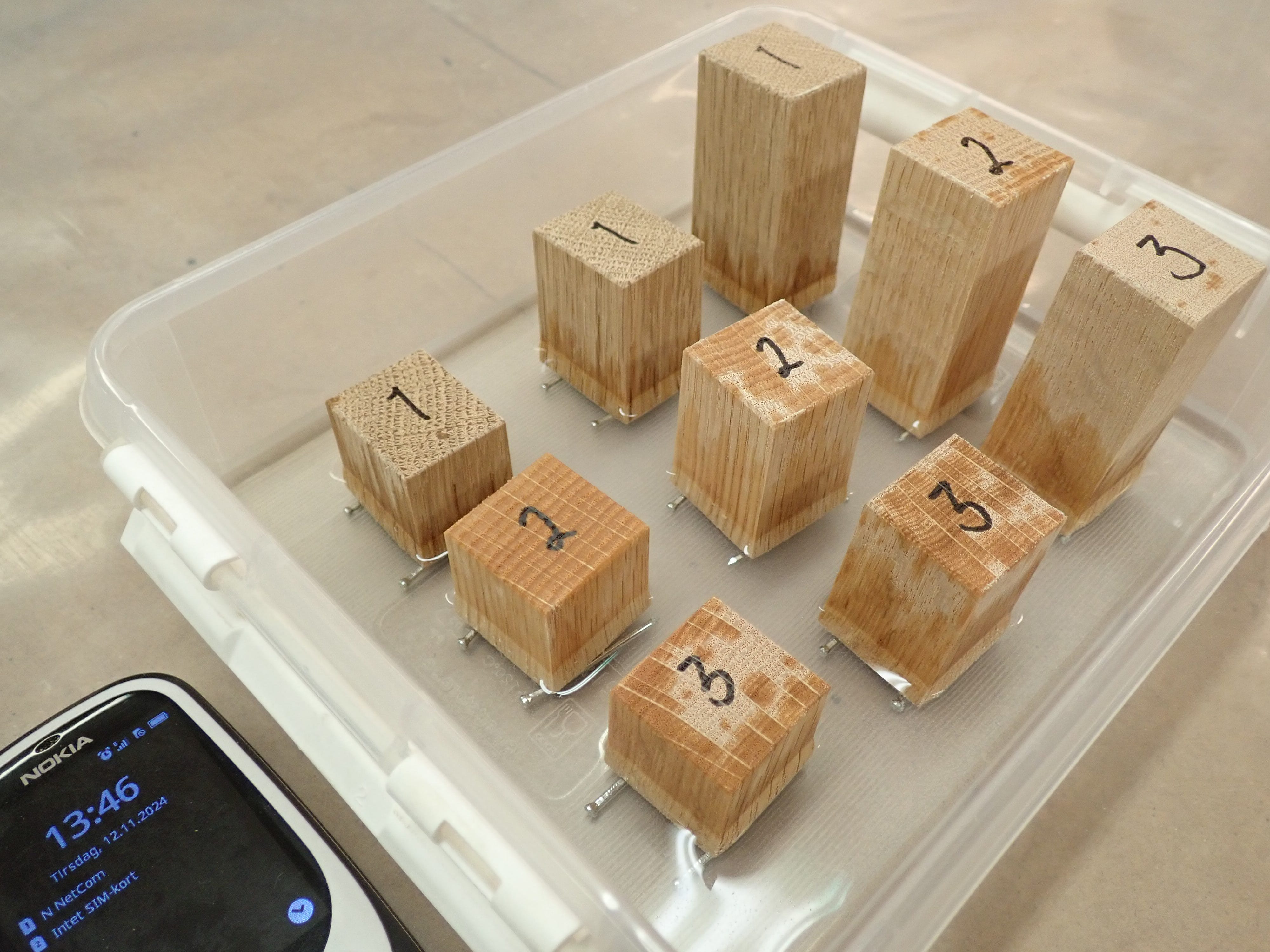
Red oak is like a sponge. Don’t use it outside or for boatwork!
Hope you found this useful.
***
But, did you convince your supplier and get your white oak?
It dries readily, just like a sponge 🧽does, most of the water falls right out, but it’s definitely not weather resistant, since it’s so easily influenced by the environment as you note. It’s basically a weed here and why oak has such a bad reputation. IMO It’s best burnt, seriously, yakisugi type finish yields a lovely grain texture, but otherwise not my favorite despite its abundance here.