
Making a planing tray
for tapering octo-sticks

[ soundtrack : Madeleine Peyroux - You’re Gonna Make Me Lonesome When You Go ]
****
This post is too long for email — open in browser for full length.
****
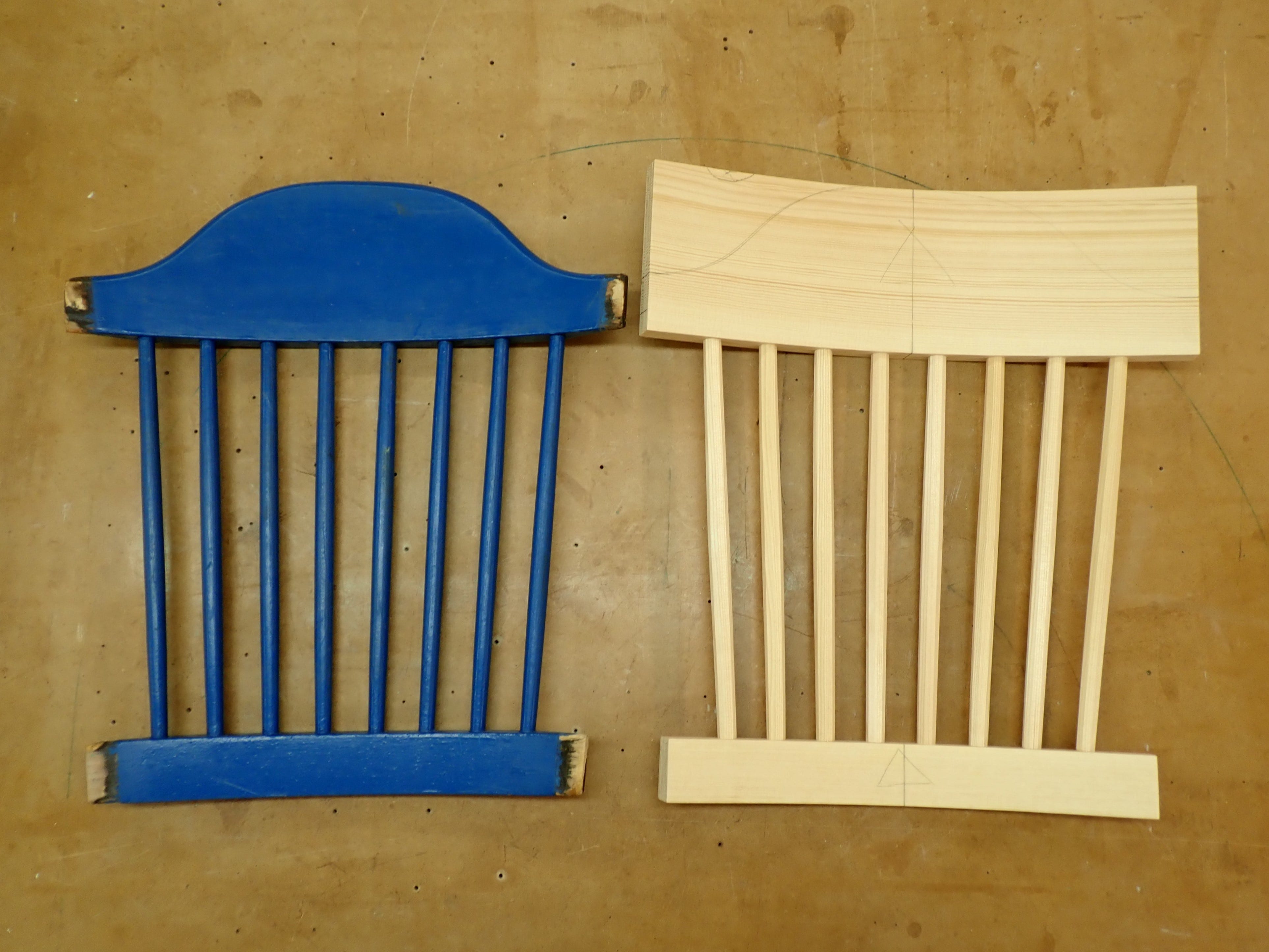
I’m still working on the backrest for my after-hours chair; I’ve laminated the back-bows, now I need to make the thin, round sticks that connect them.
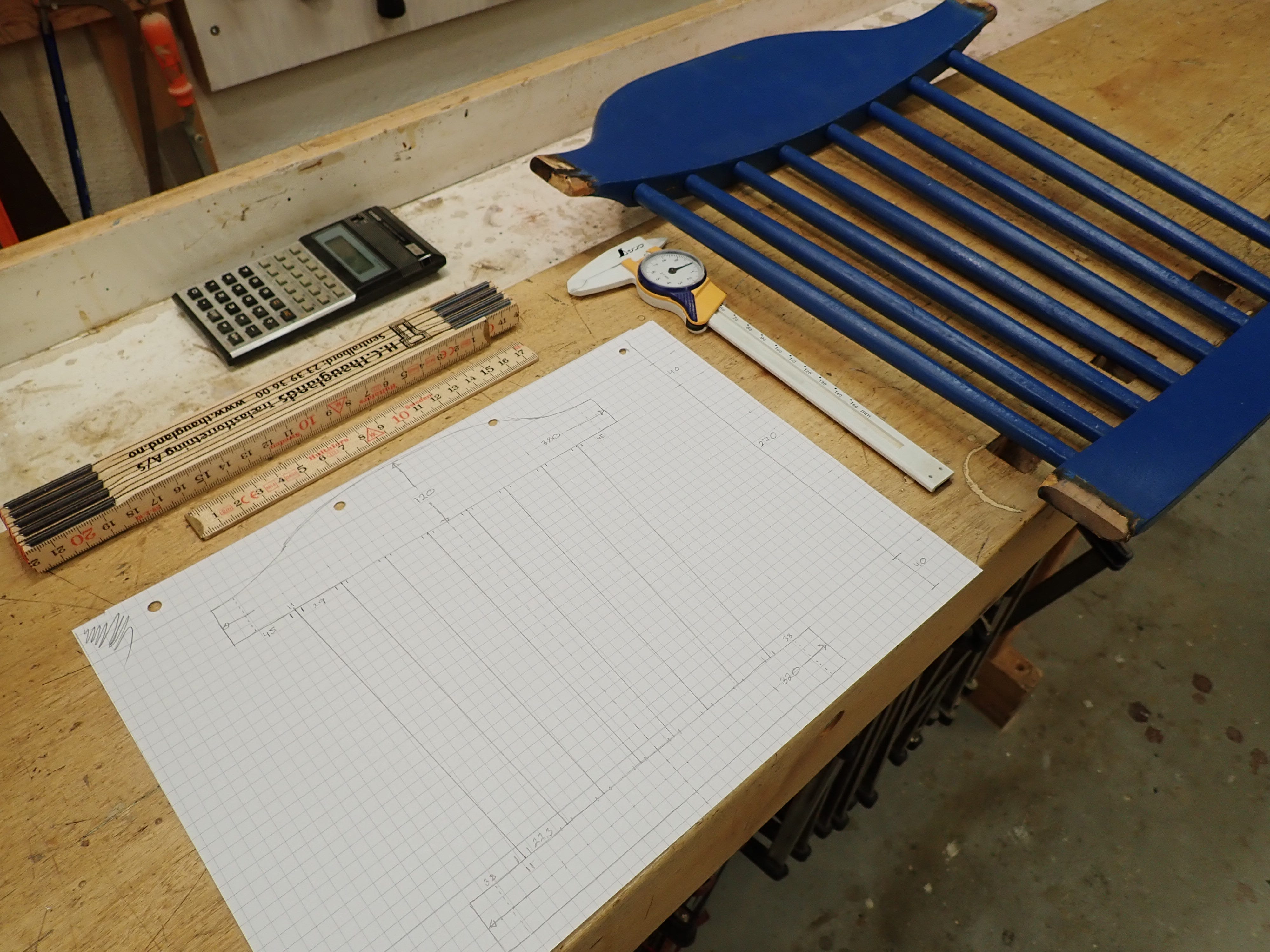
They are 300 mm long and have a slight entasis: they’re 14 mm thick in the middle, tapering to 11 mm where they enter the mortise. I’m making them slightly thicker than the original on account of using pine instead of hardwood.
I began with laying out the mortise centres …
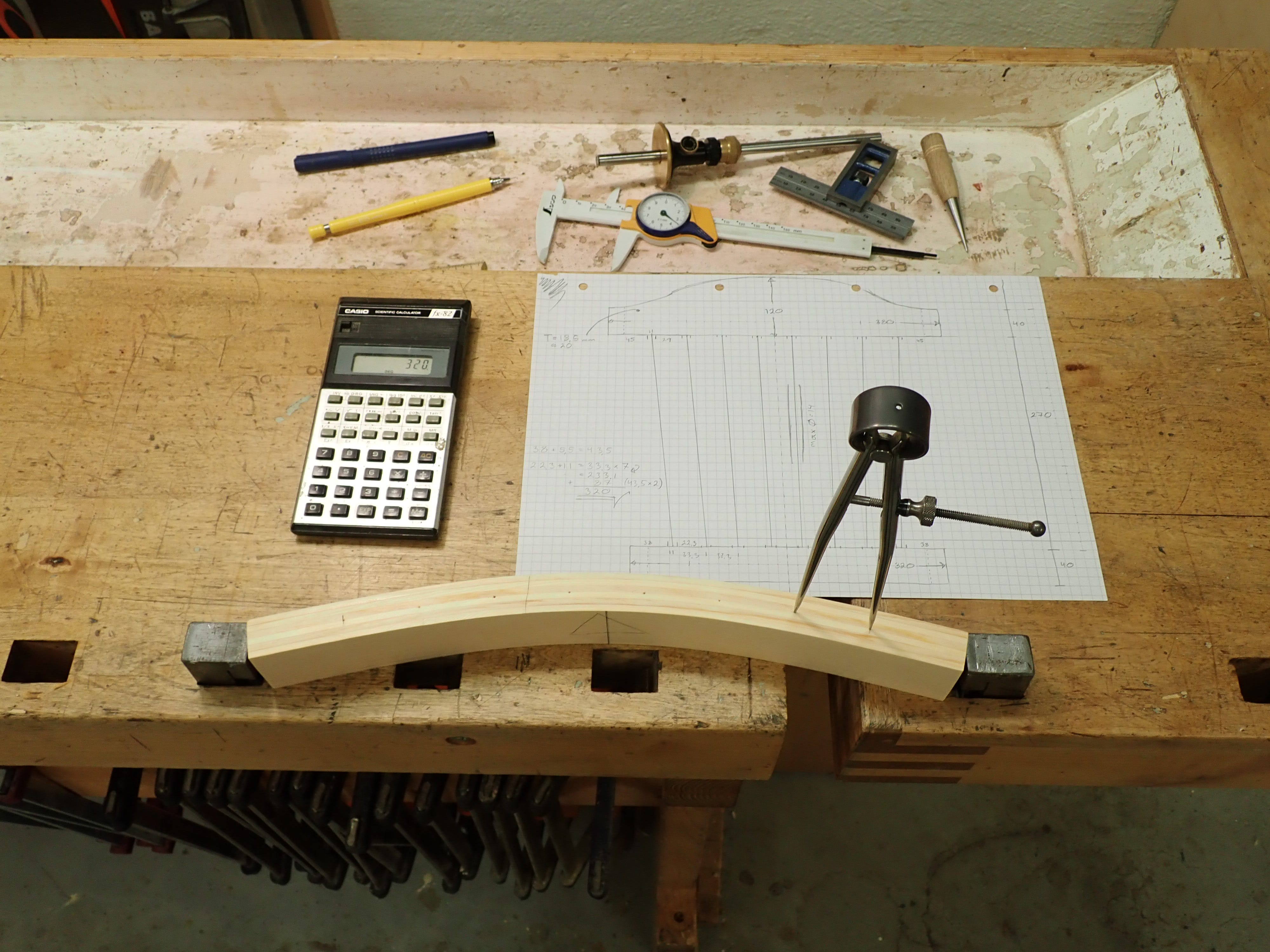
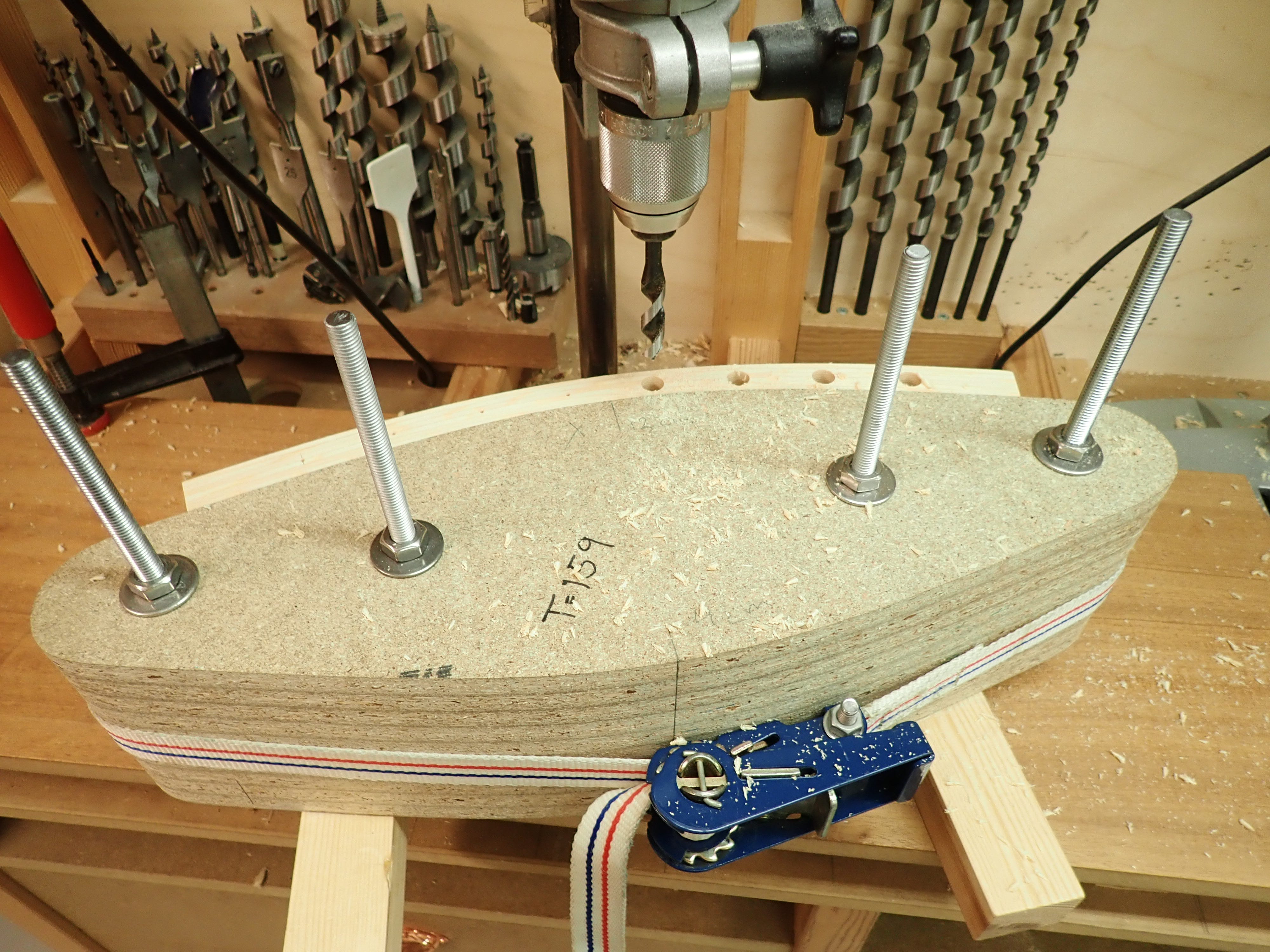
… before I used the laminating jig to hold the back-bows while drilling:
As for the thin, round sticks, my plan was to try out one of Veritas’ dowel & tenon cutters. I was able to work out that 7/16” = 11,1 mm so that would do nicely, at least for the ends of the sticks. I’d bought both the curved and the straight knife and given them a good hone-up before use.
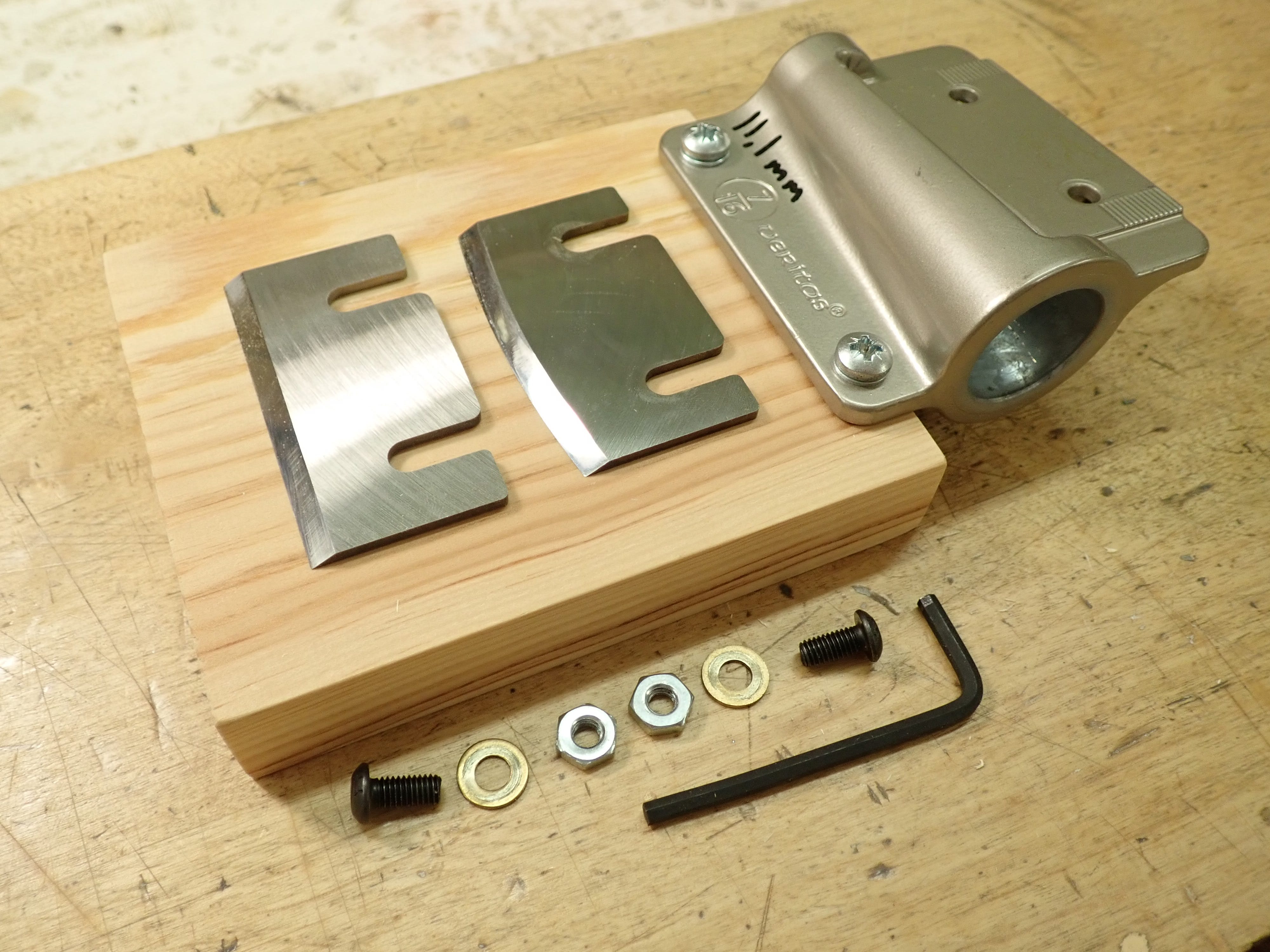
I began feeding it four-sided blanks, and while it did produce a round dowel on the other side, the surface quality was very poor.
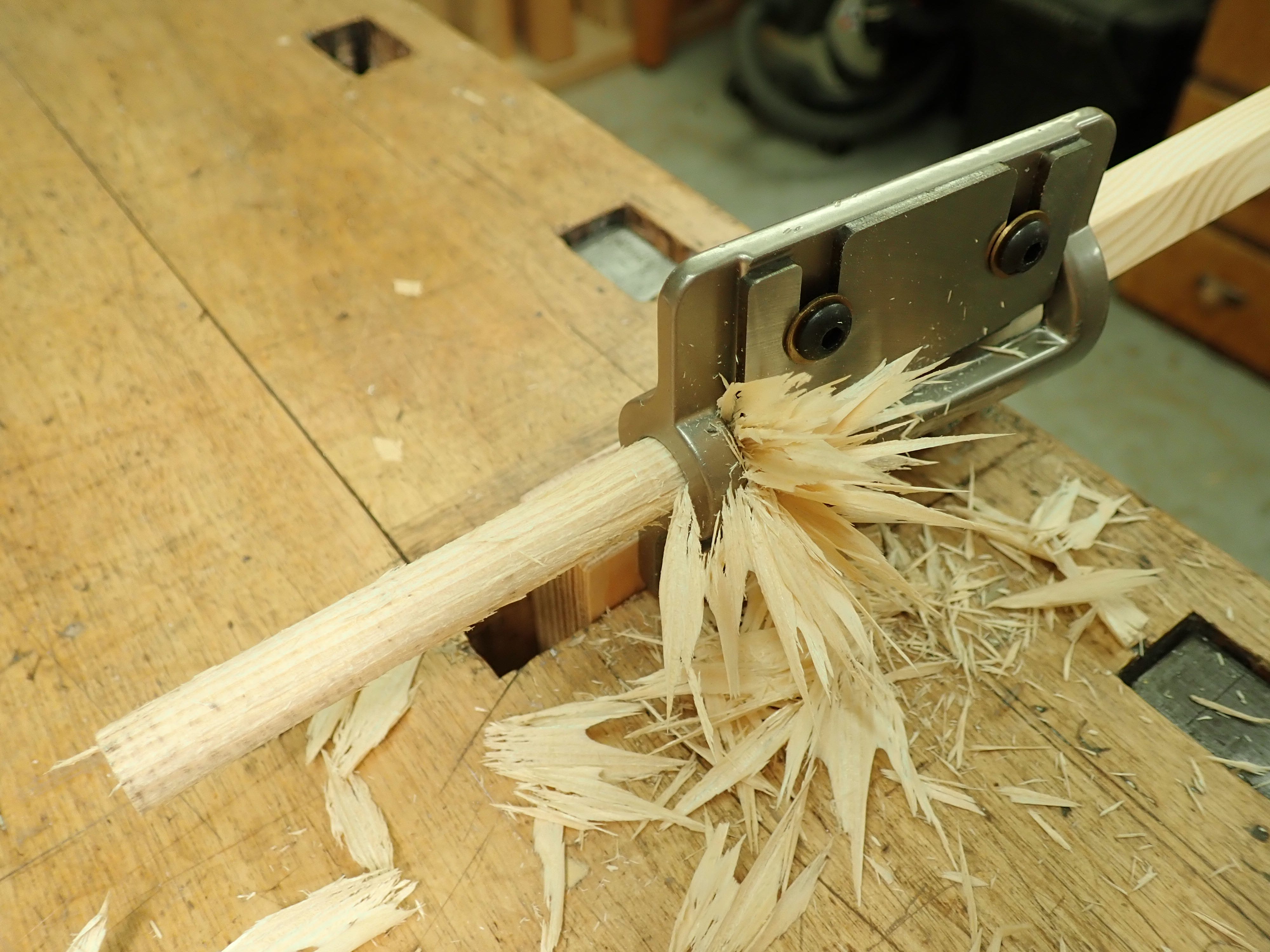
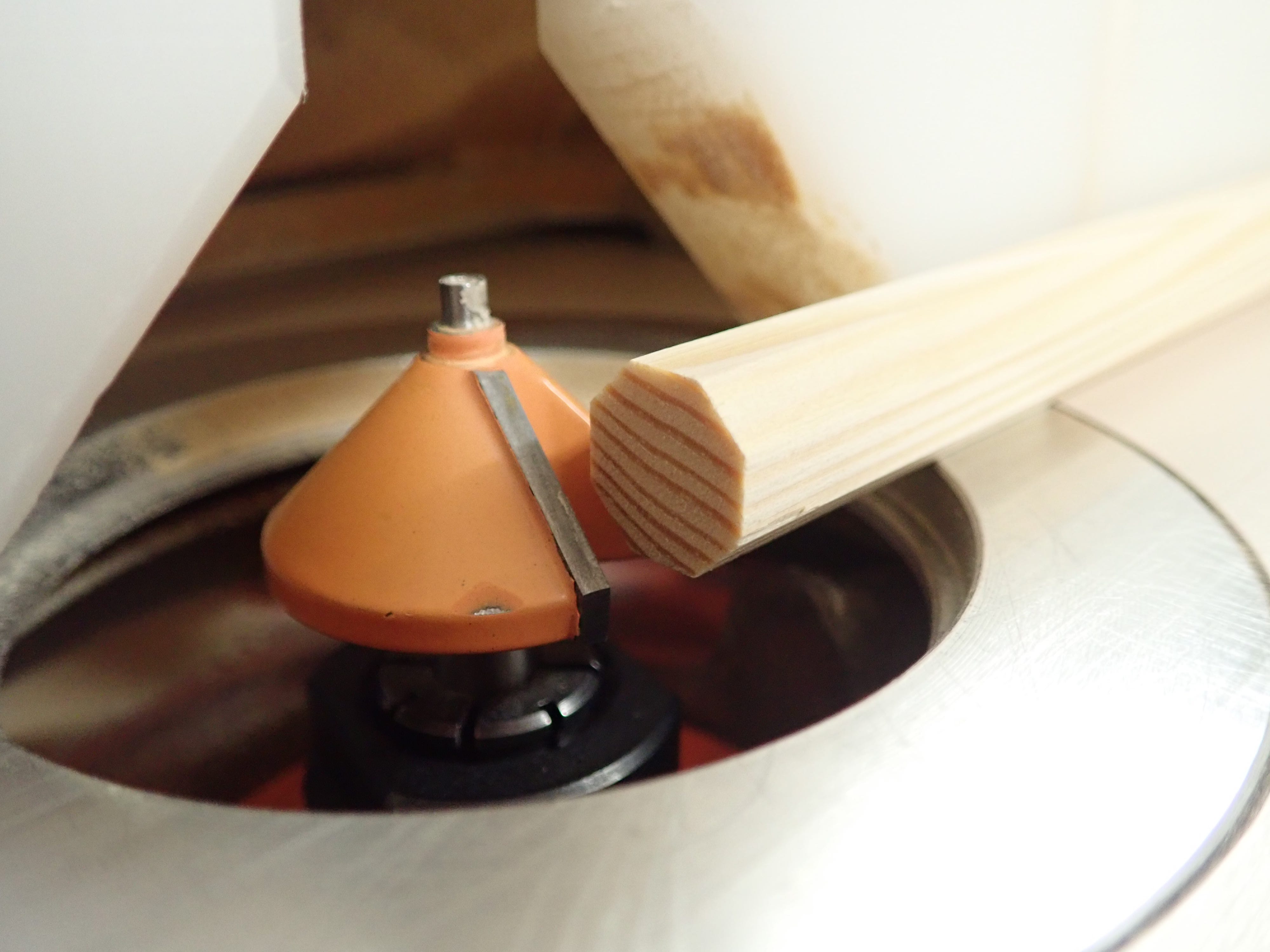
I tried adjusting the blade setting, I tried the straight-edged blade and switched to feeding it 8-sided sticks to see if that would ease the job along, but no… It did produce dowels of accurate diameter, but with a rough surface — good enough for hidden, structural dowels, but not for show.
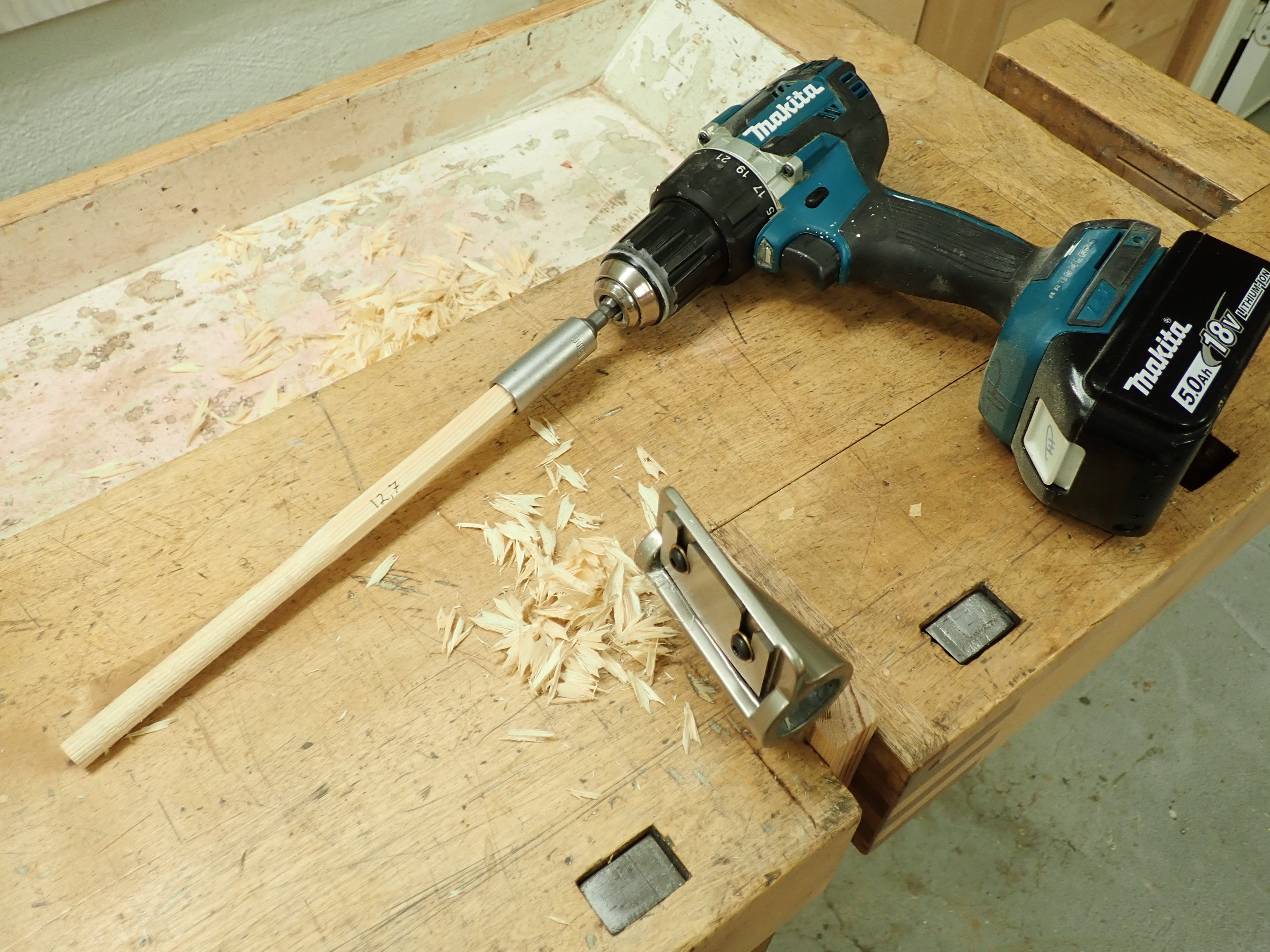
After faffing about with the dowel-cutter for a couple of hours, I reconciled myself to finding another solution to my sticky problem.
Back to the old devil you know …
Lots of octagonal back-sticks cut to equal, finished length.
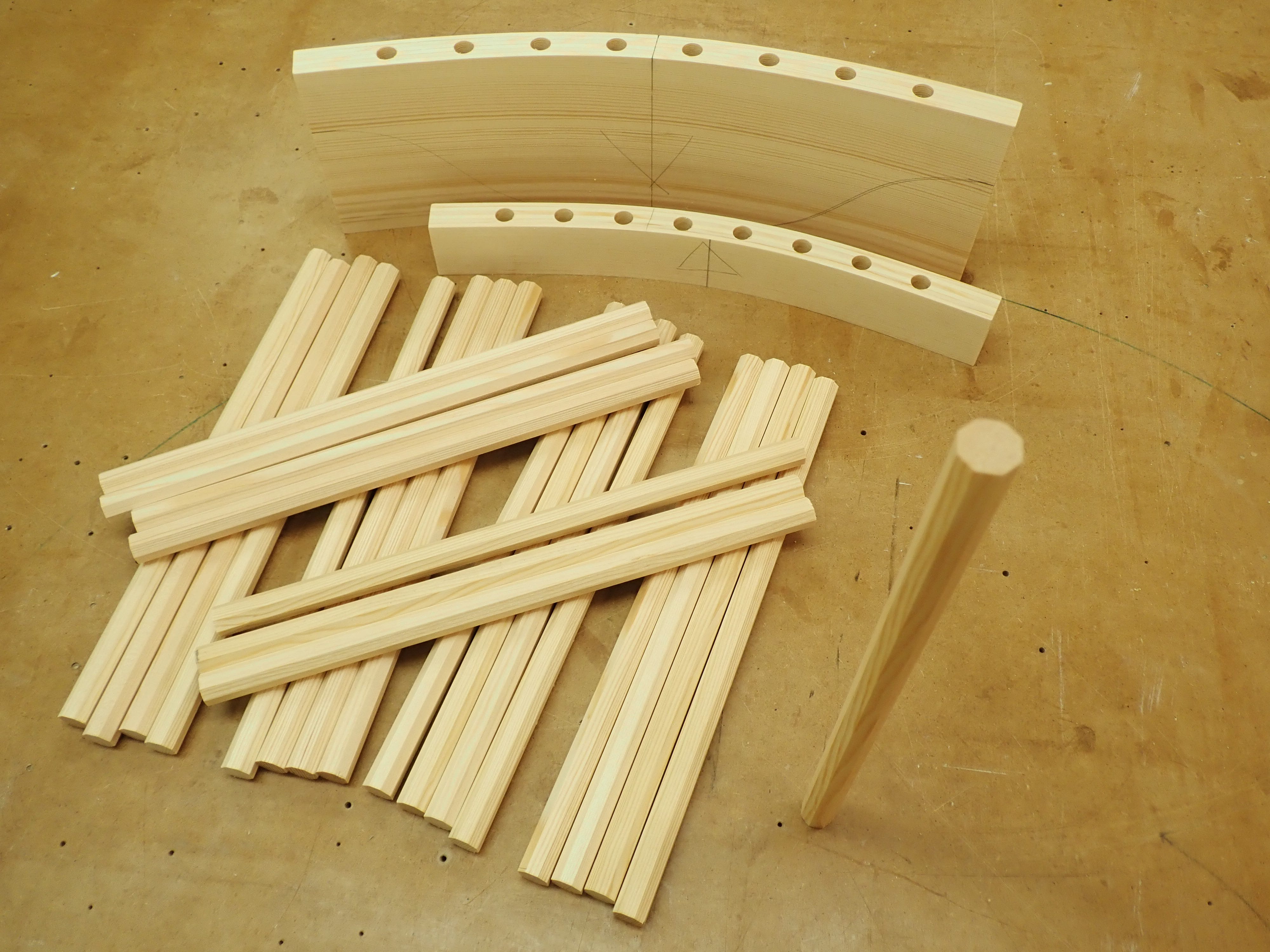
But how to taper them — and make them fit the round holes?
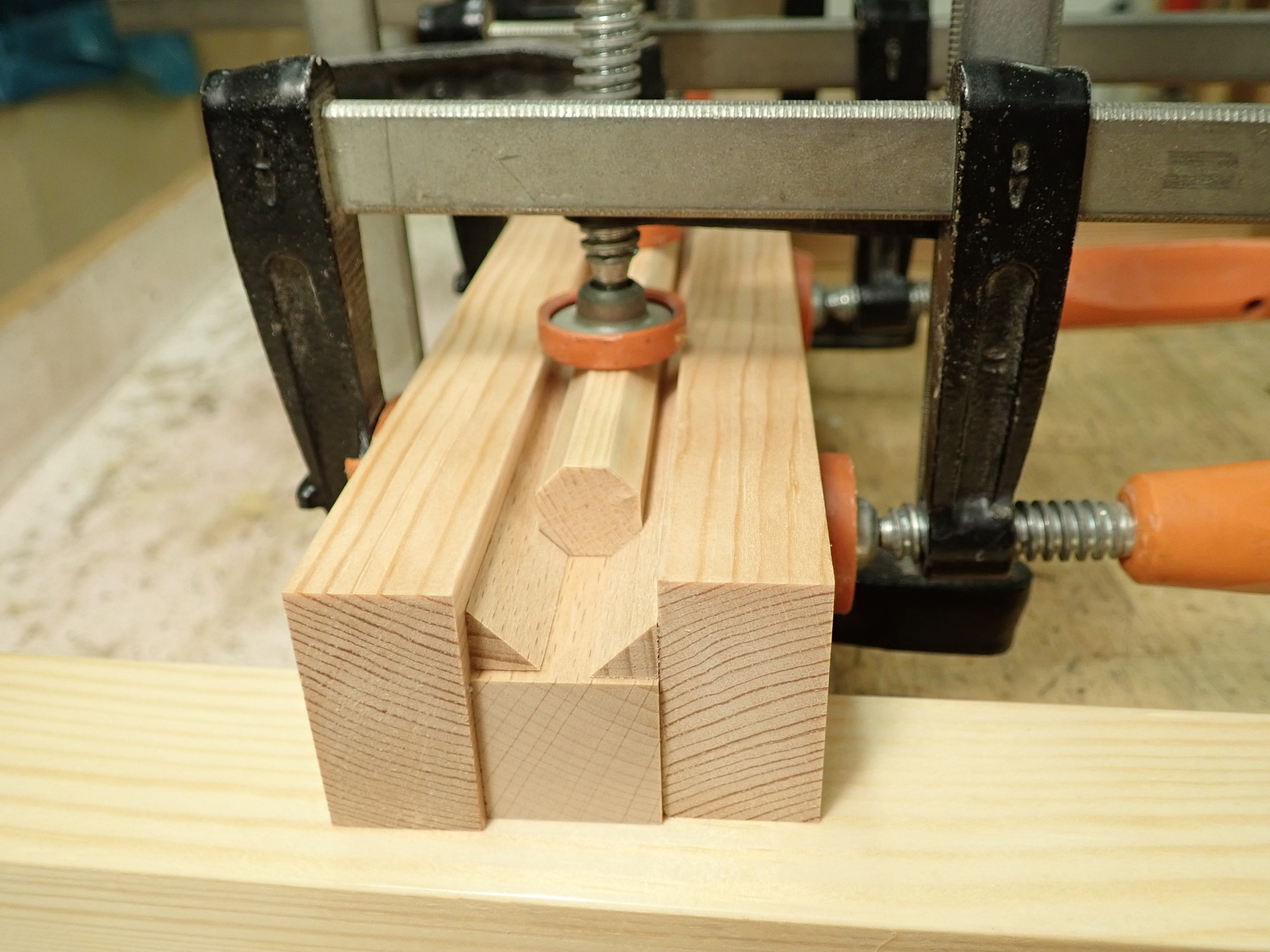
I resolved to make a planing tray — a simple workholding device to help me hold the octo-sticks in place while I handplaned a slight taper to them. I began by gluing two 45-degree strips down onto a square length. The octo-stick pushes them down (and outwards) while the clamping cauls on each side keeps them aligned sideways. I was careful to only use a thin smear of glue so as not to get the sticky stuff all over the place. There’s also packing tape on the clamping cauls.
Then I planed the sides equal and true.
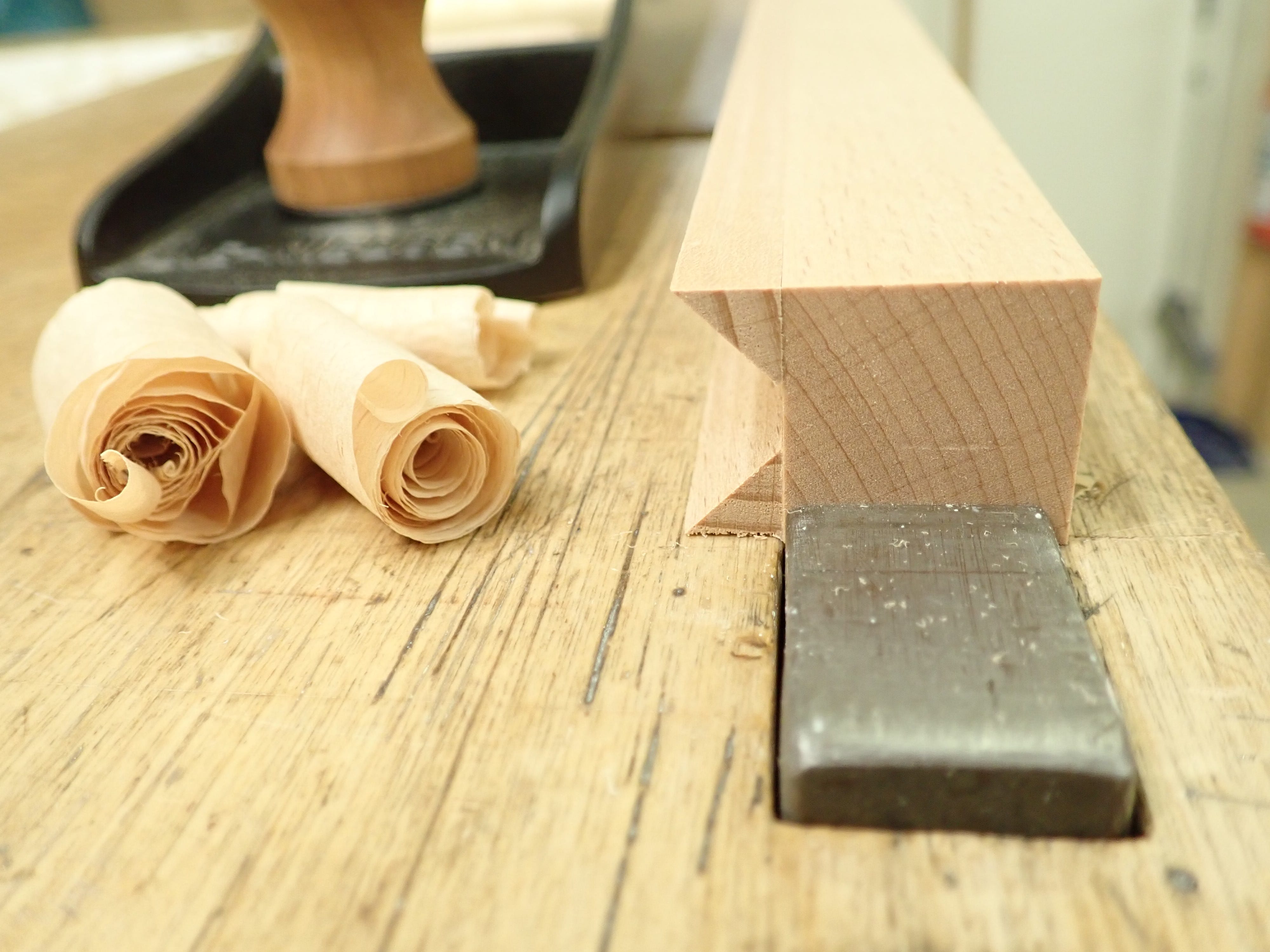
This ‘cradle’ is what supports the octo-stick, and is free-floating (but snug-fitting) between the side-pieces that guide the handplane and limits the planing depth.
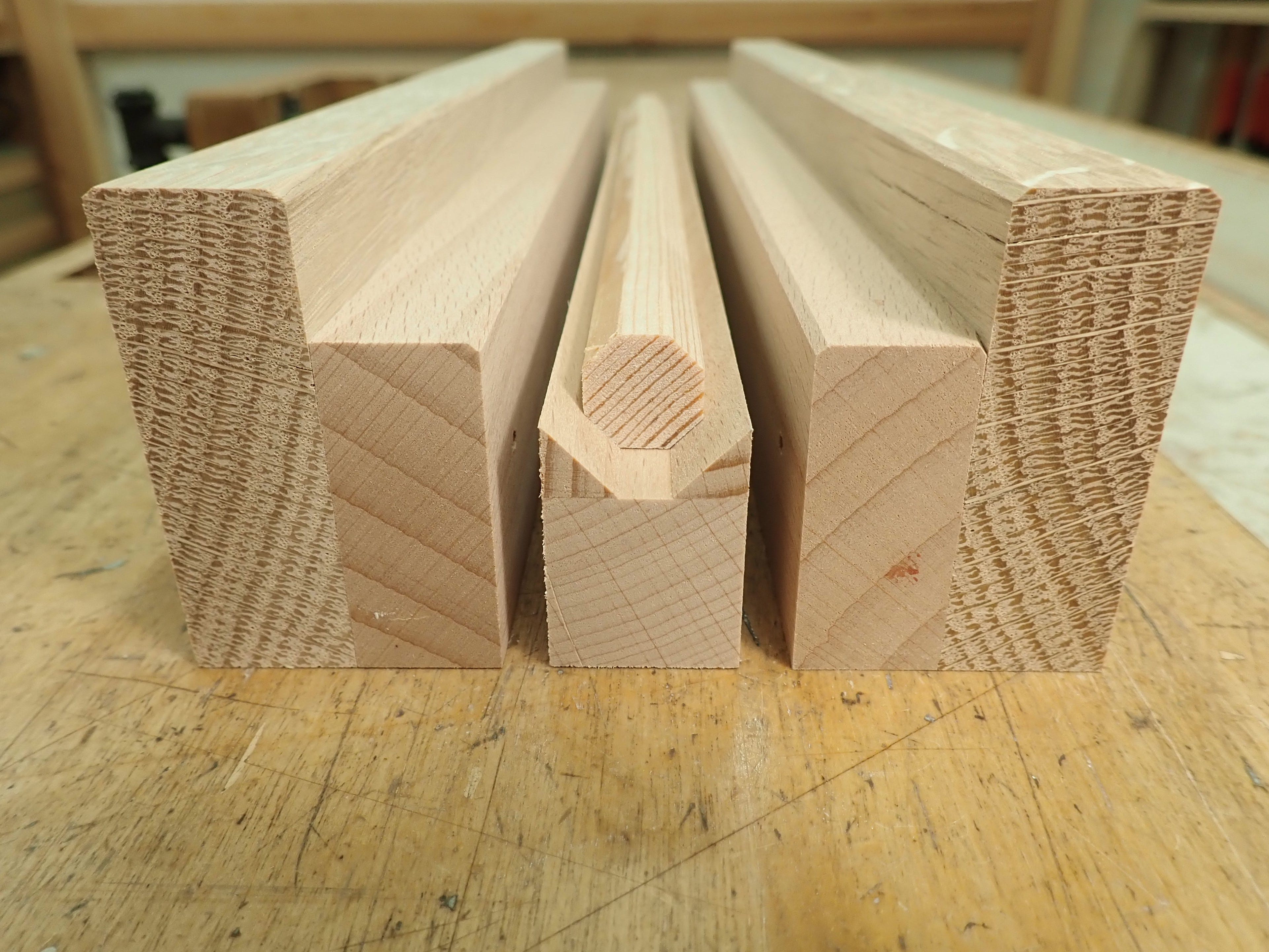
The parts are only screwed together; it’s quick and makes it easy to modify the contraption later if necessary.
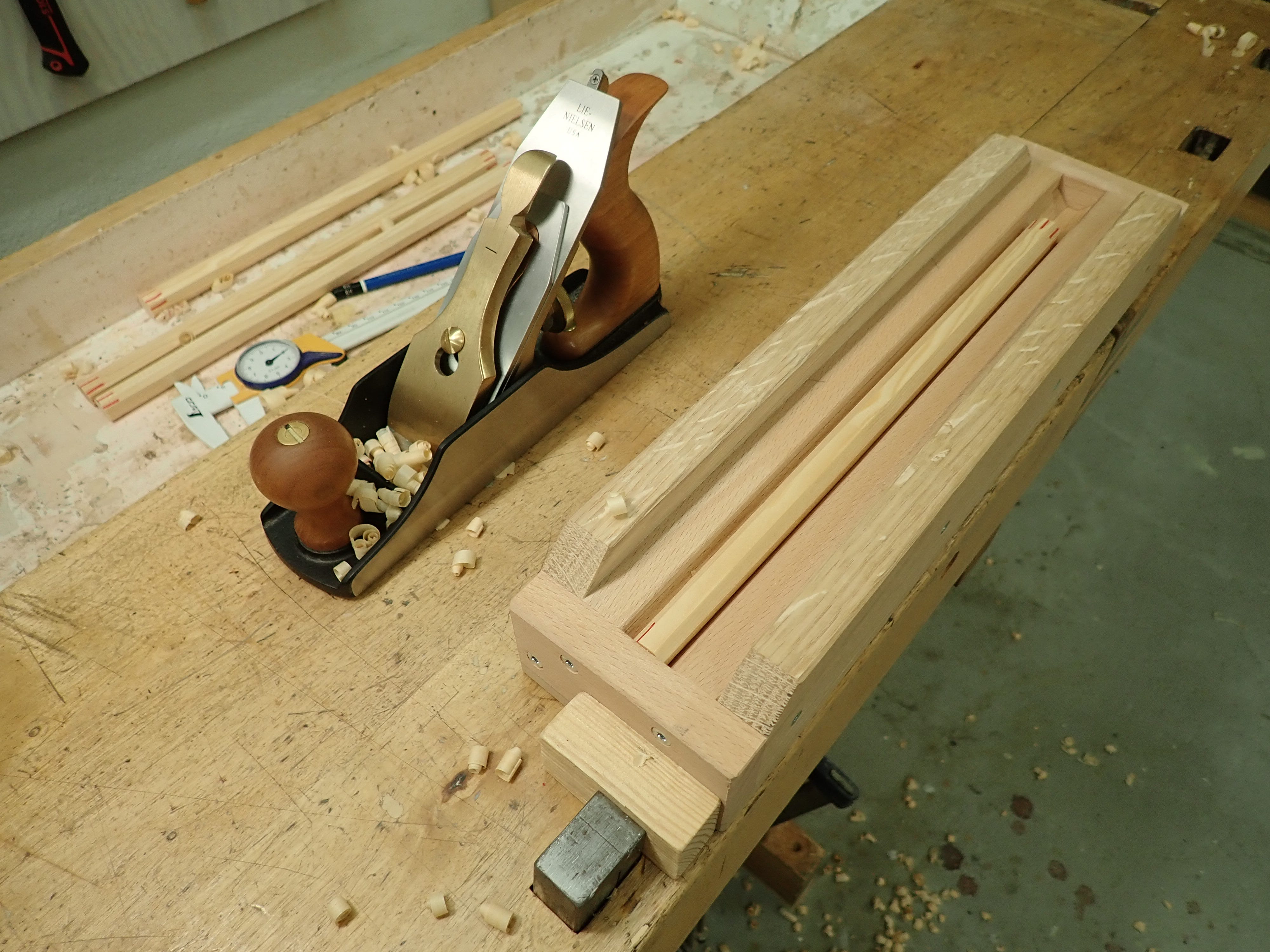
The cradle rests against the bottom of the planing tray, but in order to get the required angle for the taper, I prop it up with some carefully calculated small thicknesses that that I keep in place with a bit of masking tape.
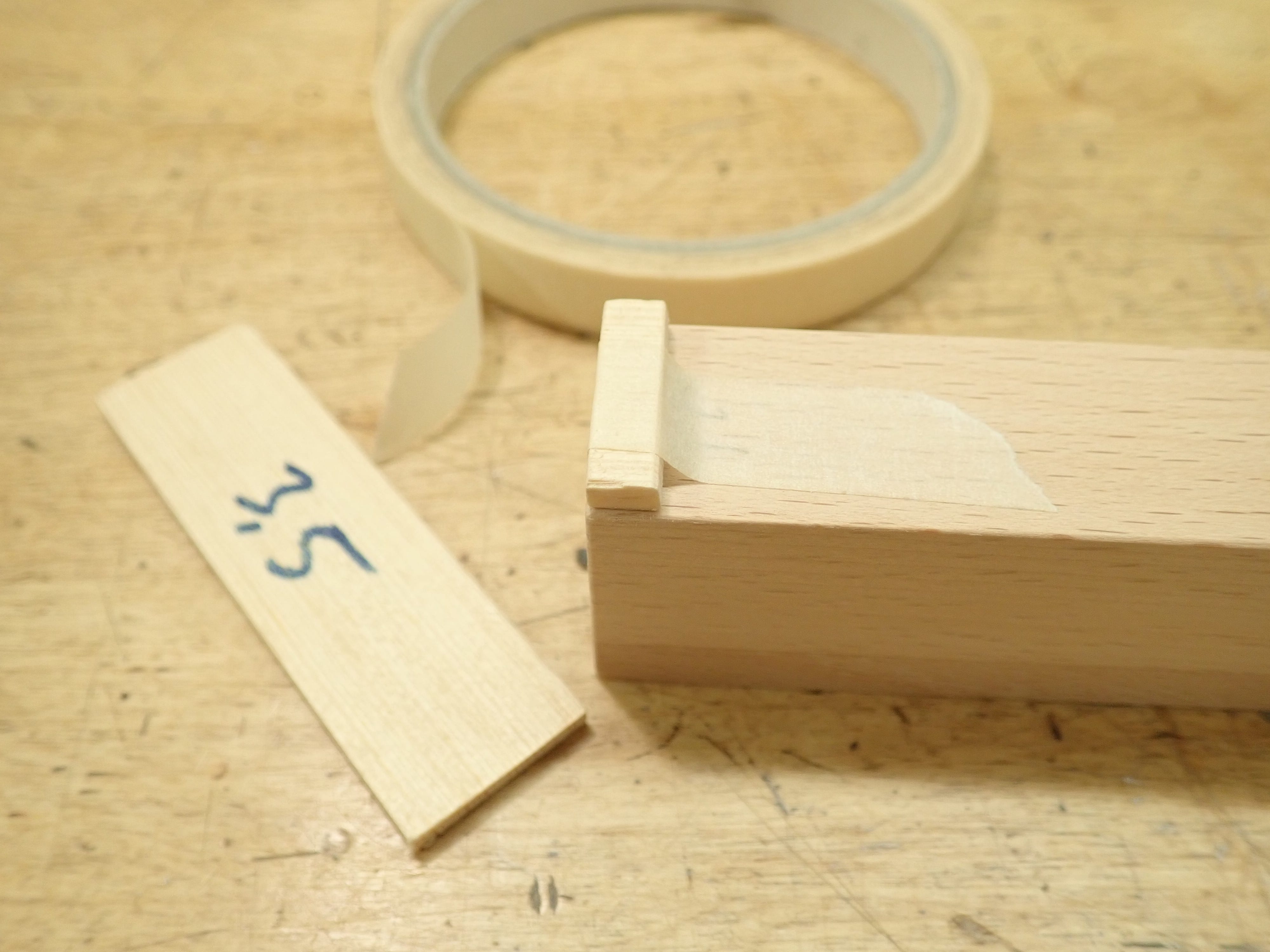
It’s a bit fiddly, but works well.
You can plane the first four facets using this initial set-up, but as you continue to work your way around the octagon, the remaining facets will be resting on a side you’ve already planed, so you’ll need to prop up the cradle with an amount equal to what you’ve planed off before you do the last four sides.
Another thin sliver stuck in place solves that problem :-)
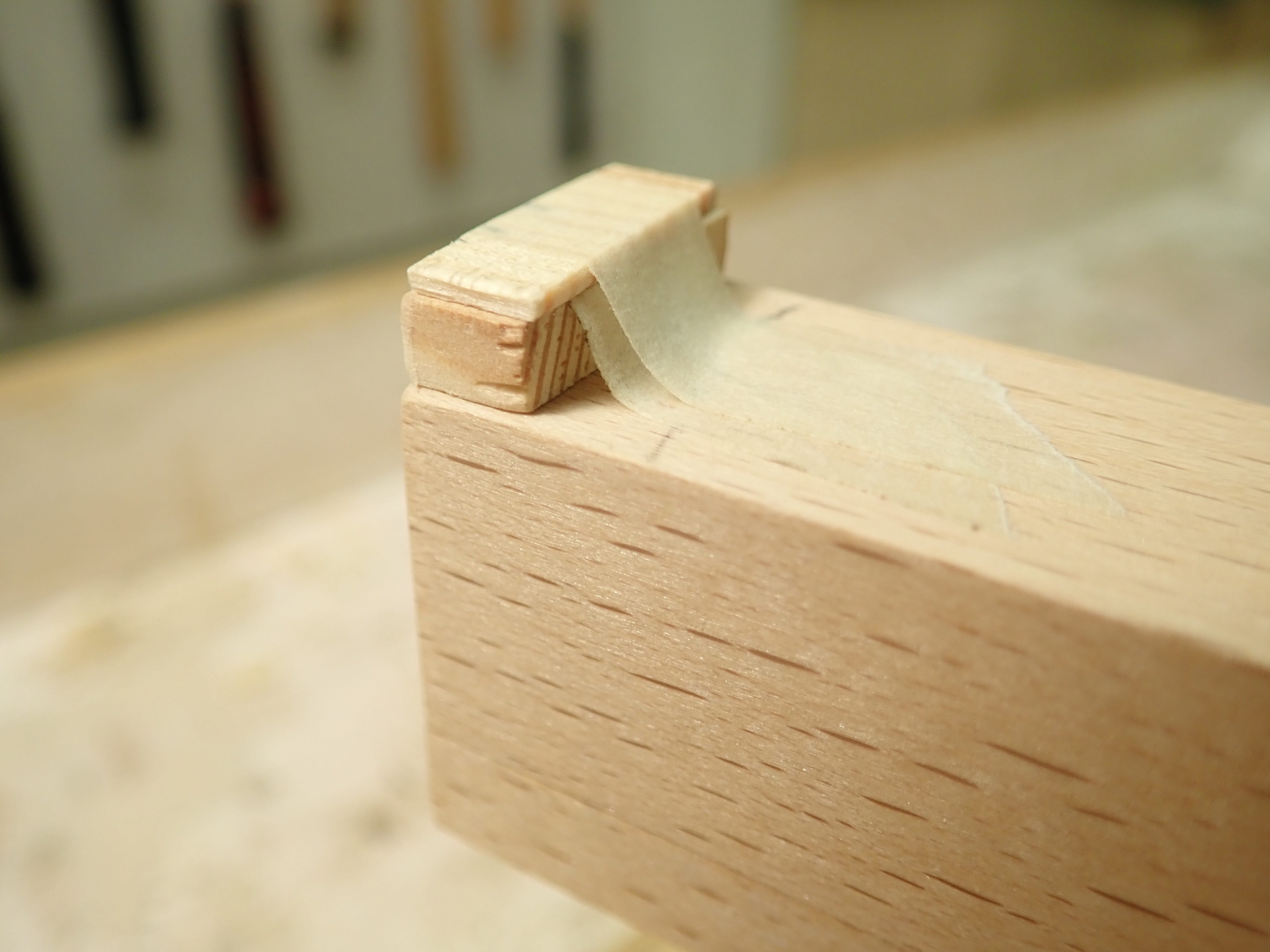
This produces sticks with an equal taper ...
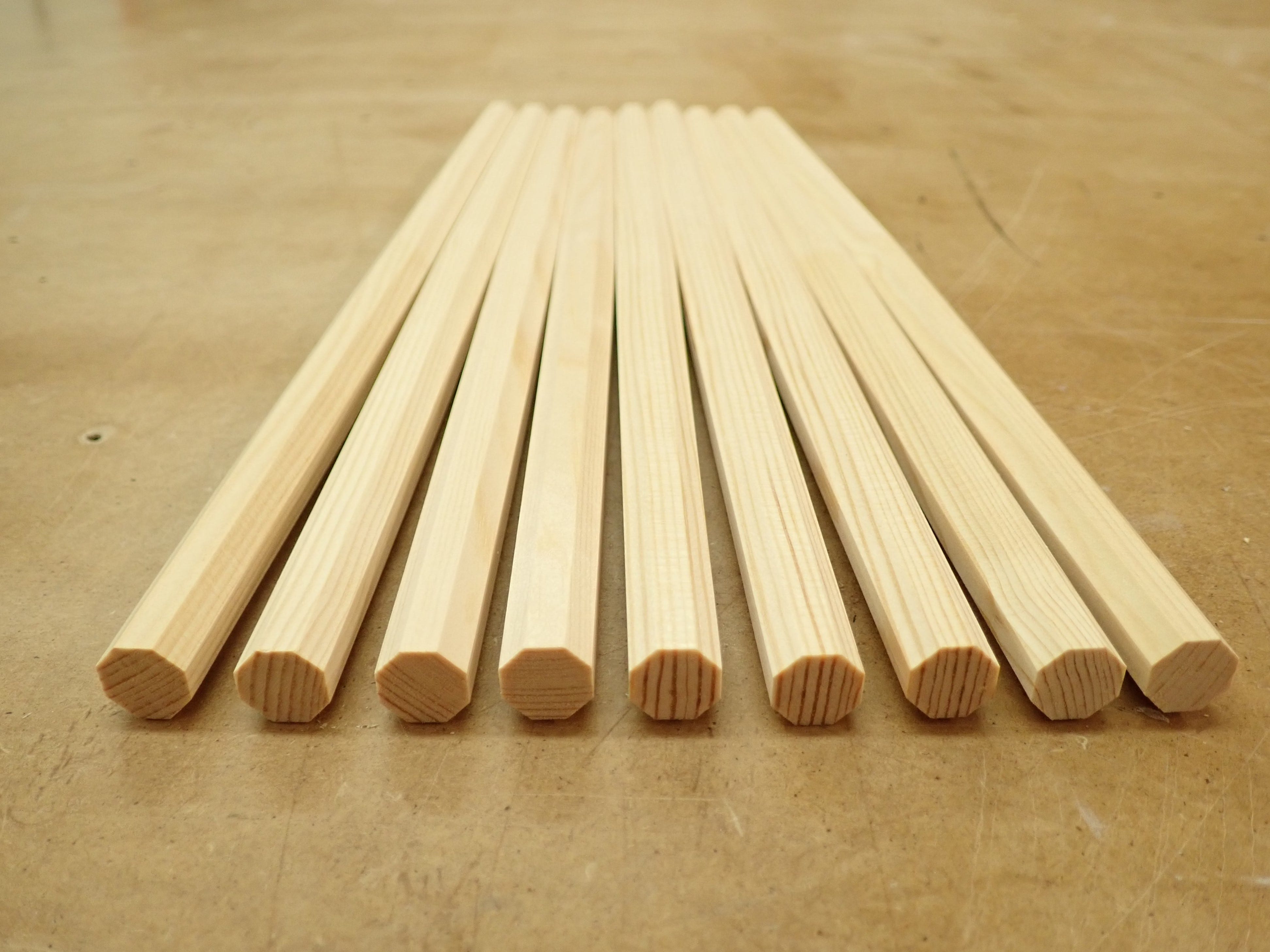
… but they’re still octagonal in cross section, so I need to whittle them down to a roundish section. I used a small marking gauge to cut a shallow shoulder on the tenon and a whittling knife to remove the octagon’s arrises / edges.
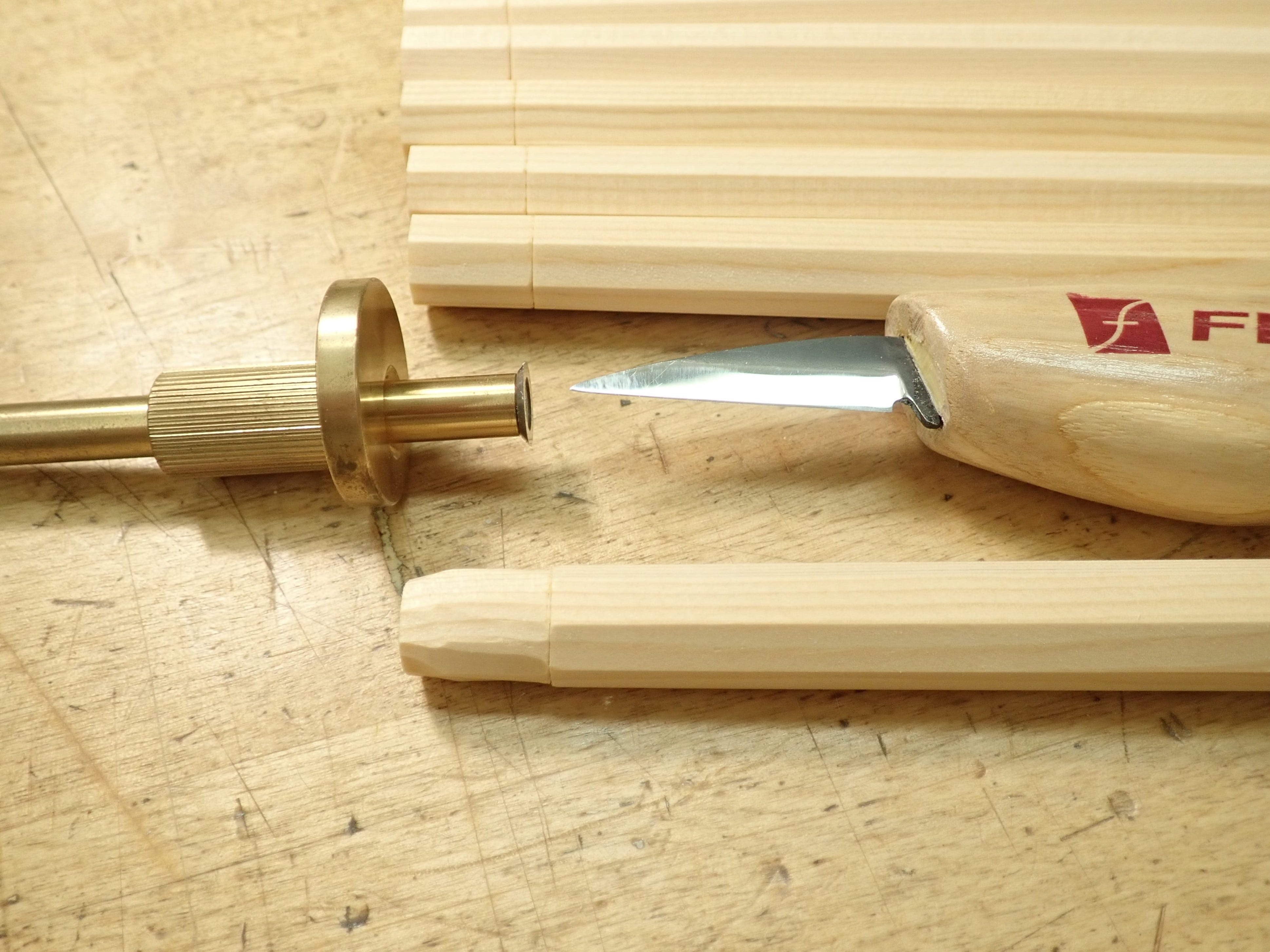
I also blunted the tiny tenons and gave them a slight taper so they could tilt a bit sideways in their mortises — they fan out from the lower back-bow and up.
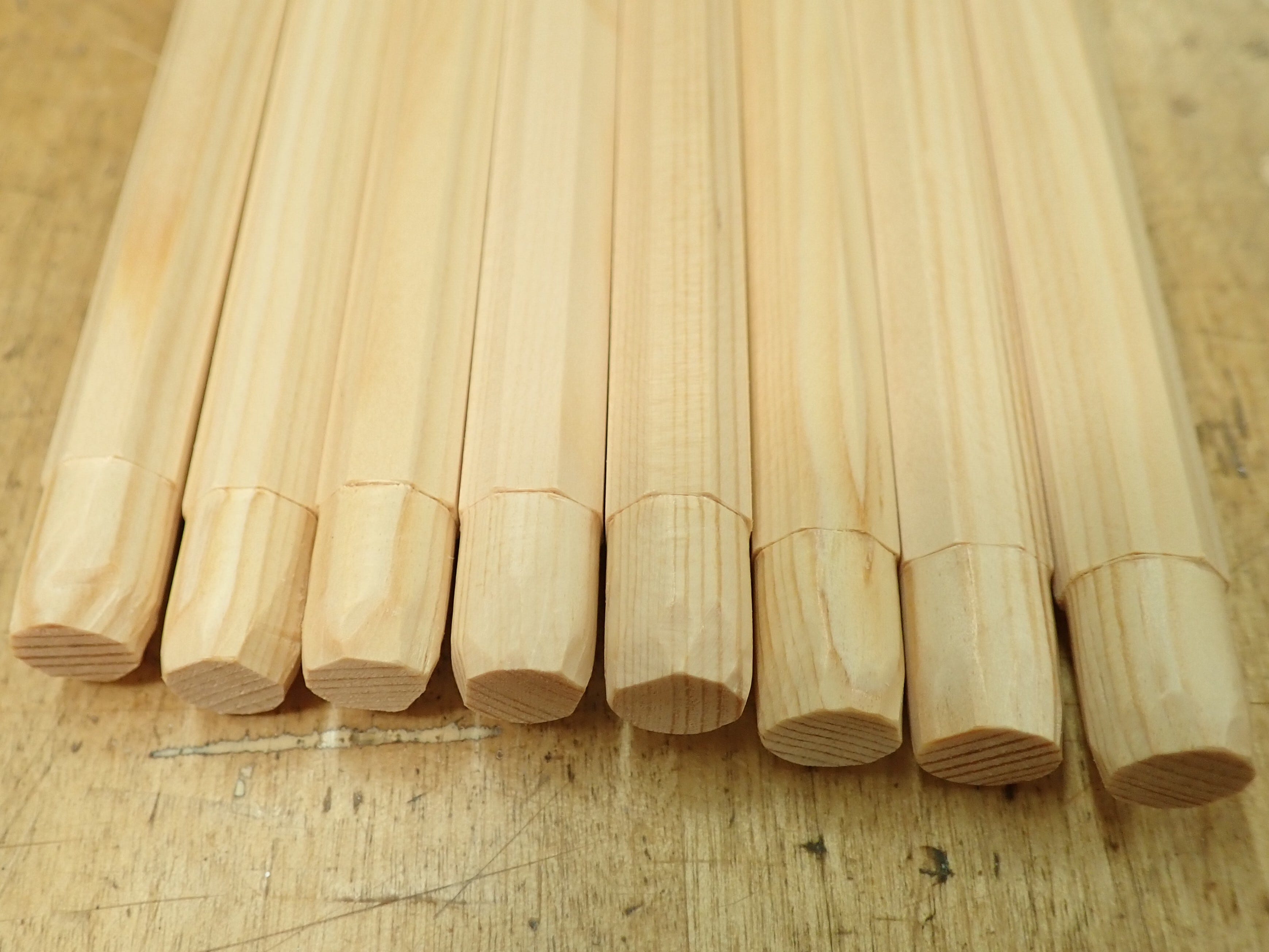
This is a case where the softness of pine lets you get away with a less-than-perfect fit; The tenon is slightly compressible and becomes rounder as you twist it around in the tight mortise, which also has some ‘give’.
This operation; tapering octo-sticks with a handplane in a planing tray, is in principle the same operation I did when I tapered the legs for my kitchen stools using a jig on my table saw — same task, just different sizes and tools.
Woodworking is often like this — variations on a familiar old theme.
****
Splendid job
I imagine the poor finish from the doweling may be due to the soft wood…I can’t get a smooth-enough finish on pine even using a lathe. Anyway, I’d give the tool another chance on harder wood. Just guessing from a guy who is far less accomplished.