
Making a form
for bent laminations

[ soundtrack : Jussi Björling - Tonerna (1957) ]
****
This post is too long for email — open in browser for full length.
****
My after-hours chair project is just about creeping along, but I’ll admit it’s hard to find time and motivation when there’s so much life going on outside!
Previous post had me making the backstaves.
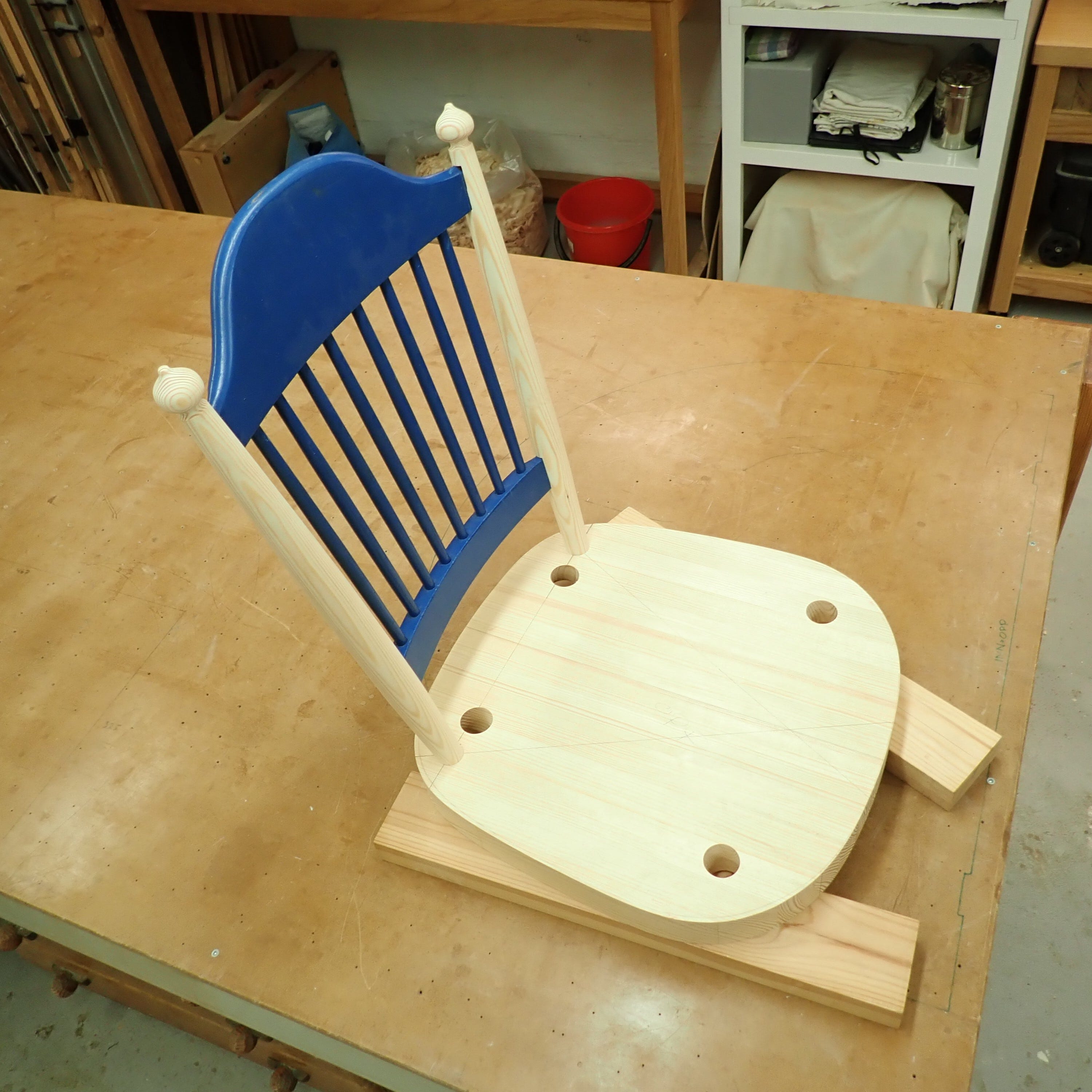
Now I need to decide how to go about making the actual backrest. It consists of two bent parts (let’s call them the back-bows) and a bunch of thin vertical sticks that connect them. A little measuring and a quick sketch …
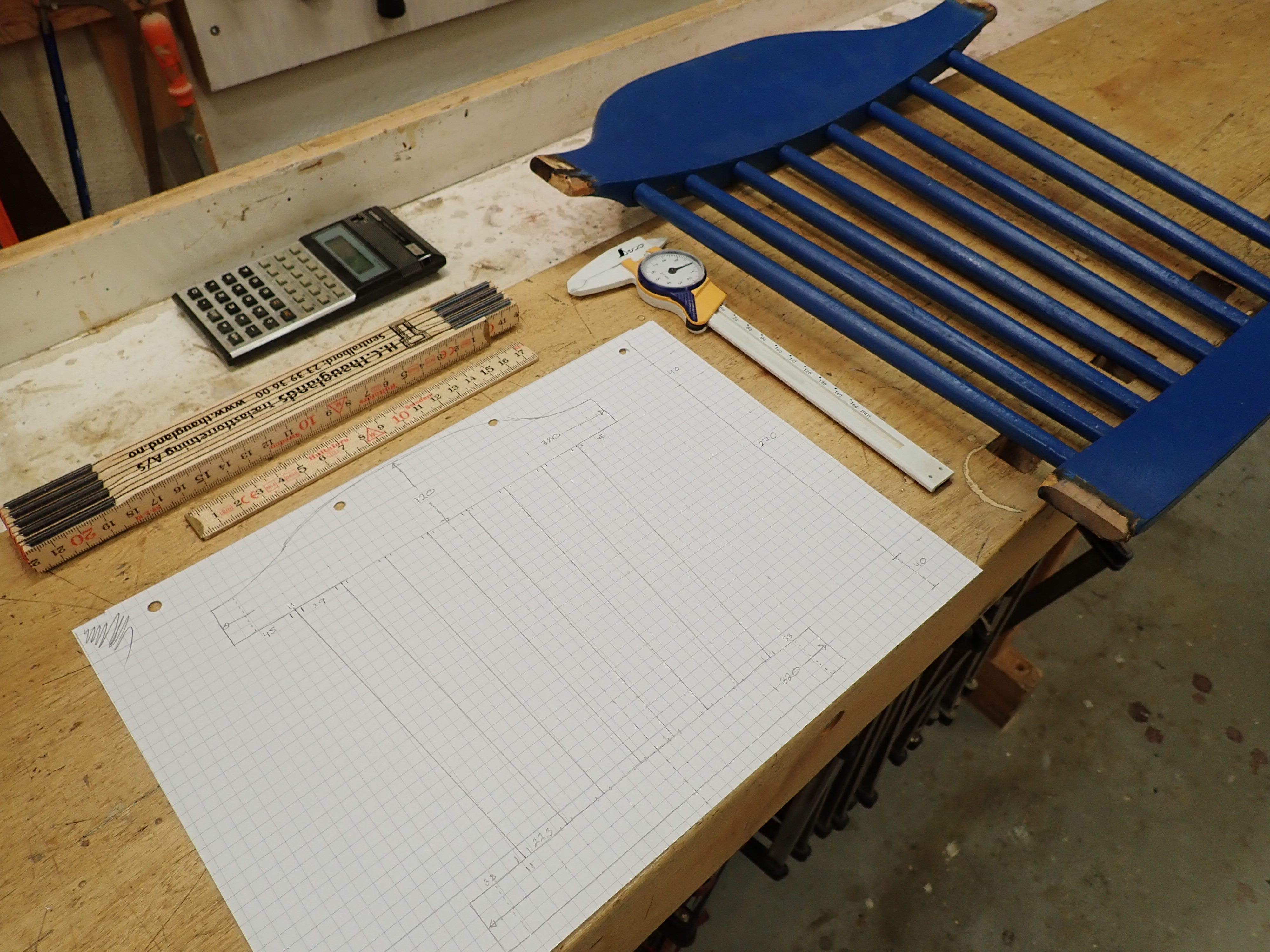
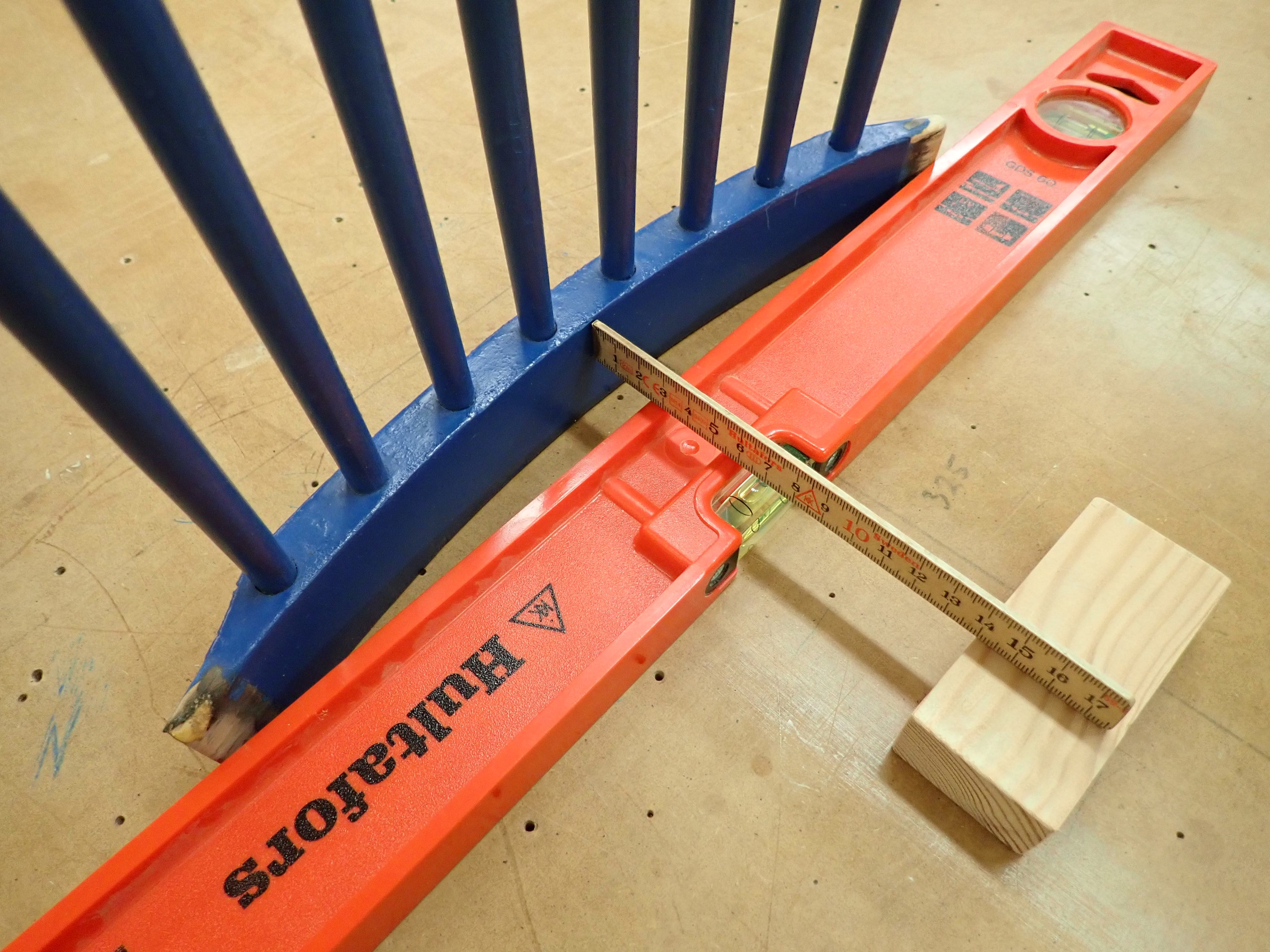
The back-bows are of equal thickness but have different length, different height and different curvatures.
I’ll make the back-bows first. I have two options: steam-bending solid-wood pieces or laminating thick veneers (‘thicknesses’). I’d love to get into steam-bending - one day! - but I don’t have a steam box yet, and since I’m only making one of each back-bow I reckon the easiest and cheapest way is to laminate them. I plan on painting the chair so that’ll hide the glue-lines on the edges.
I need a shape … a form … a mould — a block to bend my thin slices of wood over while the glue cures.
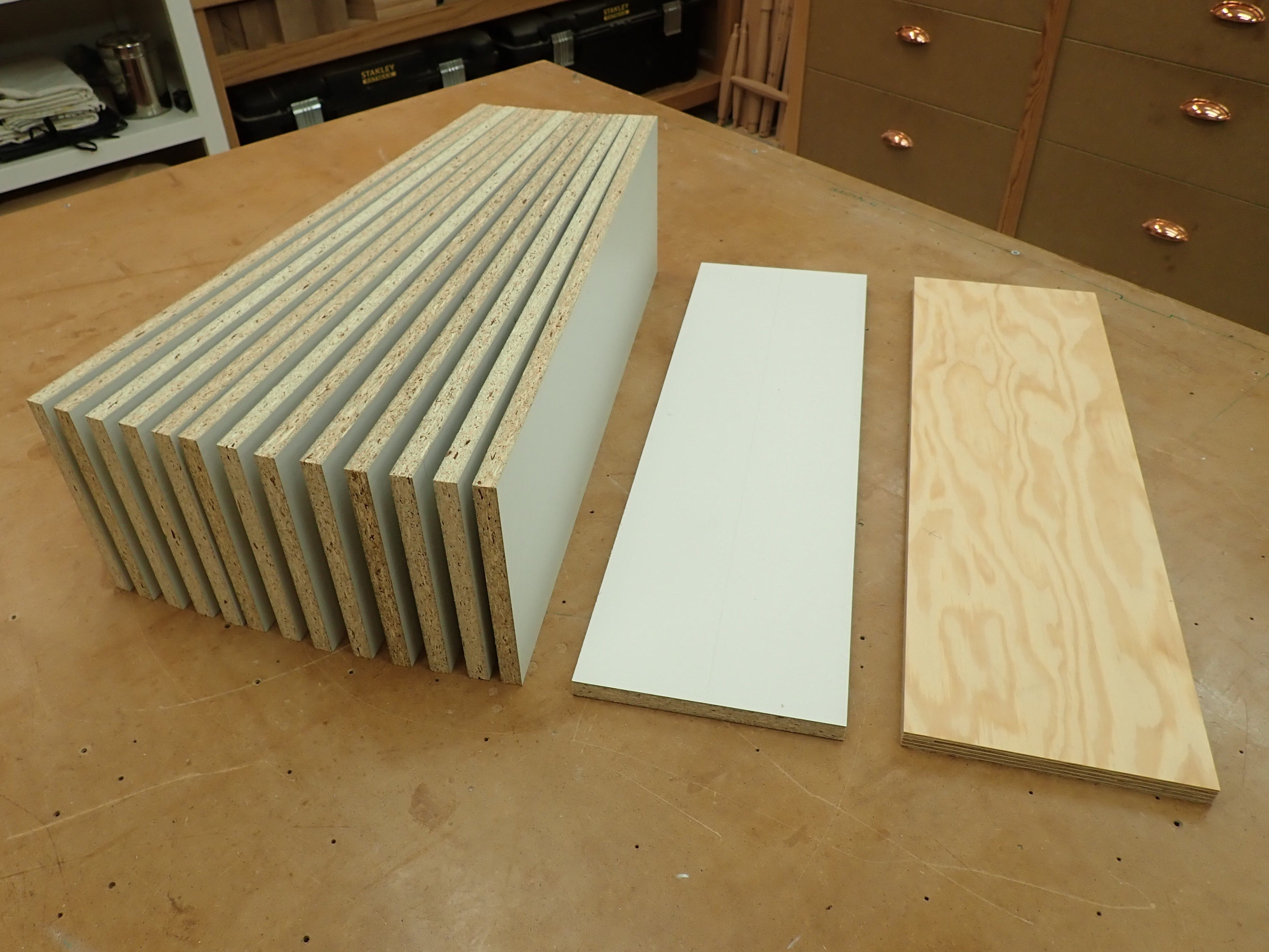
I’ve had some strips of pre-primed 12mm chipboard knocking about for years; leftovers from when we built some cheap walls down here in the cellar. I’ve been close to chucking them in the skip each spring, but you never know … and now they’re just what I need! I’ll use them to cut a stack of identical shapes that will make up my bending form.
First I cut them to size, plus one piece of 15mm ply.
My idea was to make a double-sided mould (different curves, remember?) so I set about laying out the shapes using the measurements I had lifted from the old chair.
How fortunate that I have such a nice selection of bendy rulers at hand :-)
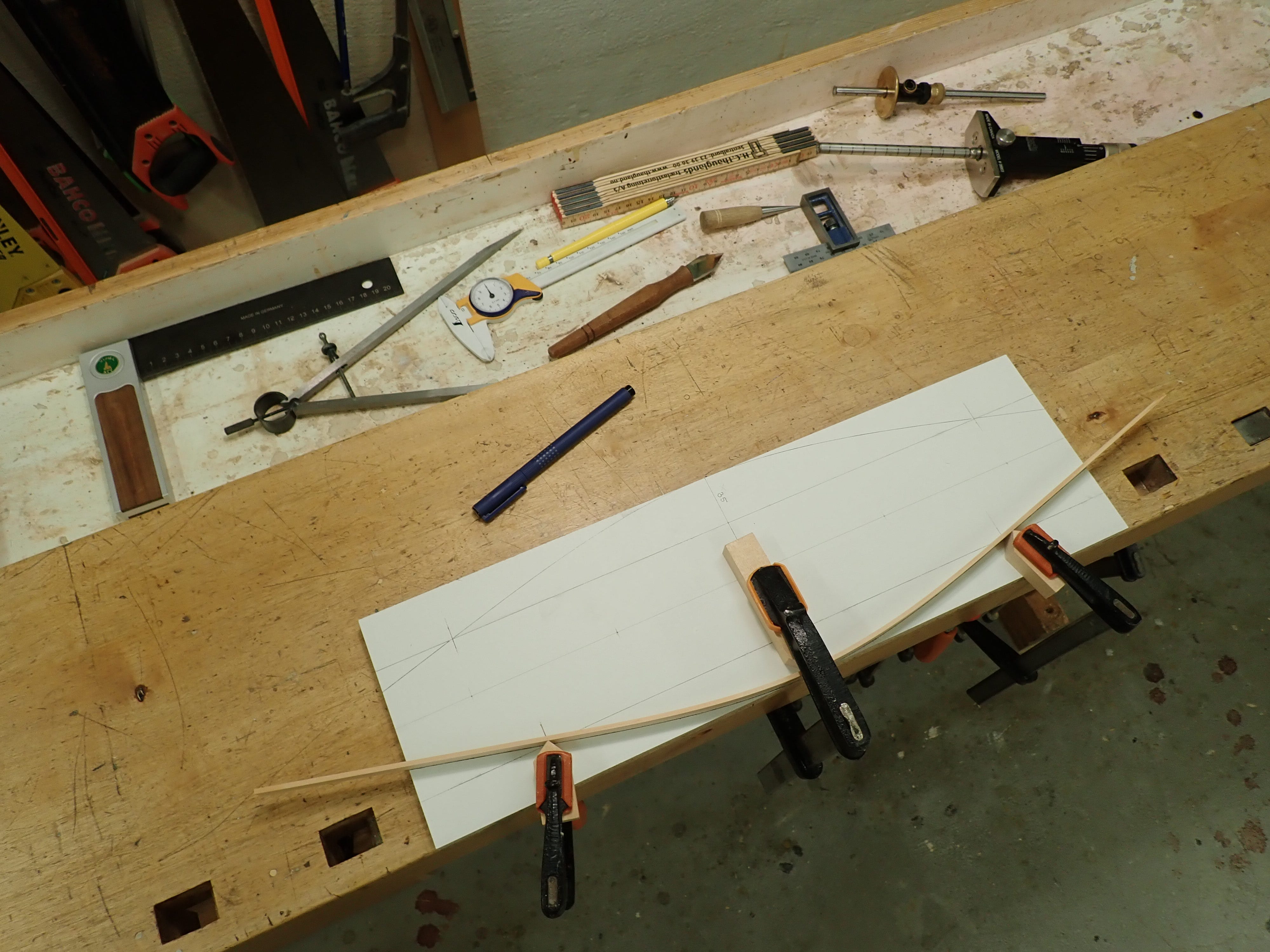
After ‘trying it on for size’ on one of the bits of chipboard, I drew the same shape on the plywood.
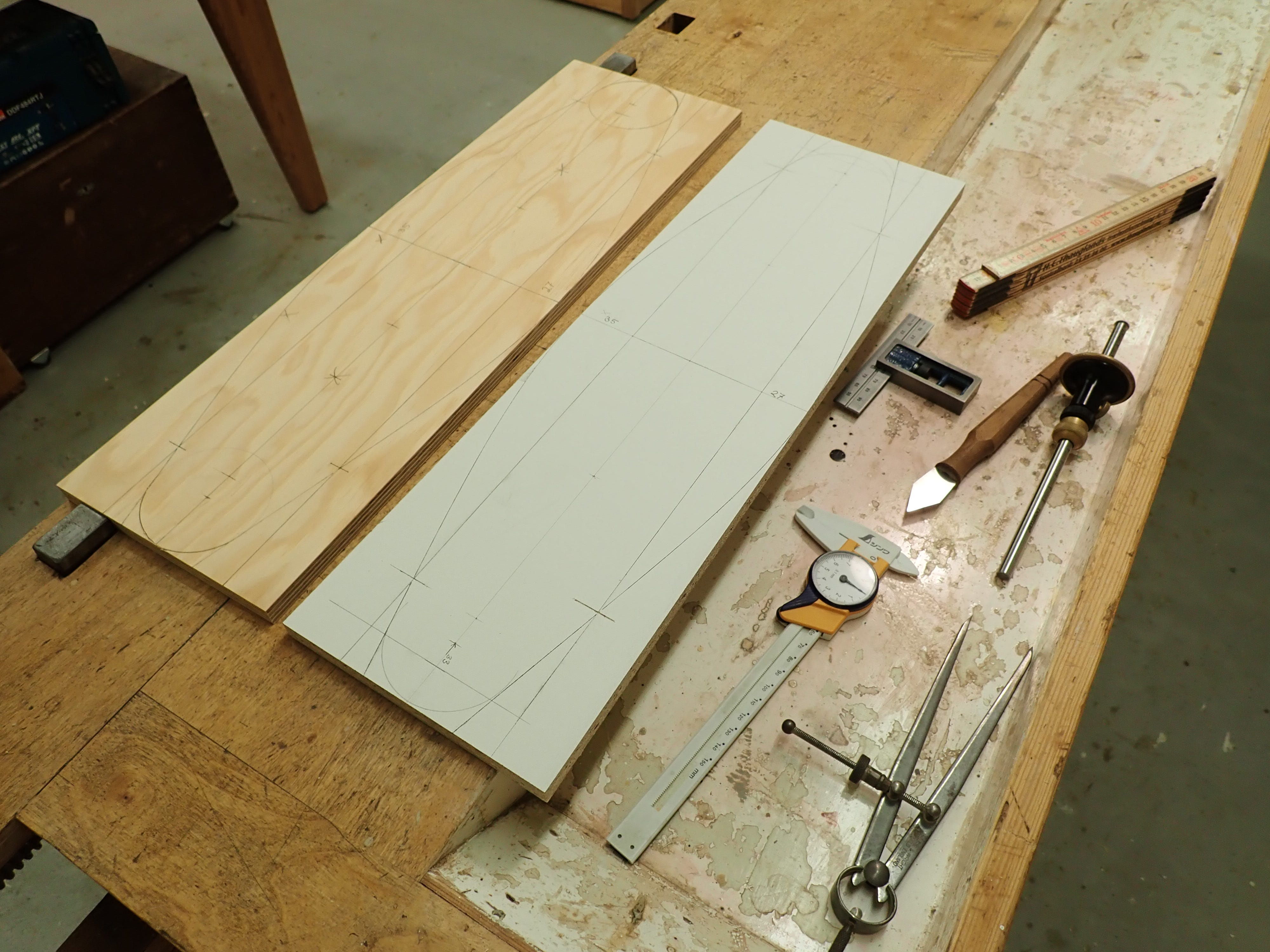
Then I made some strategically placed holes …
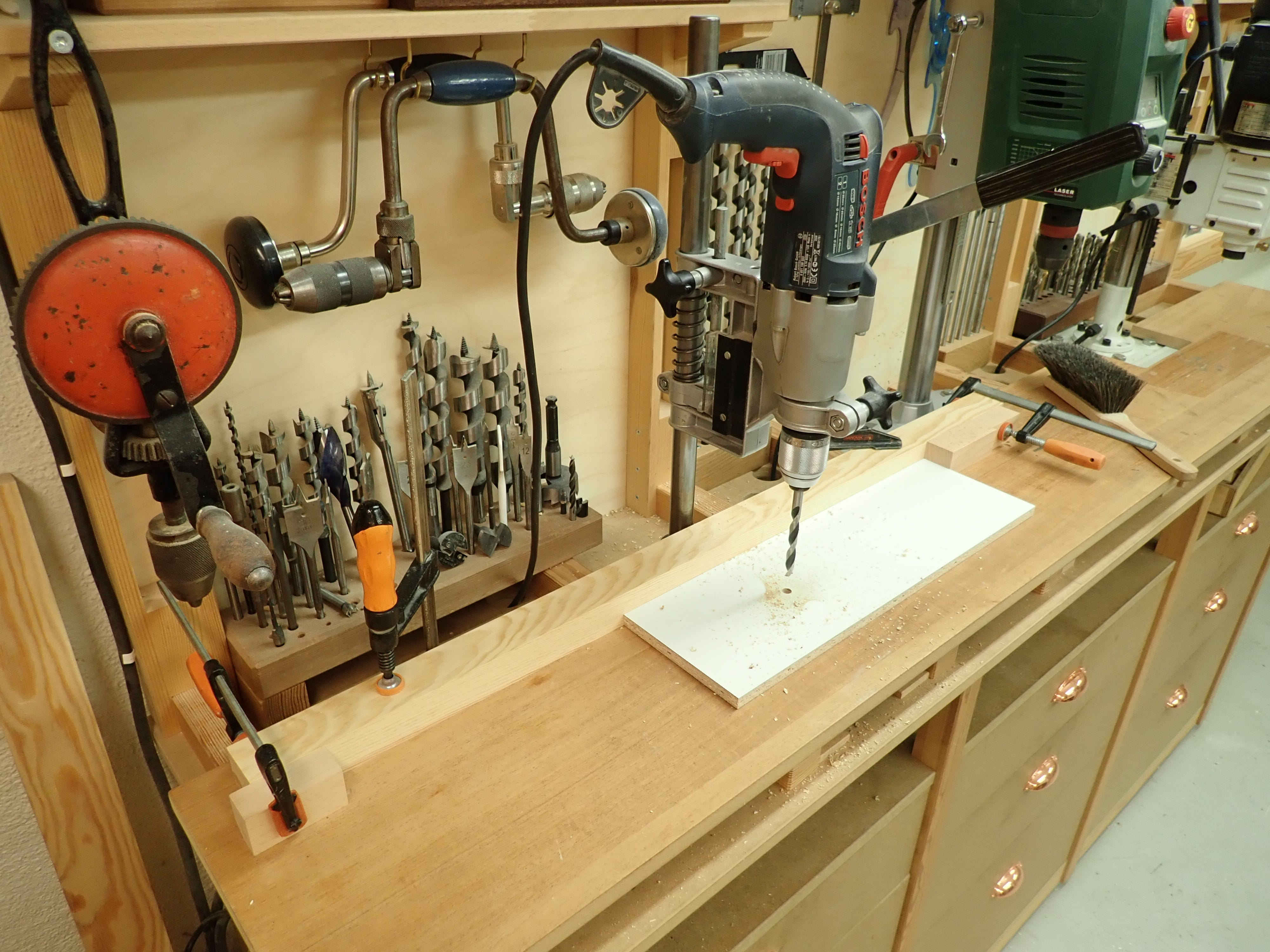
… in all the parts …
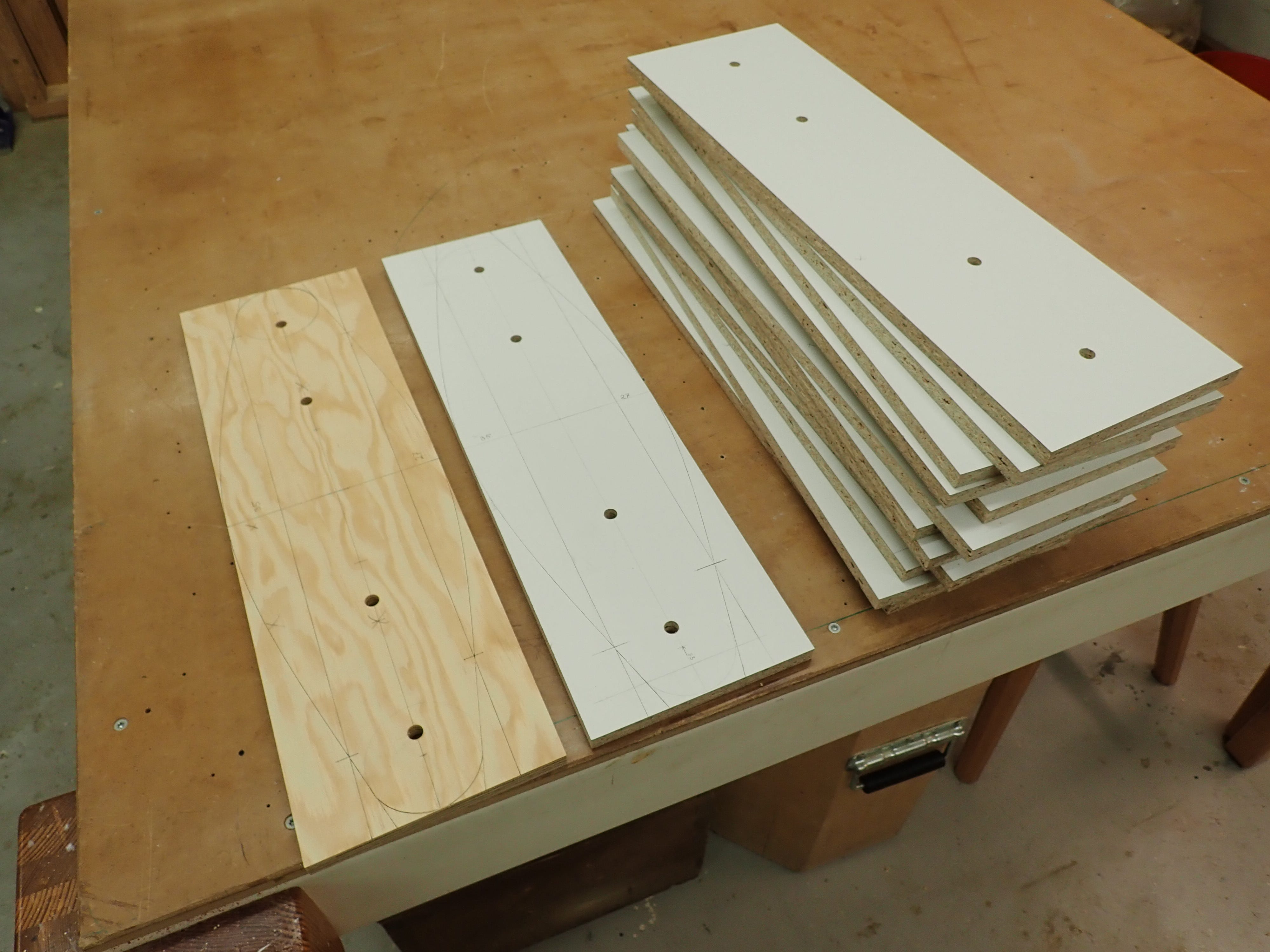
… before I cut out the plywood shape as accurately as I dared.
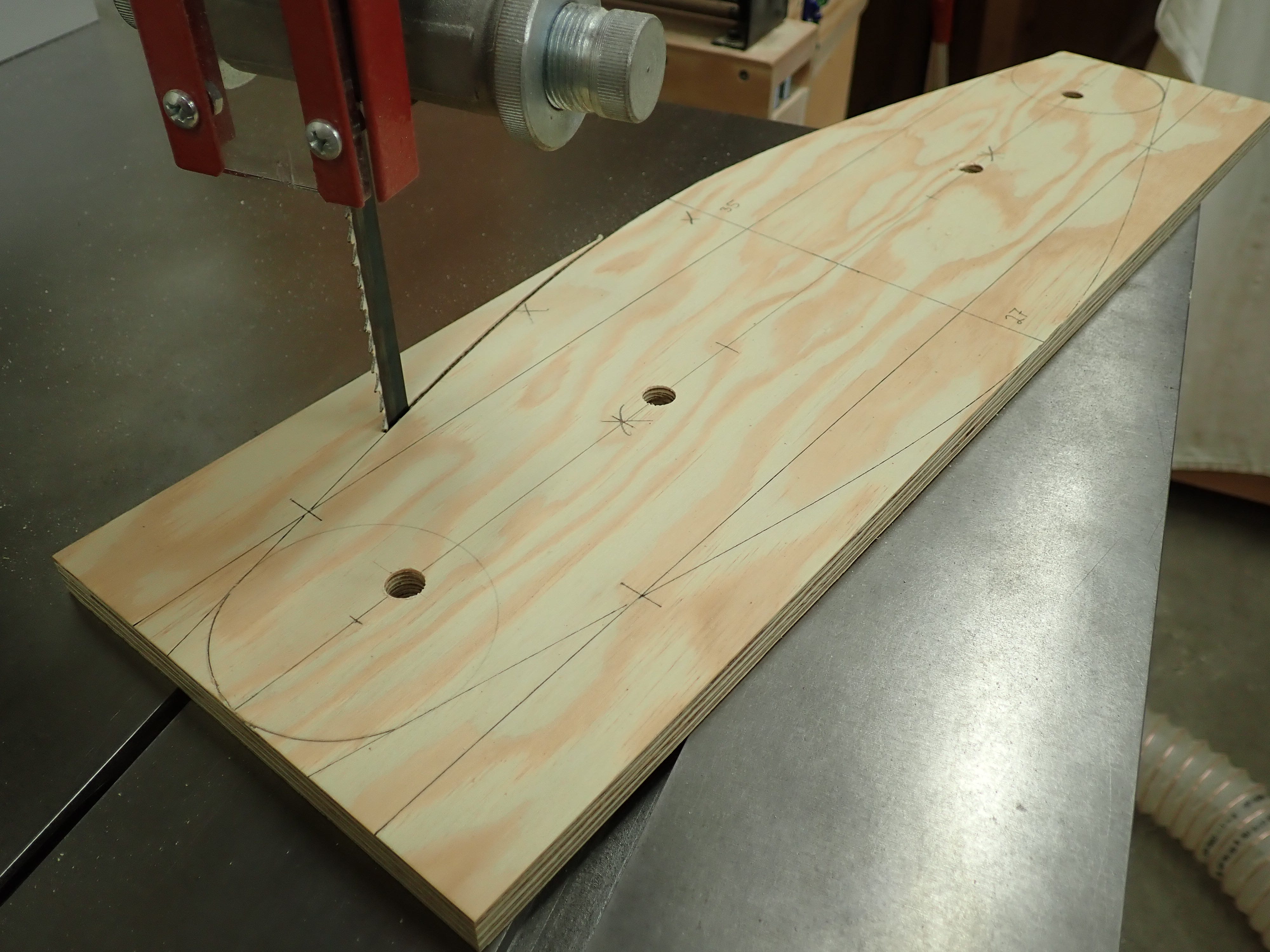
A bit of raffinement in the front vise …
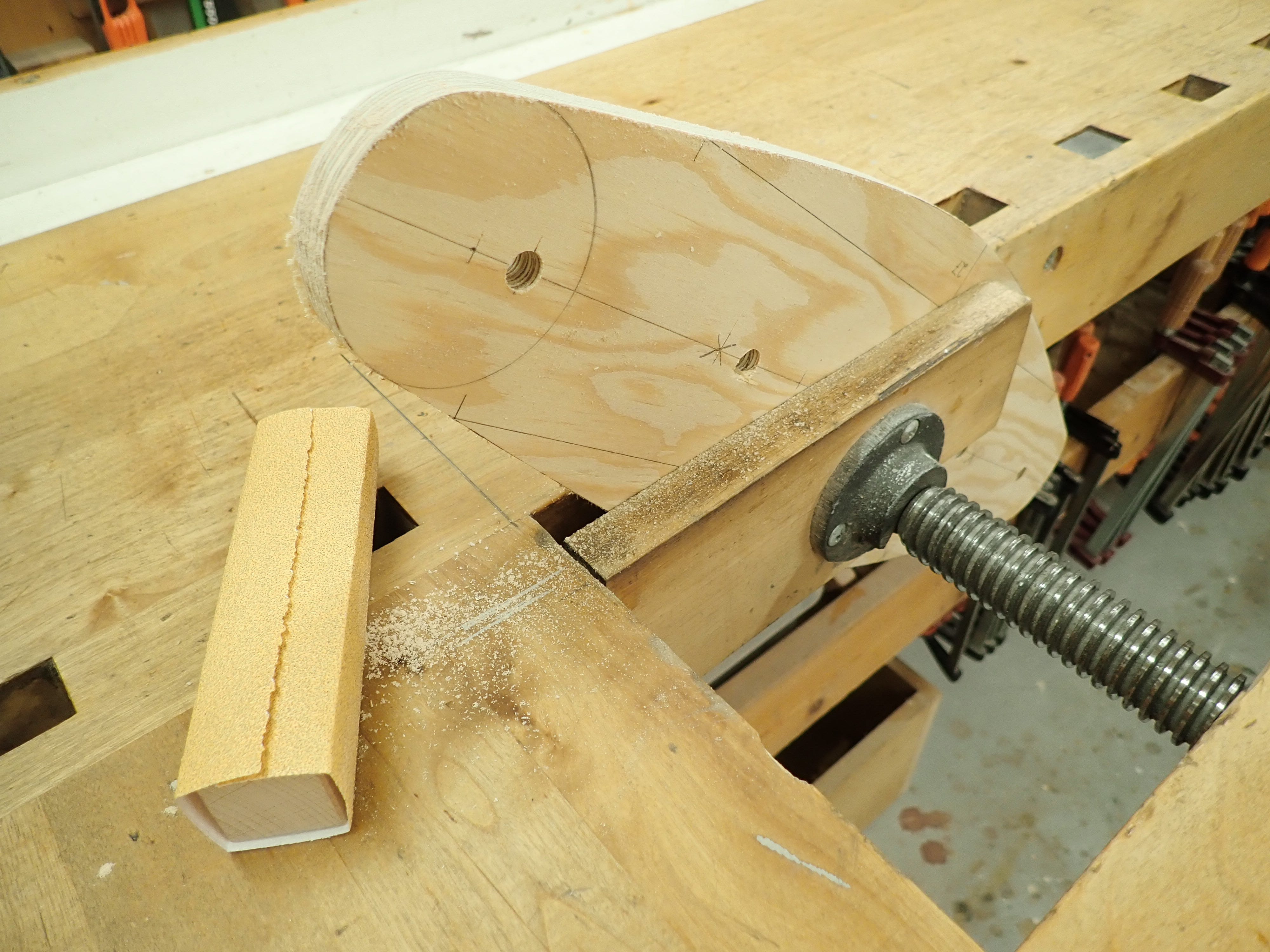
… and then I could use a pair of dowels to accurately place the plywood template on each chipboard square and trace the shape.
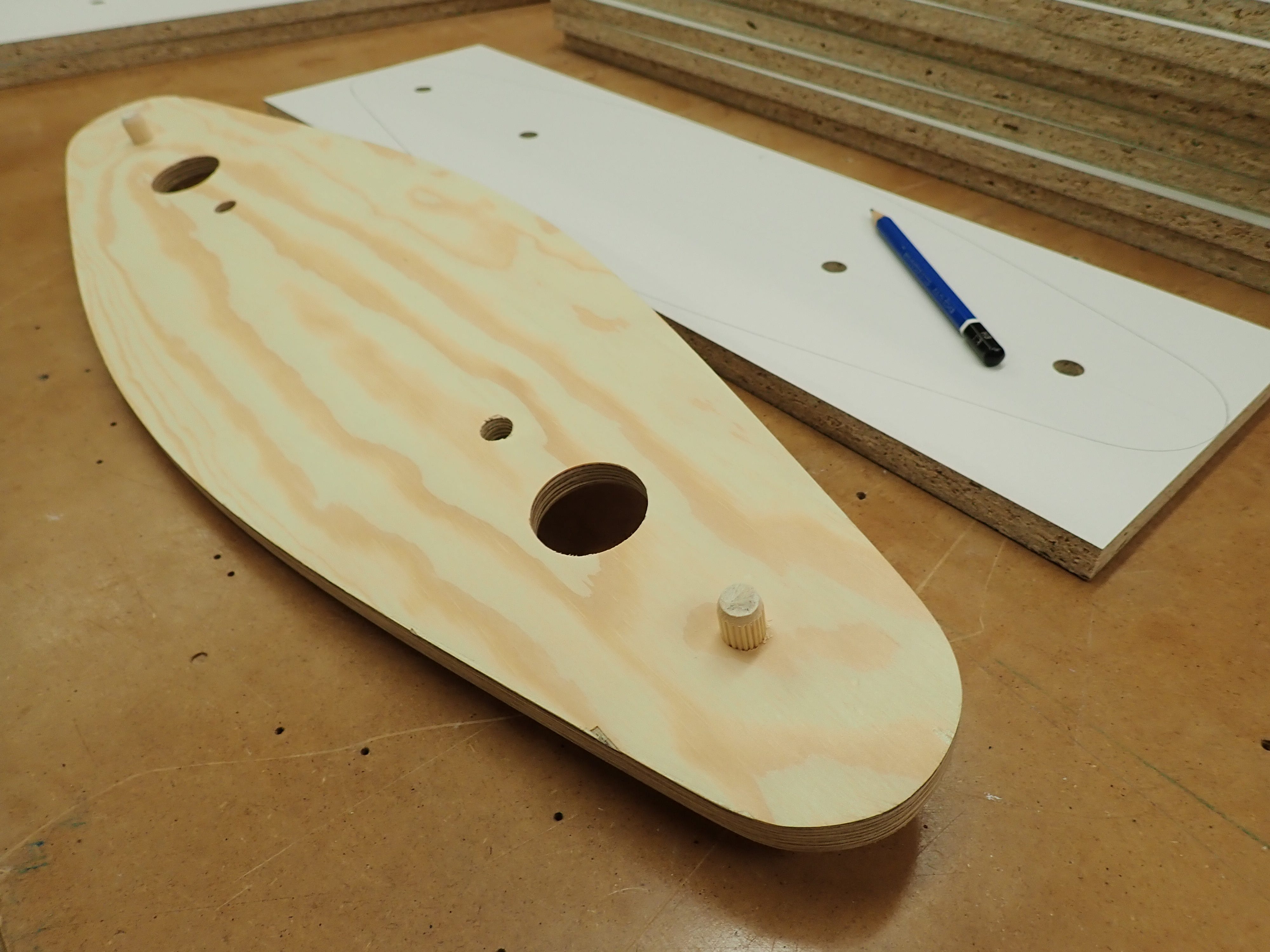
Back to the bandsaw, cutting a sloppy millimetre outside of the line ...
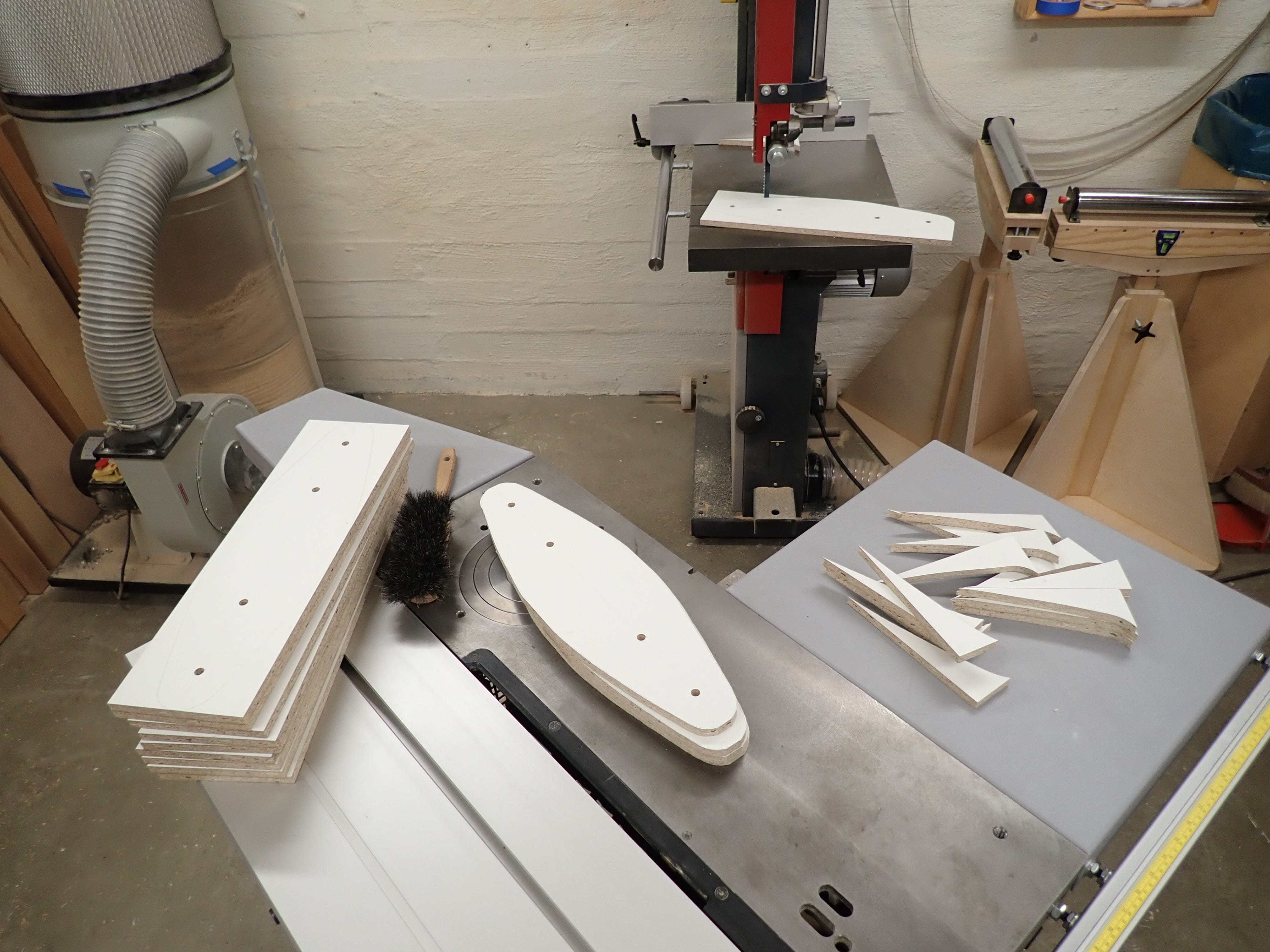
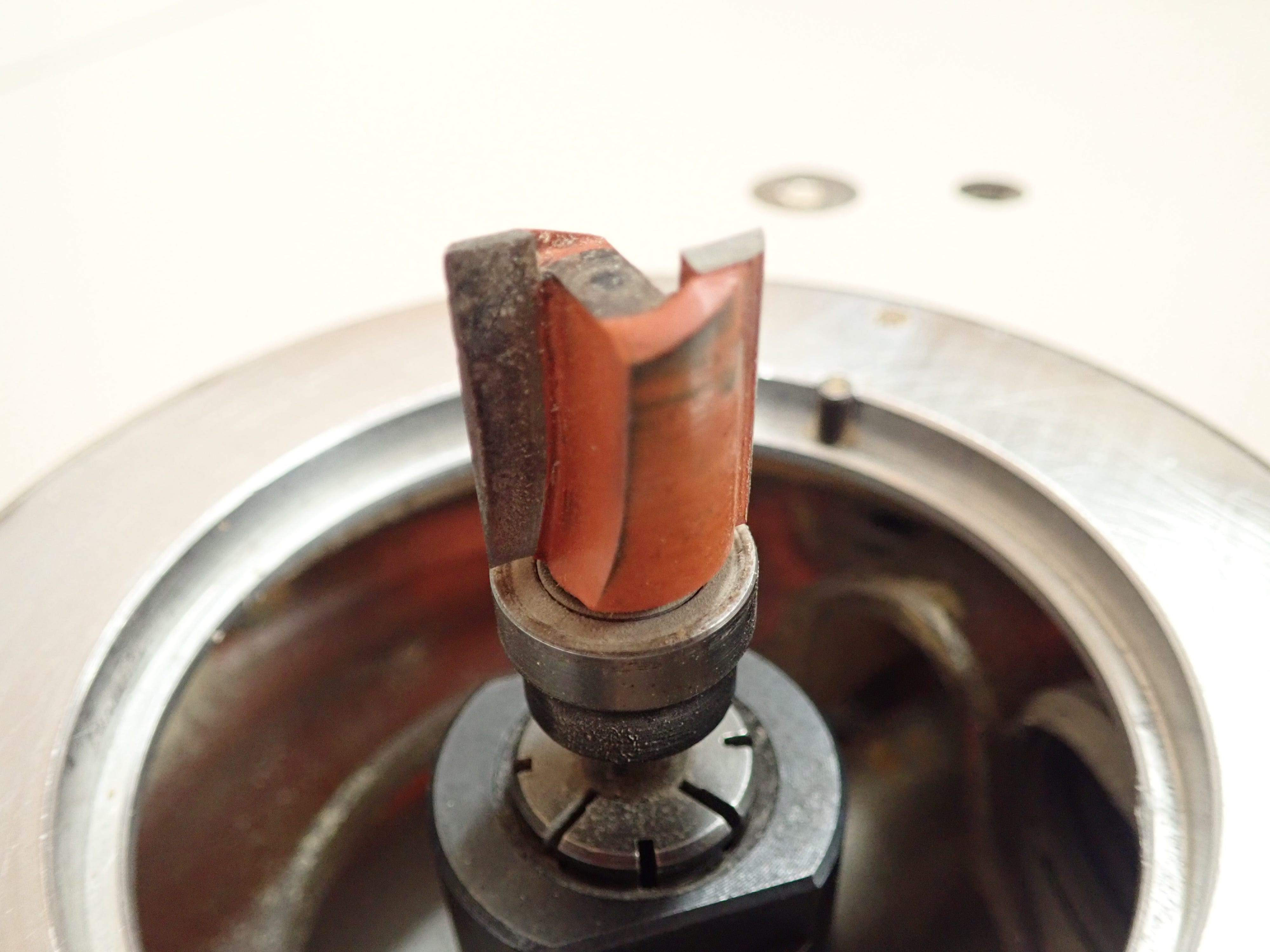
… because I’ll use my small table-router to copy the shape exactly. Since I’ll be routing against a ball-bearing and not using the fence, I’ve hooked the dust extractor up to suck directly from beneath the router bit (there’s a port for this purpose in the plastic ‘dust-collecting-cup’ under there).
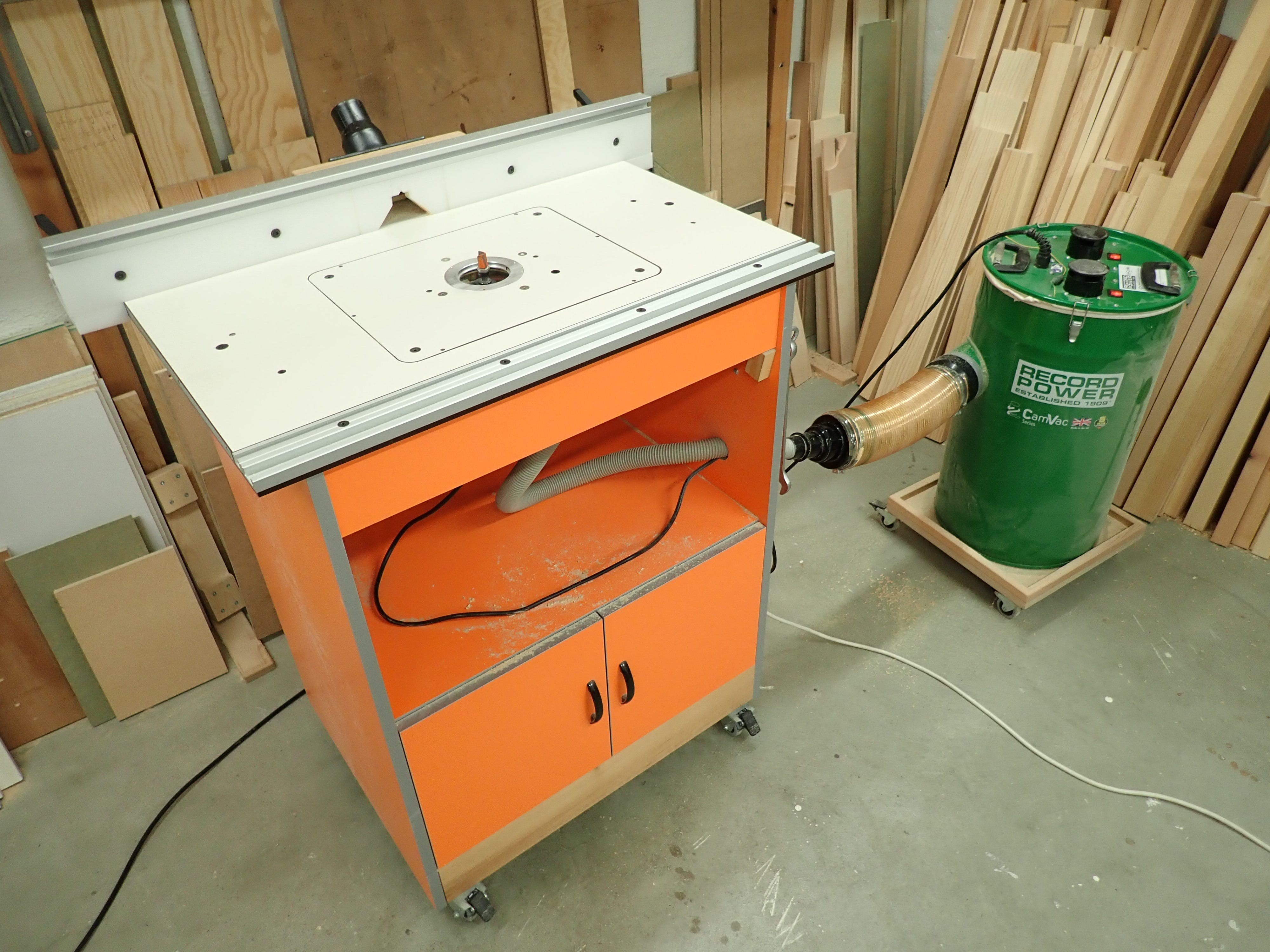
Chipboard is full of hard glue that will wear and dull your router bit, so I used one of me old muckers that I use for routing splices into grubby old windows where you’re liable to hit rusty nails and fossilized putty.
It’s still good enough to rout chipboard — in fact, it’s perfect for it.
Mind your ears!
I was initially thinking of gluing all the layers together …
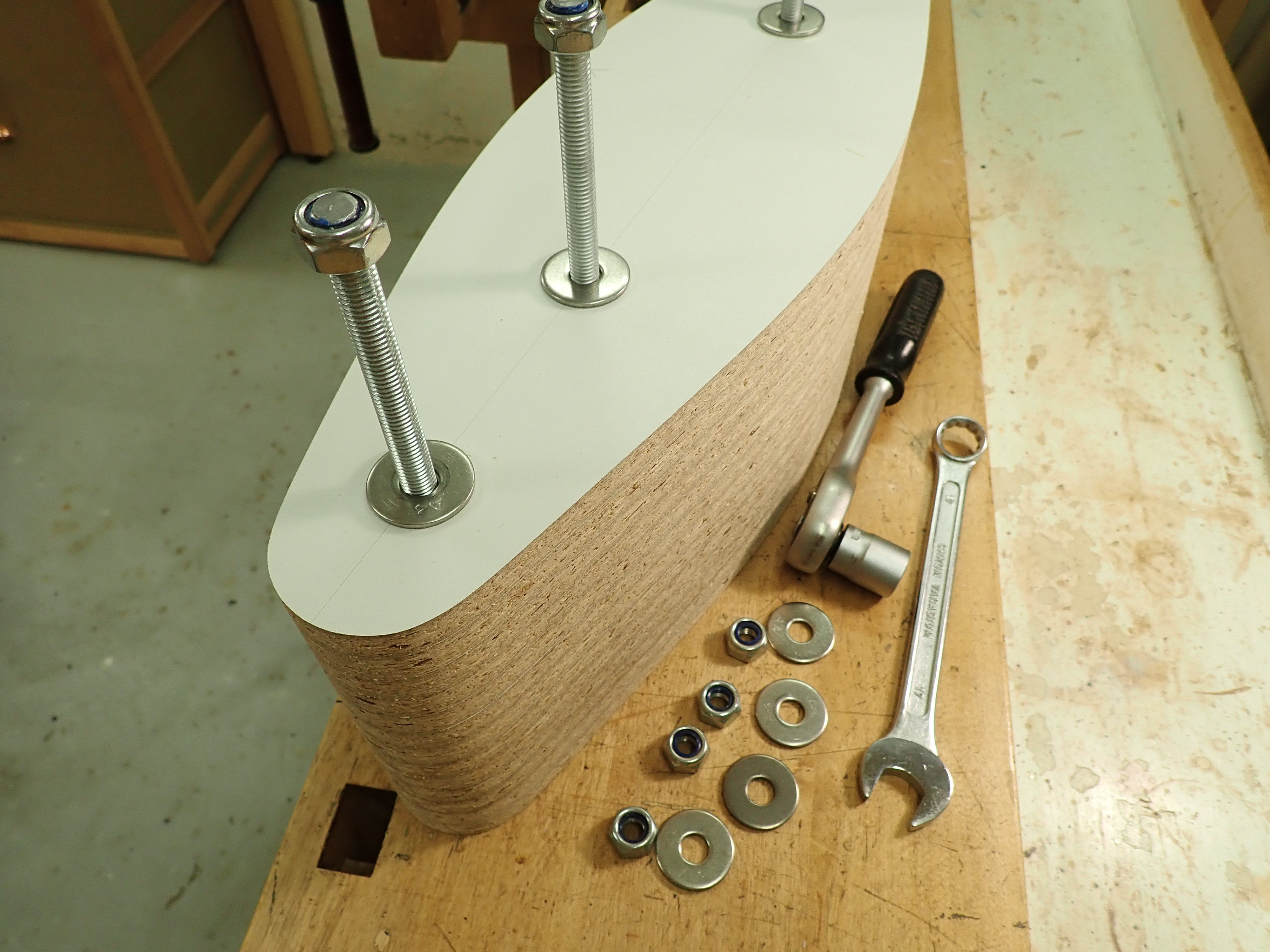
… but the four M10 threaded rods seem to do the job just fine.
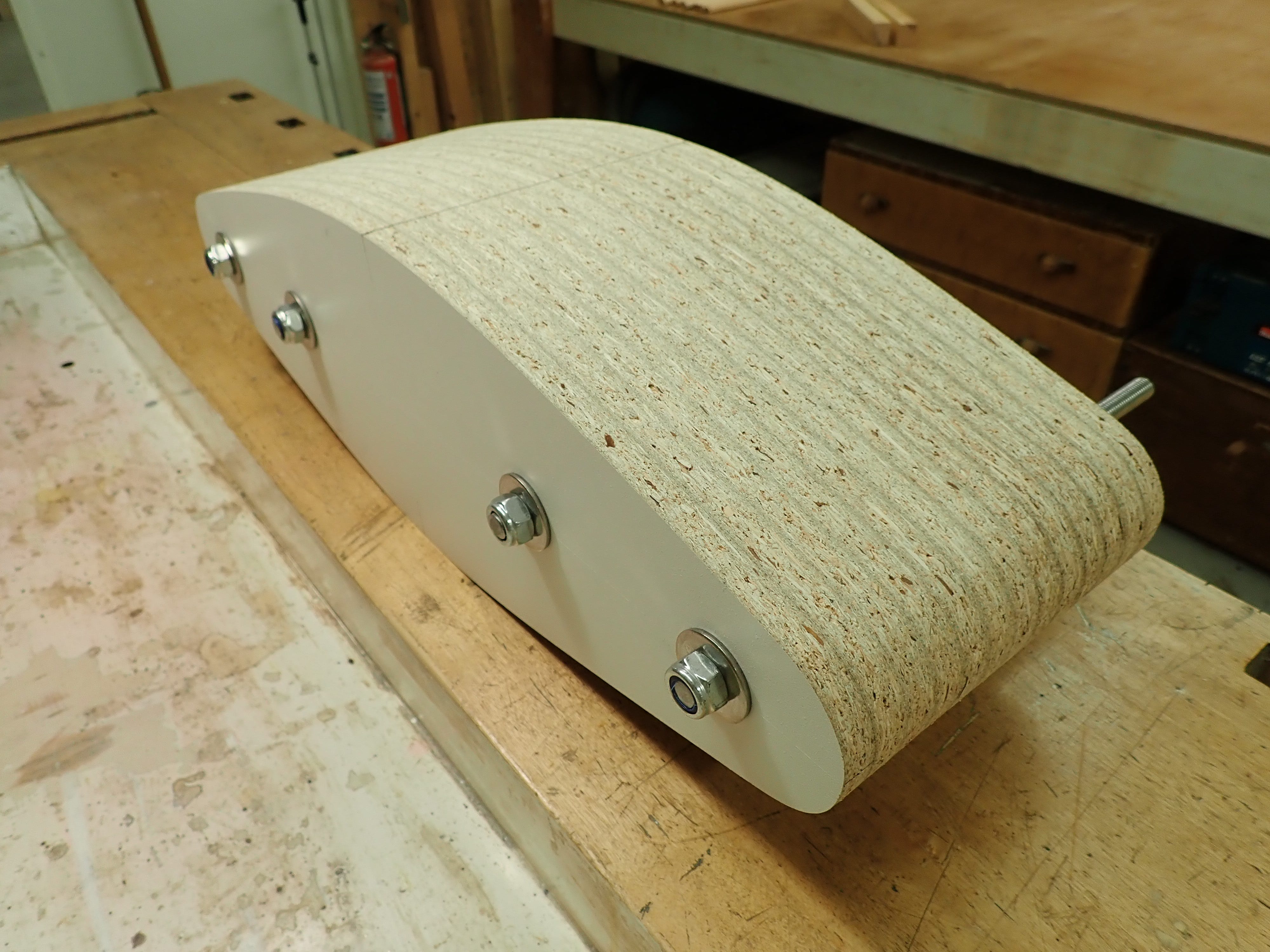
Next time we’ll see if my idea actually works.
****
It’s a “what am I missing” question. Am trying to understand how you’ll use the form to bend/laminate the back-bows— how will you clamp the wood strips to the form, so the lams are held tight together through their length? Only at center do you have perpendicular holding for clamps. Toward each end the clamp-ends will be on a slope, which unless you put nonslip wedges under each end, will leave the clamps prone to slipping down the slope instead of tightening securely. At least that’s what happens to me when I can’t get good holding for clamps ..
So I’m not connecting the dots here and hope you’ll enlighten me.
Looks fabulous.. that’s form fitting.
How will you clamp the lams to the form? How do you get purchase for clamps? When I laminate bends, I always have a time keeping the layers tight. A firm flexible backing and lots of clamps helps, so I often end up drilling a bunch of holes in the form, large enough to take f-clamp ends. (If it was solid stock you might just pinch the ends, but I need more help with lams to keep the layers tight..)