
Carpenter's chisels
for when Muhammad must go to the mountain

[ soundtrack : Hot Feet - Three Black Crosses ]
****
A reheated post from the archive
****
Sometimes m’colleagues manage to coax me out of my underground lair. Cowering, blinking and feeling exposed in the sunlight I grumble and splutter profanities as we load my tools into the van.
I used to do a fair bit of carpentry when I was younger; it was always easier to find work on site than in the workshops. Most residential buildings in Norway are built of wood so it’s not difficult for a furniture maker to cross over to the dark side. In fact, I’d highly recommend it! It’s both useful and interesting to learn how houses are built, and it’s great to be part of a good team of carpenters — being a man among men.
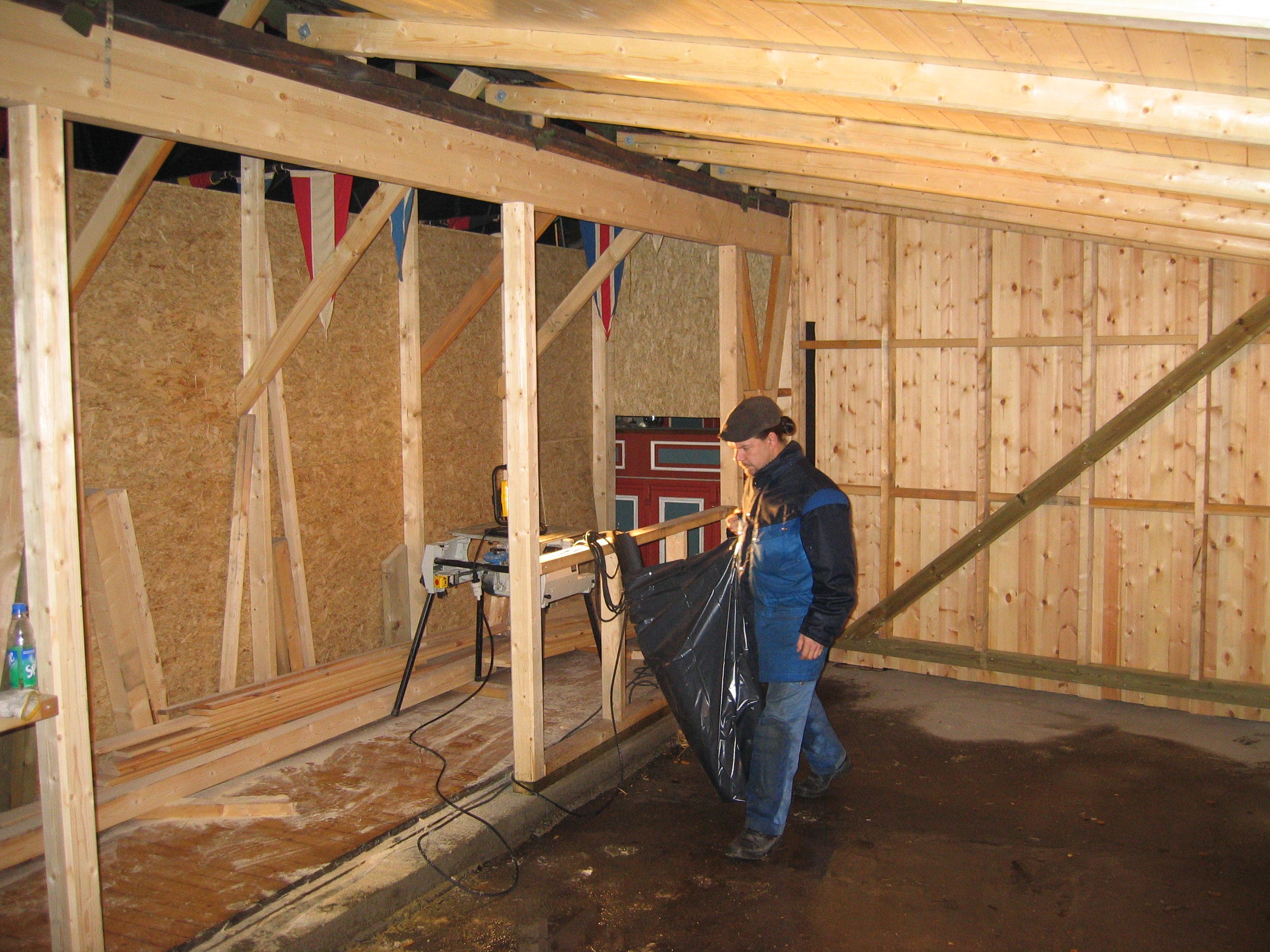
As the years go by I’m increasingly loath to leave my shop, but sometimes I have to. This usually involves helping the guys with some work that needs sharp tools and a flair for solutions, so the normal site infrastructure is usually in place; I only need to bring my personal tools. I’ve whittled it down to this:
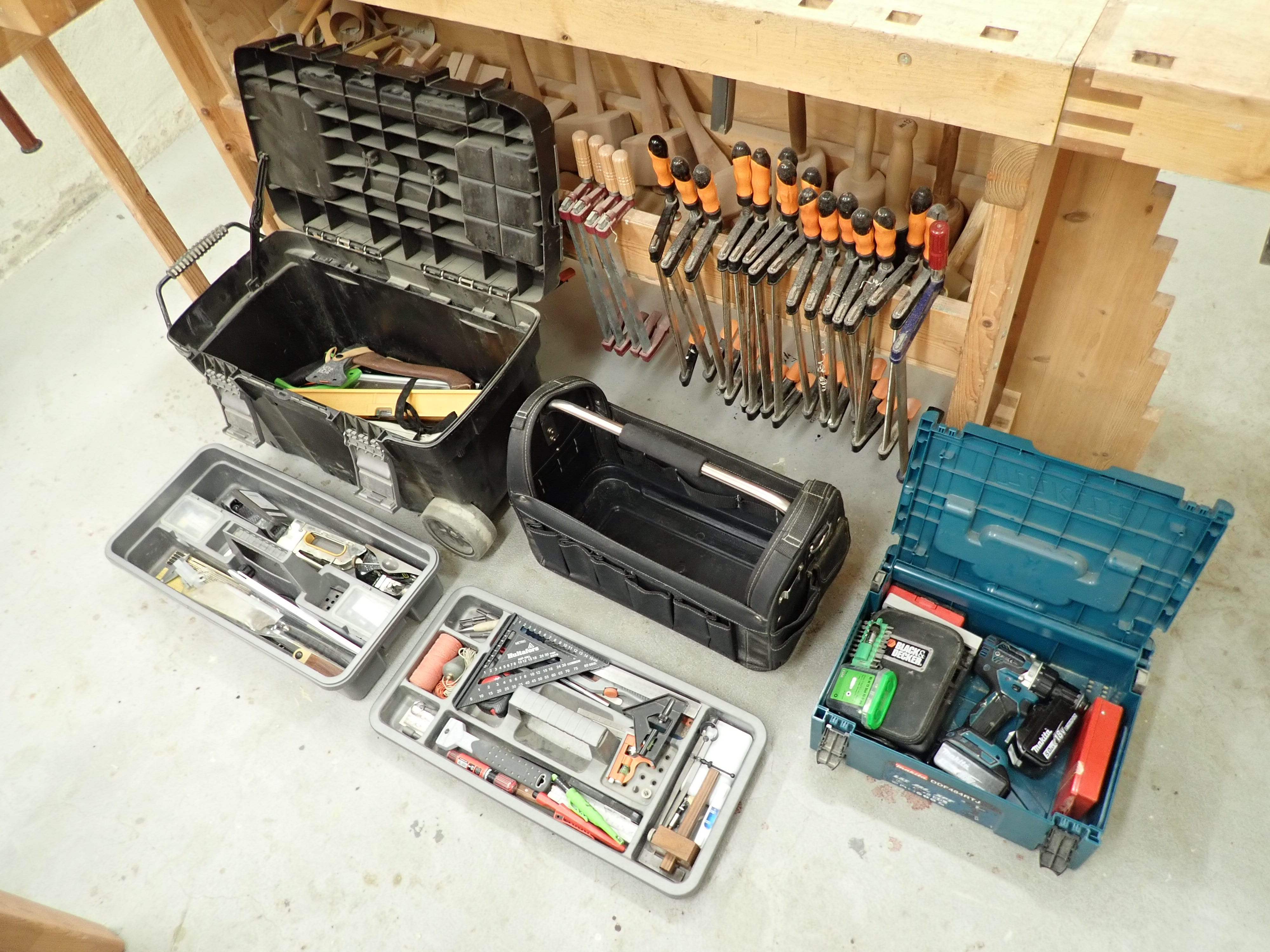
We usually do old-school work, so it’s mostly traditional hand tools — supplemented as needed — and a 18V drill-pack. The tools live in the big box that I can pull trundling along after me (I’m sure you’ve noticed that no one carries their suitcases any longer), the empty open-topped case is for moving around the tools and fasteners I’m actually using on site.
Last week I wrote about deliciously svelte paring chisels, this week I thought we’d have a look at their butch brethren; the carpenter’s uncouth companions (because you can be damned sure I’m not taking my Lie-Nielsens out on site!)
Let’s begin with a roll of Stanley ‘bench chisels’ that lives in my trundle-cart:
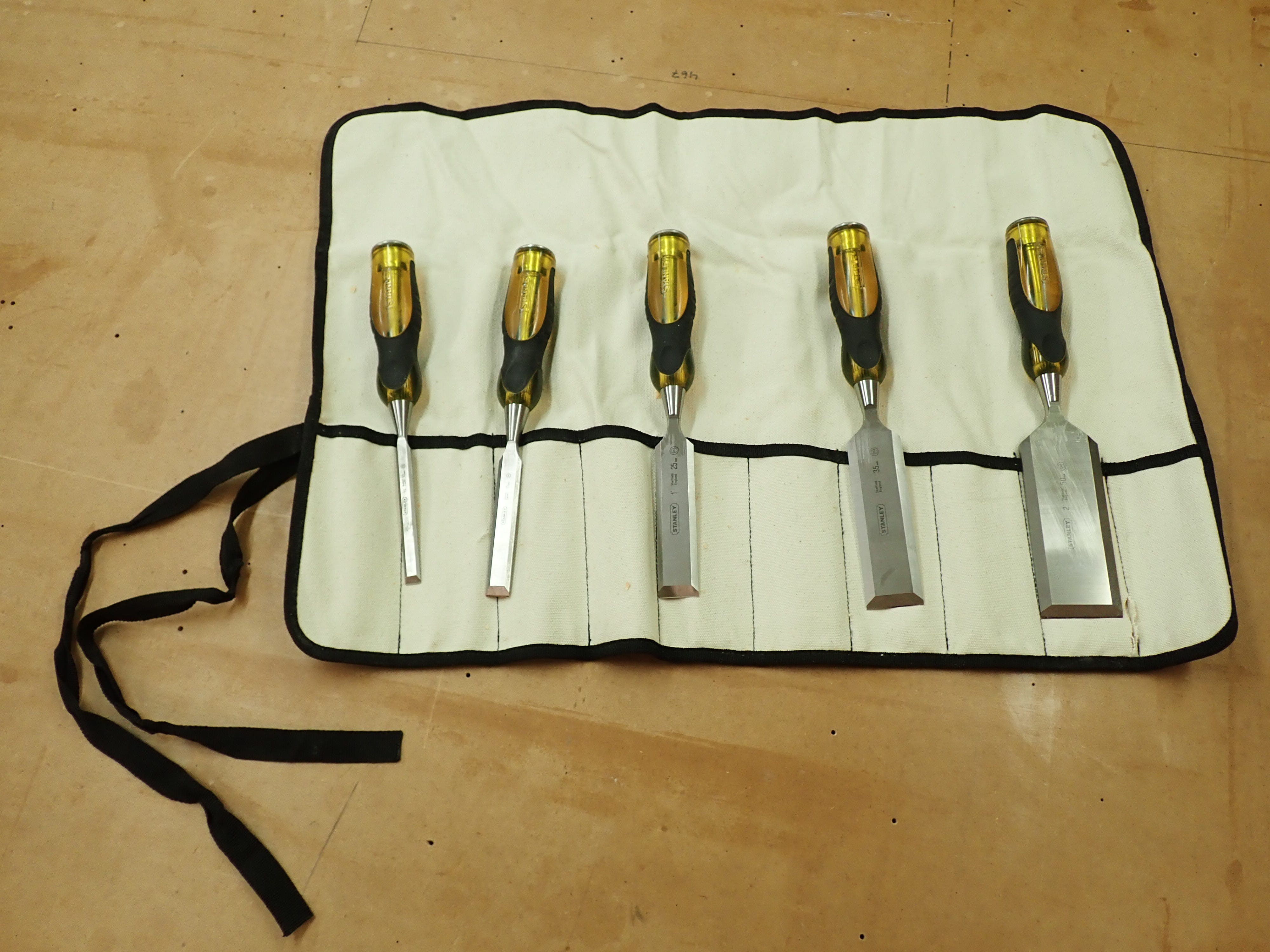
I use them for general chopping, paring and slicing, obviously. They’re fairly inexpensive so I don’t have to worry about them leading a rough life out of doors, and they have a steel striking cap …
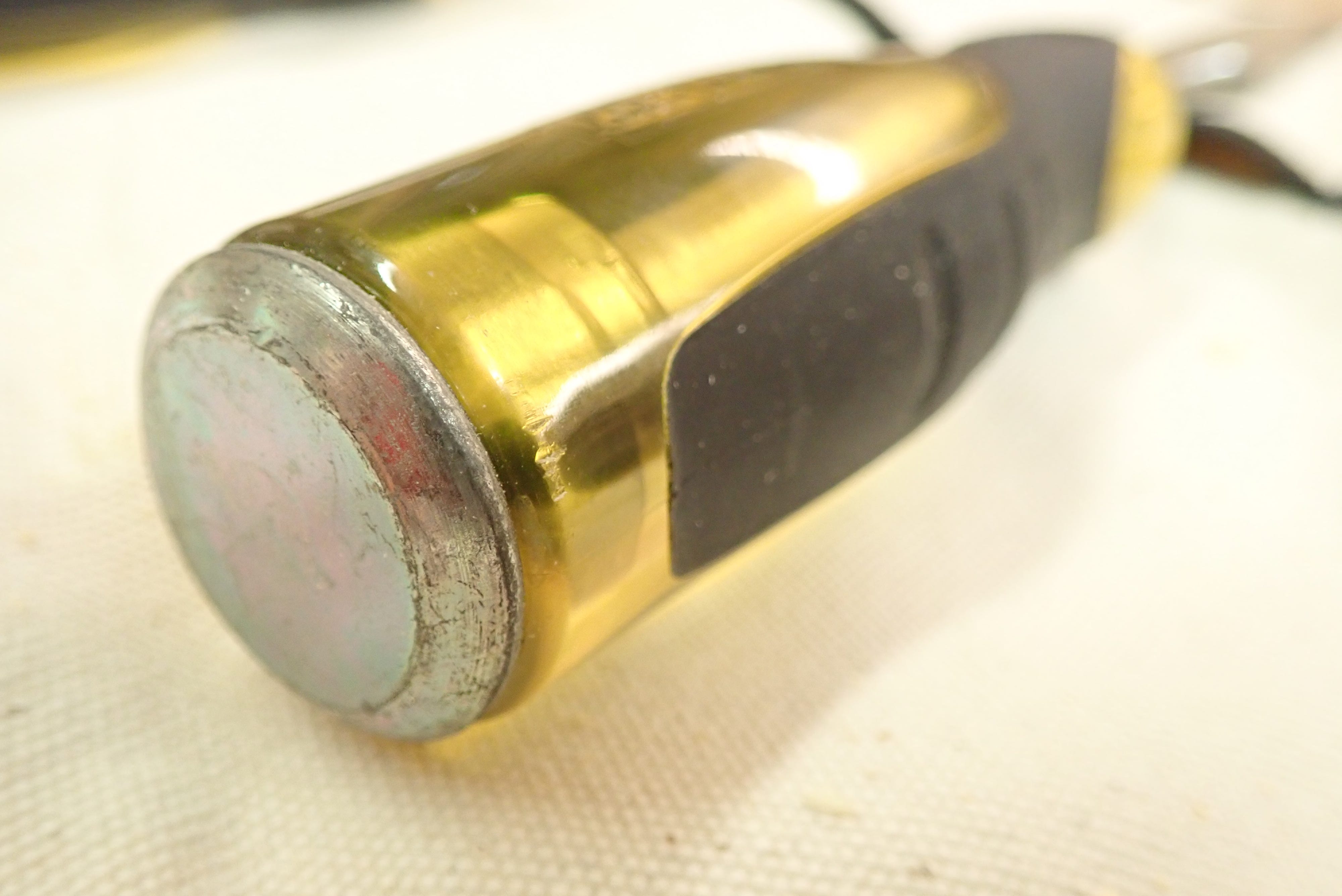
… so I don’t have to pack a bulky mallet but can strike them with the claw hammer that I’m carrying anyway. Terrible ergonomics and a godawful racket but we’re talking occasional chiseling, so an acceptable trade-off.
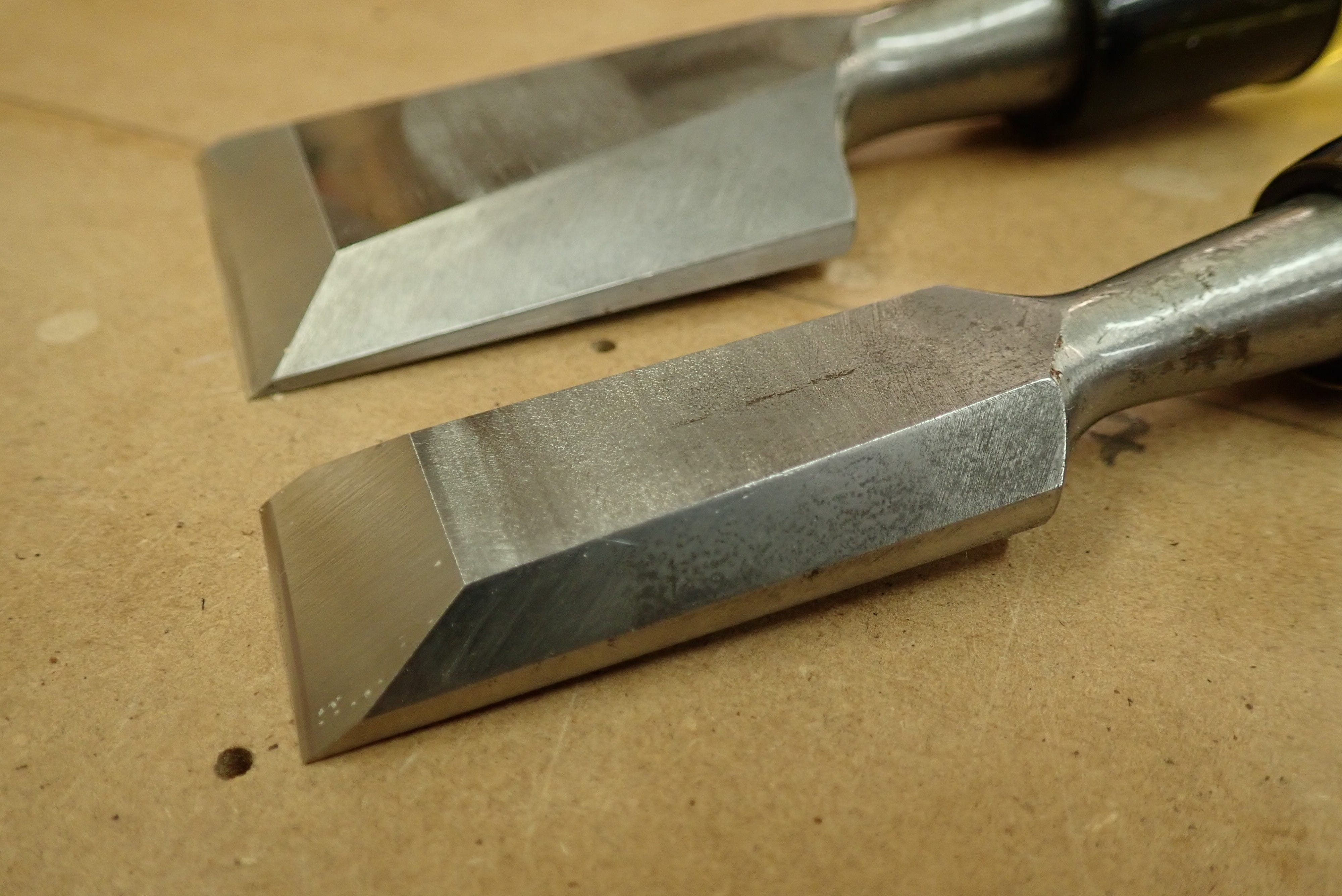
I have another pair of steel-capped Stanley chisels that I pack when I’m chopping in oak or old pine — after a hundred years or so even the softwood pine ‘fossilizes’ and becomes surprisingly hard. They are stubby, sturdy pig-stickers capable of serious hogging.
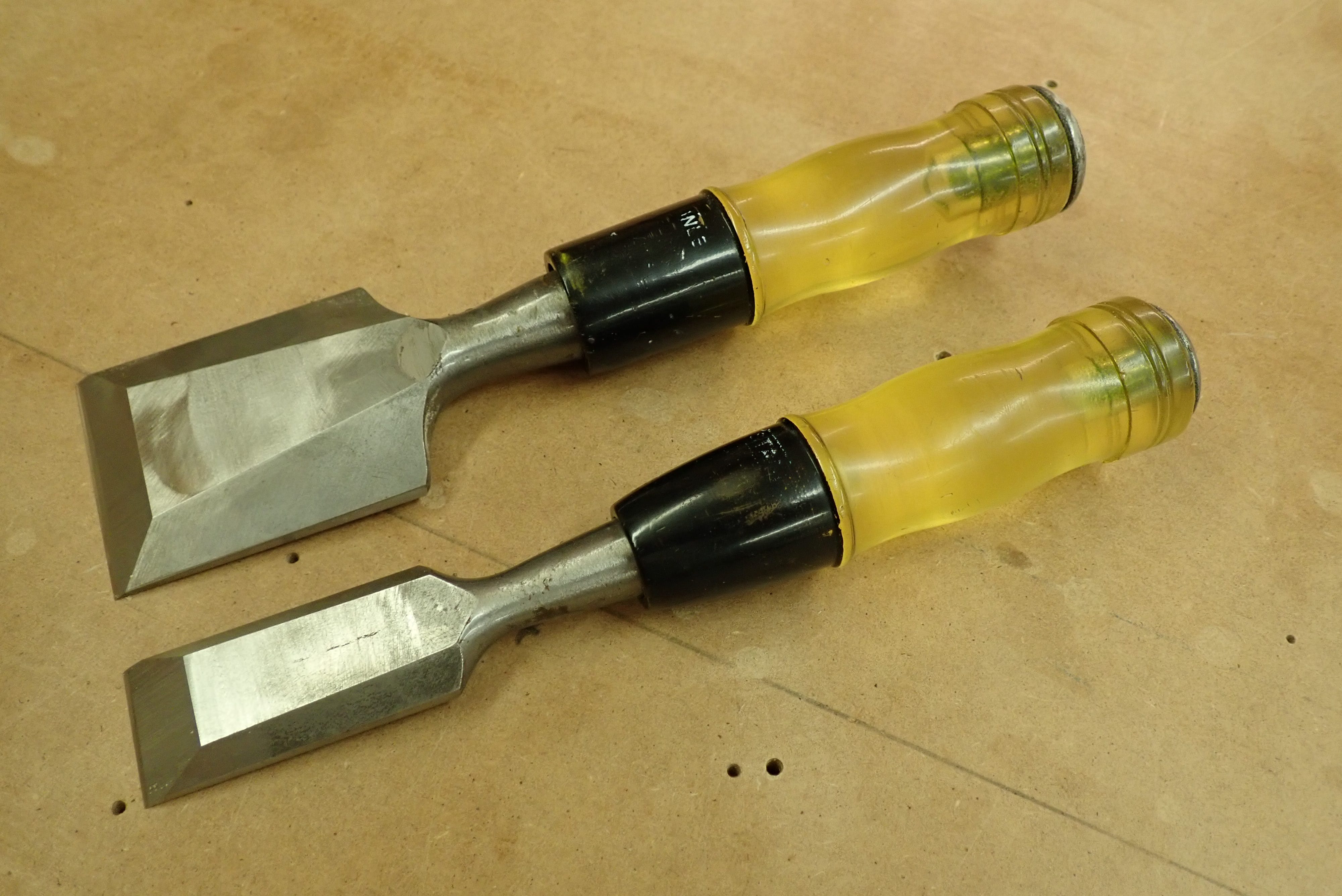
Their blades are THICK.
Although they don’t live permanently in my carpenter’s case they certainly feel at home there; the brilliant ‘rough trade’ chisels from Hultafors:
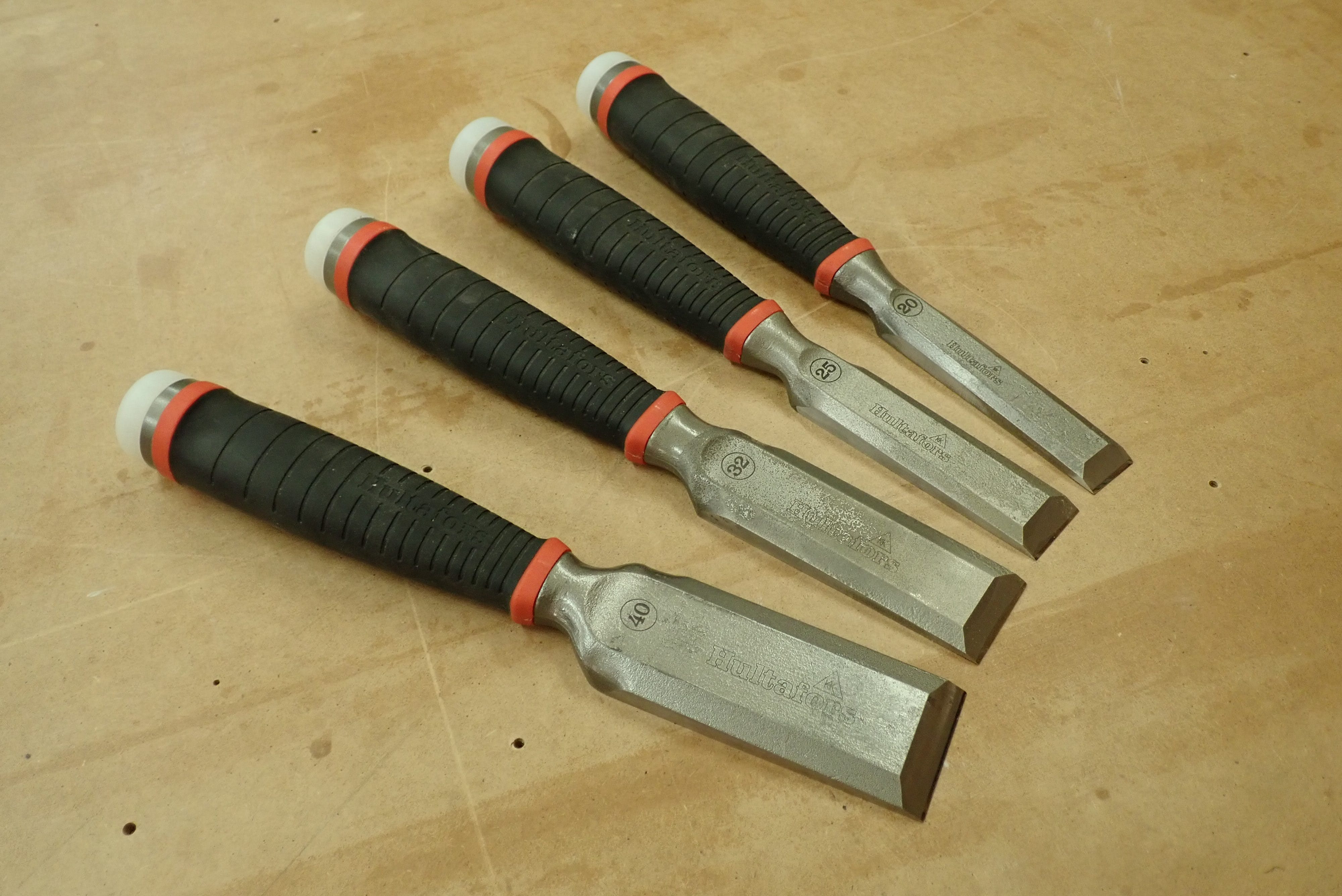
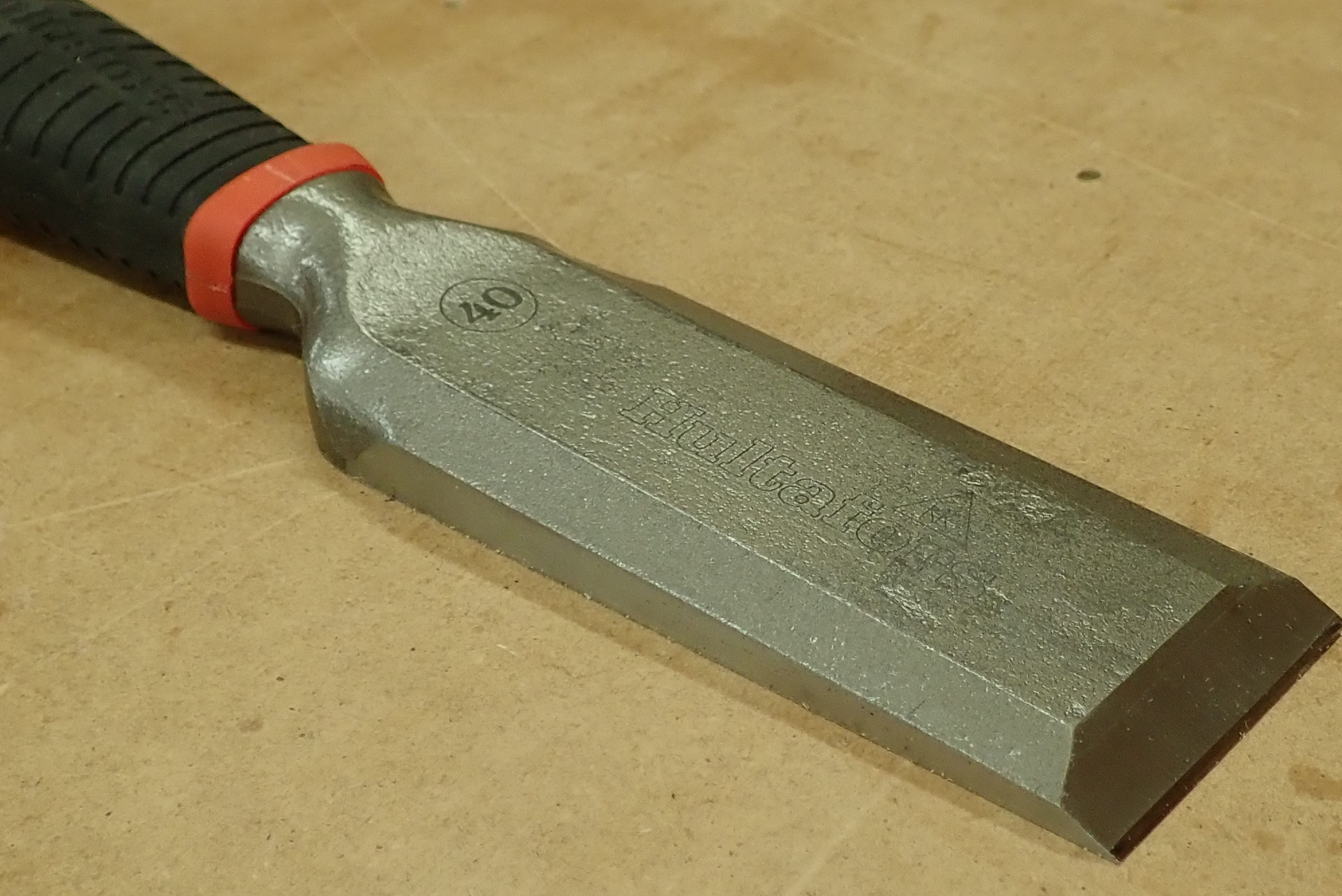
They have a replaceable nylon striking cap that allows you to use a steel hammer (or a wooden mallet without spoiling it), and the steel is thick and sturdy for heavy-duty use. Another useful feature is that the handle will not interfere with the back of the blade when it’s lying flat on a surface so you may use it for ‘flushing flat’:
I used to tease the carpenters by claiming that a furniture maker can do anything a ‘timber-man’ can do, only more accurately and in less time. They responded by forgetting to invite me to their parties. Have you read the story about how André-Jacob Roubo went one better than the Parisian carpenter’s guild?
If you’re gonna boast you’d better be able to back it up. That’s why I bought a trio of firmer chisels from Henry Taylor with some nice leather edge protectors from Workshop Heaven.
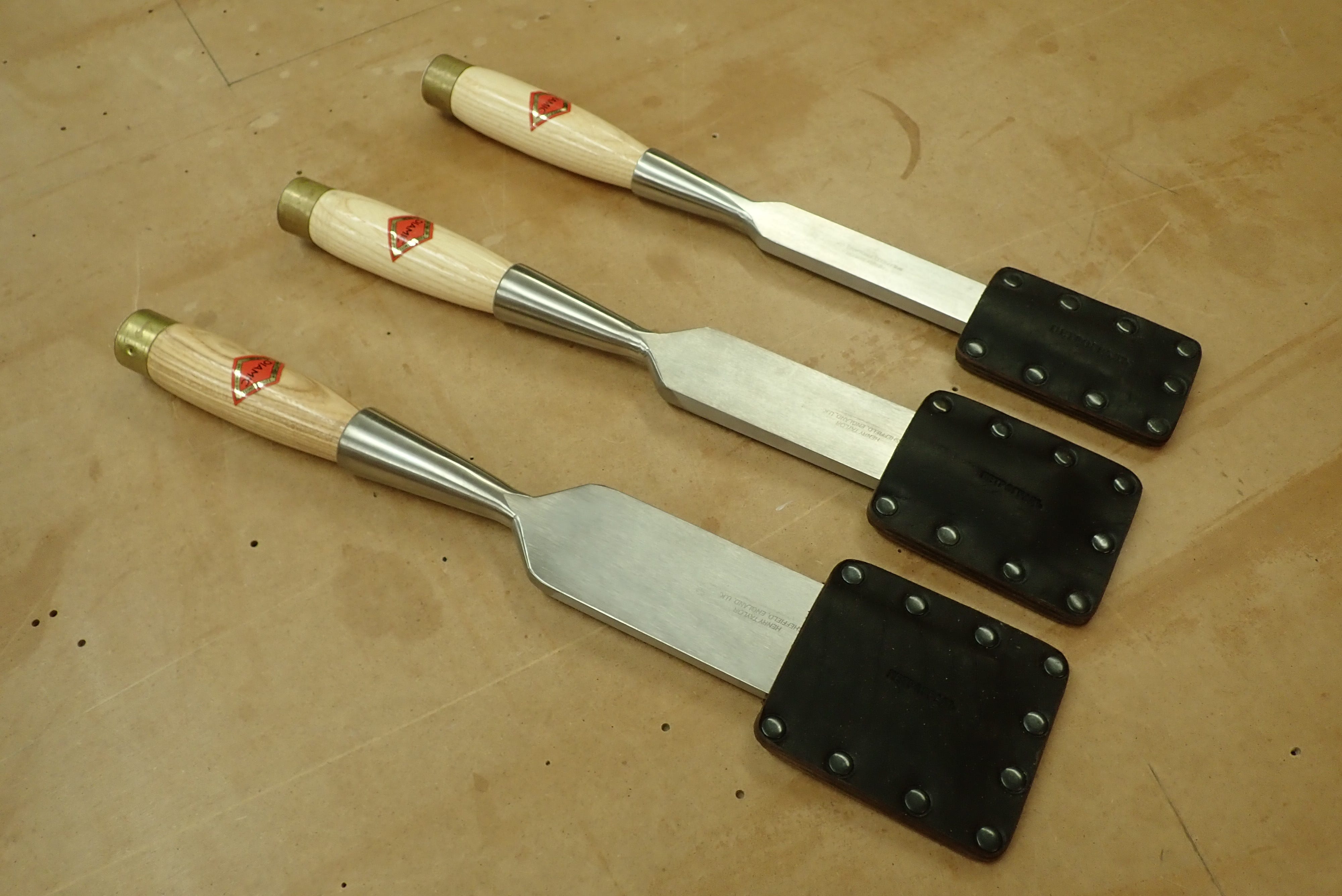
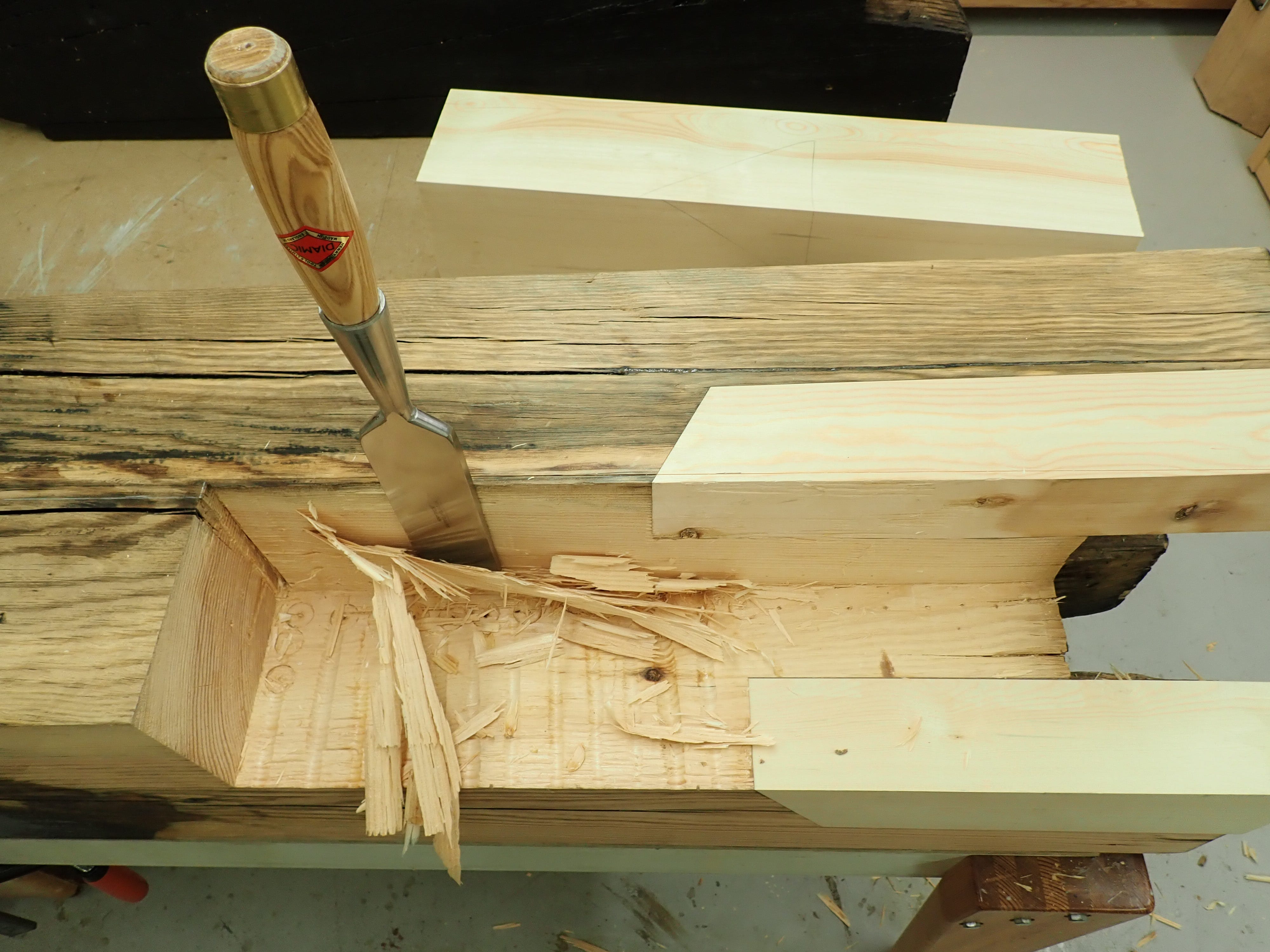
They’re handy when you’re working on beam-sized materials, doing splices and timber-joints.
Only problem with them is that they’re made in Britain. As some sort of Norse half-Brit it pains me to say, but I’ve stopped buying UK tools — the quality is too consistently awful. The steel in these chisels seems alright, but the fucking monkey manning the grinding machine ruined not only my set of chisels but I’ll wager all the chisels that passed through his dirty paws for as long as he worked there. The problem is that he made the cutting edge look nice and shiny by touching up the back of the chisel on the grinding wheel. This makes the chisel unusable and impossible to sharpen properly. Backs of chisels must be flat!
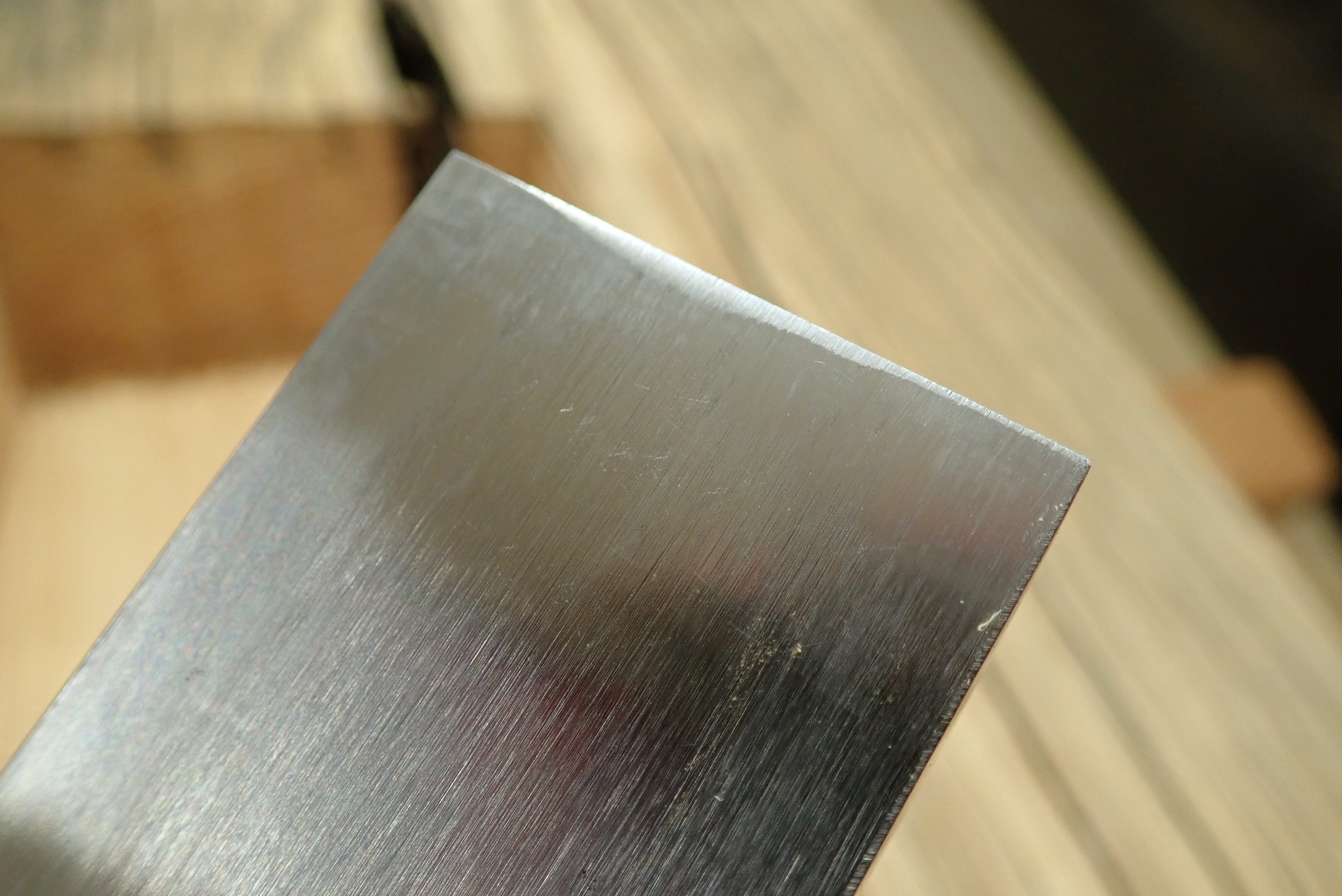
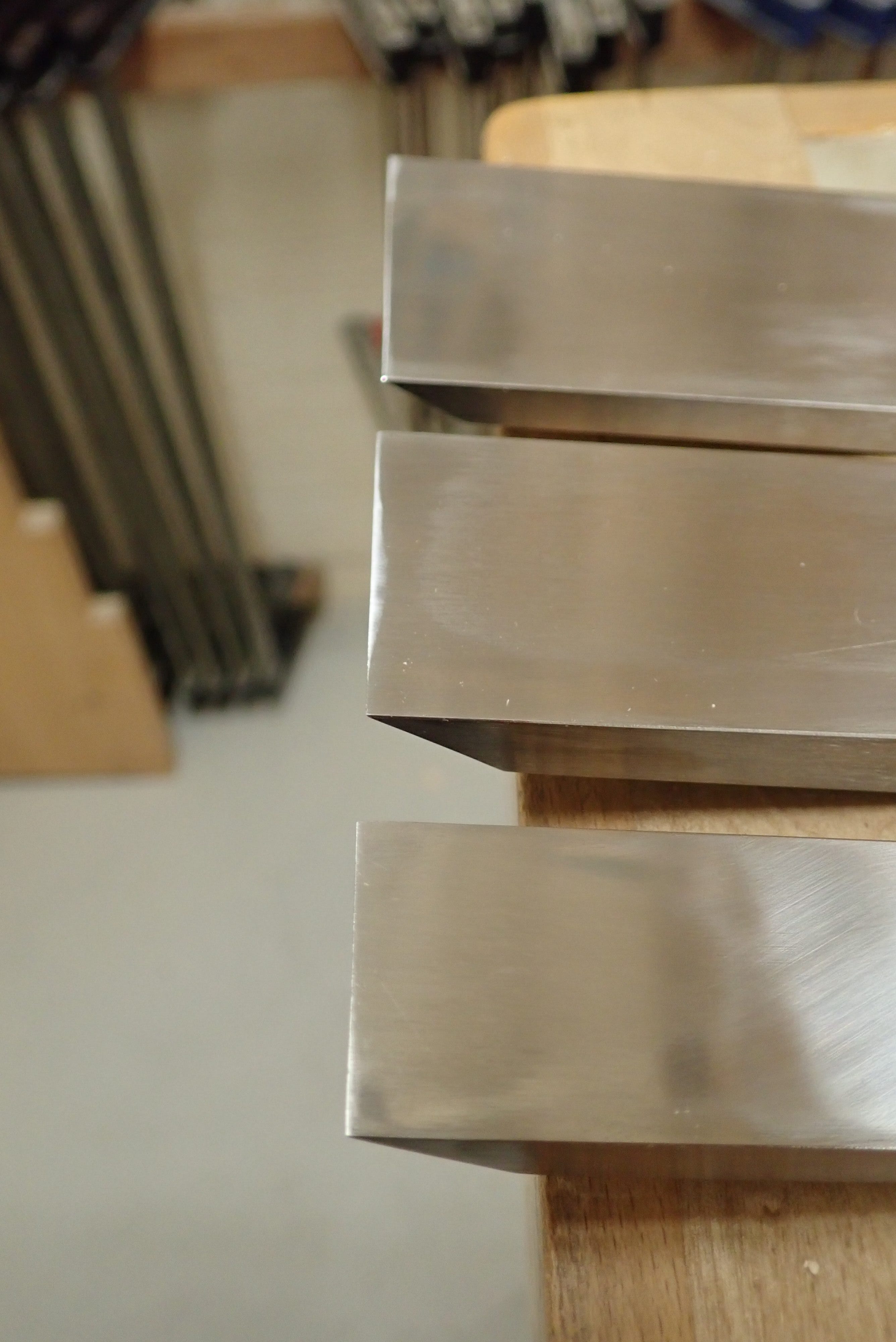
This tells me there is no quality control or even basic understanding of the product they are making at Henry Taylor.
I salvaged the firmer chisels by taking an angle grinder with a flap disc to the backs of them and free-handing a Japanese-style hollow-grind to reduce the amount of steel to be removed before I settled in for a Mother of a flattening session on the abrasives.
HENRY TAYLOR, YOU INCOMPETENT CHARLATAN!
****
I have a similar set of Stanley "crap chisels", as I call them, always at the ready to do some dirty work. I love them, I beat the crap out of them and they always work.
From "Kashtanka by Anton Chekhov" , "You Kashtanka, are an insect of a creature, and nothing else.
Beside a man, you are much the same as a joiner beside a cabinet-maker. . . ."